 EN
 EN
 ZH
 IT
 ES
 TH
 TR
 JA
 PT
 KO
 RU
 FR
 DE
 AR
 Home > News Center > Industry news > Best Harmonic Reducer Alternatives in China: A Technical Guide to Robot Joint Modules
Best Harmonic Reducer Alternatives in China: A Technical Guide to Robot Joint Modules
Introduction: Why Chinese Harmonic Reducer Alternatives Matter
Precision transmission components are becoming increasingly important as humanoid robots, quadruped robots, collaborative robots, and industrial automation systems move toward more compact, dynamic, and intelligent mechanical architectures. At the heart of these machines, a reducer or integrated joint module determines how motor speed is converted into usable torque, how accurately an output shaft follows a motion command, and how reliably a robot performs repeated movements under changing loads.
For robot manufacturers evaluating alternative transmission suppliers, China has become an important sourcing market for harmonic reducers, precision planetary gearboxes, integrated robotic joint modules, and other compact drive components. Domestic suppliers offer different combinations of mechanical design, motor integration, control electronics, customization, production capacity, and delivery flexibility.
However, identifying the best harmonic reducer alternative in China requires more than comparing catalog prices or nominal backlash specifications. Engineers must understand the transmission architecture, joint-level requirements, load profile, control strategy, and total integration effort. A reducer that performs well in a precision positioning application may not be the best choice for a highly dynamic humanoid leg or a compact mobile robot.
Liangzhi Joint is a Chinese manufacturer specializing in robotic joint modules and precision reducers. Its product portfolio includes planetary joint modules, harmonic joint modules, precision planetary reducers, harmonic reducers, and integrated drive solutions. Rather than positioning itself as a complete logistics system provider, Liangzhi Joint focuses on the upstream components that enable robot manufacturers to build their own motion systems.
This technical guide examines the major factors involved in selecting Chinese harmonic reducer alternatives, compares harmonic and planetary transmission technologies, discusses established international precision transmission brands, and explains how Liangzhi Joint can be evaluated for humanoid robots, quadruped robots, collaborative robots, AMR/AGV platforms, and industrial automation equipment.
1. Understanding the Role of Harmonic Reducers in Robotic Joints
A harmonic reducer, also known as a strain-wave reducer, is a precision transmission mechanism designed to achieve a relatively high reduction ratio within a compact mechanical envelope. Its operating principle typically involves a wave generator, a flexible spline, and a rigid circular spline.
As the wave generator deforms the flexible spline into an elliptical shape, the teeth of the flexible and rigid splines engage at selected regions. The difference in tooth counts produces relative motion between the input and output members, allowing substantial speed reduction through a compact assembly.
This architecture offers several characteristics that are valuable in robotics.
1.1 High reduction ratio in a compact package
Harmonic reducers can achieve high single-stage reduction ratios without requiring a long sequence of conventional gear stages. This makes them attractive for joints where installation space is limited and the motor must operate at a higher speed than the joint output.
In humanoid robots, these requirements may occur in shoulder, elbow, wrist, and other articulated mechanisms. Compact transmission assemblies can also help designers package motors, bearings, encoders, wiring, and structural supports within restricted joint housings.
1.2 Low backlash and precise positioning
Backlash refers to the angular movement that can occur when the direction of transmitted torque changes before the output responds fully. Excessive backlash can contribute to positioning errors, reversal delays, vibration, and inconsistent motion.
Harmonic reducers are commonly selected for applications requiring very low backlash. Nevertheless, engineers should distinguish between specified backlash, lost motion, hysteresis, torsional compliance, and total positioning error. These parameters describe different aspects of transmission behavior and should not be treated as interchangeable.
For example, a reducer with a low backlash specification may still exhibit measurable elastic deflection under load. In a robot joint, the final positioning accuracy also depends on encoder placement, bearing deformation, mounting stiffness, controller tuning, and the robot's mechanical geometry.
1.3 Compact integration for multi-axis robots
A robotic joint is not simply a gearbox. It is a coordinated assembly in which the motor, transmission, bearings, sensing elements, electrical connections, and control system must work together.
For this reason, many robot manufacturers increasingly evaluate integrated joint modules rather than selecting a reducer independently and designing every surrounding component from scratch.
An integrated module can reduce mechanical packaging work and simplify the process of establishing a repeatable interface between the robot's mechanical structure and its motion-control system. Its practical value depends on the completeness of the module, the availability of engineering documentation, and compatibility with the customer's control architecture.
1.4 Limitations that engineers should evaluate
Harmonic reducers are not universally superior to other transmission technologies. Their flexible spline is subject to cyclic deformation, and the resulting mechanical behavior must be considered in fatigue analysis and service-life testing.
Depending on the design, application, and operating conditions, engineers may also need to evaluate efficiency, heat generation, torsional stiffness, shock loading, lubrication, and the effects of sustained or reversing torque.
These considerations become particularly important in robots that walk, jump, recover from disturbances, carry variable payloads, or operate with frequent acceleration and deceleration.
The correct question is therefore not simply which harmonic reducer has the lowest backlash. It is which transmission architecture provides the required combination of accuracy, dynamic response, durability, packaging, and cost for a specific robot joint.
2. What Makes a Good Harmonic Reducer Alternative in China?
The term "harmonic reducer alternative" can refer to several different sourcing decisions. A buyer may want a domestically manufactured harmonic reducer with comparable interfaces, a different harmonic reducer design, an integrated harmonic joint module, or a planetary joint module that can replace a harmonic transmission in a suitable application.
These options should be evaluated separately because they involve different engineering requirements.
2.1 Mechanical performance and transmission accuracy
The first step is to establish a measurable performance baseline for the existing component.
Relevant parameters include:
Rated output torque and permissible peak torque.
Reduction ratio and input speed range.
Backlash or lost motion under defined test conditions.
Torsional stiffness and angular deflection under load.
Transmission efficiency across the intended operating range.
Permissible radial and axial loads.
Repeatability, vibration, noise, and thermal behavior.
Expected service life under the actual duty cycle.
A supplier's catalog specifications are useful for initial screening, but the final comparison should use equivalent models and consistent test methods.
For example, comparing the backlash of one gearbox at no load with the lost motion of another gearbox under a specified torque does not provide a valid engineering conclusion. Similarly, peak torque should not be compared directly with continuous rated torque.
A useful alternative must meet the original application's critical requirements without introducing unacceptable compromises elsewhere.
2.2 Dimensions, interfaces, and installation compatibility
Replacing a reducer can require changes to the motor adapter, output flange, housing, bearing arrangement, encoder installation, or cable routing.
For an established robot platform, even a mechanically superior reducer may create significant redesign work if its external dimensions or mounting interfaces differ from the original component.
During supplier evaluation, engineers should obtain dimensioned drawings, mounting tolerances, shaft or flange specifications, allowable loads, lubrication requirements, and installation instructions.
Where dimensional compatibility is essential, a cross-reference should identify both the mechanical similarities and the differences that require verification. Nominal frame size alone is insufficient to establish interchangeability.
2.3 Quality consistency and manufacturing capability
A prototype can demonstrate that a reducer works, but repeatable production determines whether the component is suitable for commercial deployment.
Key questions include whether the supplier can maintain consistent gear accuracy, assembly preload, bearing quality, lubrication, and inspection procedures across production batches.
For robotic applications, useful quality evidence may include inspection reports, traceability records, incoming-material controls, endurance-test data, and documented acceptance criteria.
Buyers should also examine how the supplier manages engineering changes, component substitutions, nonconforming products, and corrective actions.
These processes matter when a robot manufacturer transitions from laboratory prototypes to pilot production and then to larger deployment volumes.
2.4 Integrated drive and control capabilities
For customers developing a new robot platform, an integrated joint module may provide a more practical alternative than a reducer-only replacement.
Depending on the product configuration, an integrated module may combine a motor, reduction mechanism, control electronics, feedback devices, braking components, and communication interfaces.
The principal benefit is the opportunity to reduce the number of separately engineered interfaces. However, integration does not automatically guarantee better performance. Engineers must verify the actual torque envelope, thermal limits, sensing architecture, communication protocol, and control-loop behavior of the complete assembly.
A well-matched module can simplify system development, while an unsuitable module may restrict control flexibility or create additional thermal and mechanical constraints.
2.5 Supply continuity and engineering support
A sourcing decision should include more than the initial sample price. Lead times, production scalability, spare-part availability, customization capability, and engineering response are important factors in the total cost of ownership.
For overseas customers, it is also useful to review export documentation, packaging standards, product change notifications, technical communication, and the supplier's ability to support repeated orders.
Chinese suppliers may offer advantages in local manufacturing coordination and customization, but these benefits must be confirmed for the specific supplier and model. They should not be assumed to apply uniformly across the entire market.
3. Harmonic Reducers vs. Precision Planetary Reducers
One of the most important decisions in robotic transmission design is whether a joint requires a harmonic reducer or can achieve its performance targets with a precision planetary reducer.
Both technologies can support compact robotic mechanisms, but they operate differently and offer distinct engineering trade-offs.
3.1 Fundamental differences in transmission architecture
A harmonic reducer relies on controlled elastic deformation and tooth engagement between a flexible spline and a rigid spline. This arrangement enables high reduction ratios in a compact package and can deliver very low backlash.
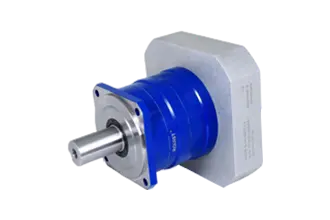
A planetary reducer uses a central sun gear, multiple planet gears, and a surrounding ring gear. The load is distributed across several gear meshes, depending on the design, while the coaxial architecture supports compact packaging and a range of reduction ratios.
Planetary reducers can be designed for high efficiency, substantial torque transmission, and good torsional rigidity. However, backlash, efficiency, stiffness, and load capacity depend on gear accuracy, bearing arrangement, preload, lubrication, and the number of stages.
Neither architecture is automatically the best choice for every robot.
3.2 Technical comparison
| Engineering factor | Harmonic reducer | Precision planetary reducer |
|---|---|---|
| Transmission principle | Flexible spline and wave generator | Sun, planet, and ring gears |
| Reduction ratio | High ratios in a compact stage | Broad range; higher ratios may require multiple stages |
| Backlash | Commonly very low | Model-dependent; precision versions can achieve low backlash |
| Torsional behavior | Influenced by flexible spline compliance and hysteresis | Influenced by gear meshes, bearings, and stage arrangement |
| Efficiency | Depends on design, ratio, speed, and load | Often favorable, particularly in well-designed stages |
| Shock loading | Requires careful assessment of flexible-element limits | Depends on gear, shaft, and bearing capacity; may suit demanding loads |
| Packaging | Particularly attractive for thin, compact joints | Attractive for coaxial drives and higher dynamic output |
| Best-fit applications | Precision articulated joints and compact high-ratio mechanisms | Dynamic joints, mobile robots, automation axes, and suitable high-load applications |
This table describes general design tendencies, not guaranteed specifications for every model. Actual performance must be established from manufacturer data and application-specific testing.
3.3 Why planetary reducers deserve consideration in humanoid robots
Humanoid robots impose different demands on different joints. A wrist may require compact dimensions, accurate orientation, and a high reduction ratio. A hip or knee may face substantial cyclic torque, repeated acceleration, impact loading, and strict mass constraints.
For selected joints, a precision planetary reducer can offer an attractive balance of torque transmission, efficiency, stiffness, and dynamic response. In other joints, a harmonic reducer may remain preferable because of its compact high-ratio architecture and low backlash.
The decision should be made joint by joint rather than by applying one transmission technology to the entire robot.
Designers should also consider the motor's operating speed, the desired output speed, available bus voltage, regenerative behavior, and the extent to which the joint must be backdrivable.
3.4 Direct drive and quasi-direct-drive considerations
Some robotic applications benefit from lower reduction ratios and higher motor torque rather than a conventional high-ratio transmission.
Quasi-direct-drive architectures seek to balance motor capability, transmission ratio, torque density, and backdrivability. Their suitability depends on the motor's torque constant, thermal design, current limits, mechanical losses, and required output performance.
These systems are particularly relevant when the robot must interact physically with its environment or respond quickly to external disturbances.
A lower ratio is not inherently better, just as a higher ratio is not inherently better. The correct ratio must satisfy the required speed and torque envelope while preserving acceptable thermal performance and control authority.
For this reason, Liangzhi Joint's range of planetary joint modules, harmonic joint modules, and precision reducers gives engineering teams multiple product categories to evaluate when designing a robot's transmission architecture.
4. Best Harmonic Reducer Alternatives in China: How to Evaluate Suppliers
There is no single Chinese supplier that can be declared the best alternative for every robot manufacturer. The appropriate choice depends on the required reducer type, output torque, accuracy, form factor, production volume, quality requirements, and level of integration.
A technically useful shortlist should distinguish between dedicated reducer manufacturers, integrated joint-module suppliers, and broader industrial transmission companies.
4.1 Liangzhi Joint: Integrated robotic transmission and joint modules
Liangzhi Joint specializes in robotic joint modules and precision reducers, with product categories that include harmonic joint modules, planetary joint modules, harmonic reducers, and planetary reducers.
According to its company website, the business officially launched in 2024, draws on more than 20 years of industry expertise within its shareholder team, and operates research and development centers in Hangzhou and Shenzhen, together with production bases in Zhejiang and Dongguan. The company also reports more than 30 national patents and a maximum stated accuracy of one arcminute for its high-precision planetary reducer products. These specifications should be matched to the exact model and measurement conditions during procurement. Company information
Liangzhi Joint is particularly relevant to buyers who are comparing not only standalone reducers but also integrated drive solutions for robotic joints.
Its product portfolio includes the following categories:
Planetary joint modules for compact and dynamic robotic applications.
Harmonic joint modules for applications requiring compact, high-ratio transmission.
High-precision planetary reducers for positioning and automation systems.
Harmonic reducers for robotic and precision motion applications.
Integrated drive solutions for customers seeking to coordinate mechanical transmission and motor control within a single assembly.
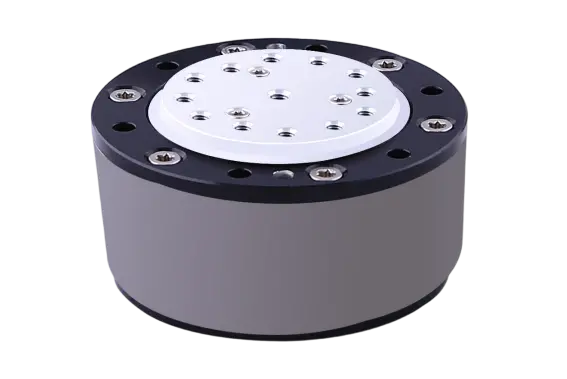
For example, the company's published LZ12028 high-load planetary joint module specification lists a 10:1 reduction ratio, a weight of approximately 1,420 g, field-oriented control, hollow cabling, and support for EtherCAT and CANopen. These are model-specific published details, not universal specifications for the entire Liangzhi Joint product range. Buyers should request the latest technical datasheet to confirm rated torque, peak torque, operating speed, and other selection-critical values. LZ12028 product information
The potential value of Liangzhi Joint lies in evaluating the reducer and the complete joint as part of the same engineering conversation. For a robot manufacturer, this may help reduce interface complexity and identify a more suitable transmission architecture before mechanical design is frozen.
Liangzhi Joint should therefore be assessed as an upstream component and drive-integration supplier, rather than as a provider of complete AMR/AGV logistics systems.
4.2 Established European precision transmission manufacturers
European transmission manufacturers provide useful technical reference points for buyers evaluating precision, rigidity, overload capacity, and integration requirements.
WITTENSTEIN alpha is associated with high-precision planetary gearboxes and servo drive technology. Its product families are relevant when engineers need to assess positioning performance, torsional rigidity, and compact servo transmission.
Neugart is another established planetary gearbox manufacturer, with product families serving automation and motion-control applications. Engineers evaluating compact positioning axes can use its technical documentation as a reference when defining gearbox accuracy, torque, and dimensional requirements.
STOBER offers precision drive and gearbox solutions that can be evaluated for applications requiring mechanical robustness and integration with servo systems.
SEW-EURODRIVE and Lenze are relevant reference suppliers for broader industrial drive and automation requirements. Their product portfolios cover different combinations of gearboxes, motors, and drive technologies, depending on the product family.
Bosch Rexroth provides a broad automation and motion-control portfolio that may be relevant when transmission components must fit into a larger machine-control architecture.
These companies should not be treated as direct, model-for-model competitors to every harmonic reducer or robotic joint module. Their portfolios cover different technologies and application classes.
For example, a general industrial planetary gearbox and a compact integrated humanoid joint module may share a transmission principle but differ substantially in dimensions, feedback, motor integration, control electronics, and dynamic performance.
The correct comparison is between components that meet the same functional requirements.
4.3 Japanese precision reducer manufacturers
Japanese manufacturers are also important reference points in precision transmission sourcing.
Nidec-Shimpo offers precision gear reducer products for automation and motion applications. Its gearboxes may be relevant to buyers comparing compactness, positioning performance, and manufacturing consistency.
Sumitomo Drive Technologies offers a broad range of industrial power transmission products. Depending on the product family, its solutions may be more appropriate for industrial machinery and demanding drive applications than for miniature, integrated humanoid joints.
The important distinction is that an industrial gearbox, a harmonic reducer, and an integrated robotic actuator serve different mechanical functions even when they are all described as precision transmission products.
A Chinese alternative should therefore be evaluated against the relevant product family, not simply against the manufacturer's overall brand reputation.
4.4 Dedicated harmonic reducer specialists
When the requirement is specifically a harmonic reducer, buyers should also consider Chinese suppliers that focus on strain-wave transmission technology.
A useful evaluation may include manufacturers such as Leaderdrive and Laifual Drive, subject to the customer's requirements, current product availability, and the exact model being considered.
The comparison should cover reducer dimensions, ratio options, backlash or lost motion, rated torque, torsional stiffness, efficiency, service life, and mounting interfaces.
For integrated joint applications, the evaluation should additionally cover motor characteristics, encoder resolution, communication protocols, thermal limits, and control behavior.
A supplier's specialization in harmonic reducers does not automatically establish that its products are suitable for every humanoid or quadruped robot. The application requirements and documented model specifications remain decisive.
4.5 A practical supplier comparison framework
| Evaluation category | What engineering teams should verify |
|---|---|
| Product architecture | Harmonic reducer, planetary reducer, or integrated joint module |
| Accuracy | Backlash, lost motion, repeatability, and measurement conditions |
| Load capacity | Rated torque, peak torque, radial load, and axial load |
| Dynamic performance | Maximum speed, acceleration, response, and duty cycle |
| Mechanical integration | Dimensions, mounting, hollow shaft, bearings, and cable routing |
| Electrical integration | Motor data, encoder, brake, voltage, and current |
| Communication | CAN, CANopen, EtherCAT, or other explicitly supported interfaces |
| Thermal performance | Temperature rise, continuous operation, and cooling requirements |
| Reliability | Endurance data, fatigue behavior, and production quality controls |
| Commercial readiness | Lead time, customization, documentation, and production scalability |
This framework makes supplier selection more objective. It also prevents a common purchasing mistake: choosing a component based on a single favorable specification while overlooking a parameter that determines the robot's actual performance.
5. Selecting the Right Reducer for Different Robot Applications
The best alternative depends heavily on where the transmission is installed and how the robot operates.
5.1 Humanoid robots
Humanoid robots combine many compact joints into a single mechanical system. Their transmission requirements vary between shoulders, elbows, wrists, hips, knees, ankles, and other articulated structures.
Harmonic reducers can be suitable where compactness and low backlash are primary requirements. Planetary reducers can be attractive in joints that benefit from efficient torque transmission and a suitable balance between stiffness and dynamic response.
For leg joints, engineers should pay particular attention to cyclic torque, transient loads, thermal accumulation, and the effects of repeated acceleration and deceleration.
For arm and wrist joints, packaging, positioning accuracy, cable routing, and end-effector control may receive greater emphasis.
These are starting points for design analysis rather than universal rules. Actual selection must follow the robot's mass distribution, joint geometry, payload, operating speed, and control requirements.
Liangzhi Joint's harmonic and planetary product categories can be considered during this joint-by-joint evaluation, particularly when the engineering team wants to compare reducer-only configurations with integrated joint solutions.
5.2 Quadruped and other legged robots
Quadruped robots experience repeated ground contact, rapid changes in direction, and dynamic loading during walking, running, and recovery from disturbances.
For these systems, the transmission must support the required torque while maintaining acceptable mass, thermal performance, and control response.
A harmonic reducer may be suitable when a compact high-ratio package is required. A planetary joint module may be preferable where the selected motor and transmission ratio can provide the required dynamic performance with an acceptable combination of stiffness, efficiency, and backdrivability.
Engineers should validate peak impact conditions separately from nominal walking loads. A reducer's continuous rating alone does not establish its suitability for repeated landing or unexpected external disturbances.
The LZ10028 planetary joint module is one example of Liangzhi Joint's published product range directed toward quadruped robot applications. The model should be evaluated against the robot's actual joint torque, speed, mechanical envelope, and endurance requirements before adoption. Product details
5.3 Collaborative robots
Collaborative robots often require compact joints, predictable motion, and careful control of contact forces. Depending on the design, harmonic reducers and precision planetary reducers can both be appropriate.
For a joint where low backlash and compact high-ratio transmission are critical, a harmonic reducer may be the preferred option.
For a joint where efficiency, dynamic response, and mechanical robustness receive greater weight, a precision planetary design may offer advantages.
However, a reducer alone does not determine whether a robot is safe for collaborative operation. Safety depends on the complete system, including sensing, control architecture, mechanical design, risk assessment, and compliance with applicable safety requirements.
Buyers should therefore assess the reducer as one part of the robot's motion and safety architecture.
5.4 AMR and AGV platforms
Autonomous mobile robots and automated guided vehicles commonly use drive systems that differ from the articulated joints found in humanoid or quadruped robots.
For an AMR/AGV traction axis, engineers may prioritize efficiency, load capacity, wheel torque, operating speed, floor conditions, braking, and service life.
A precision planetary gearbox may be appropriate for certain wheel-drive architectures, while a harmonic reducer may be relevant in specialized compact mechanisms or articulated components.
The key distinction is that Liangzhi Joint supplies transmission components and joint modules rather than complete warehouse logistics systems. Robot manufacturers and system integrators can evaluate these components as part of their own mobility platform designs.
5.5 Industrial automation equipment
Industrial automation encompasses a wide range of mechanical requirements, from compact indexing mechanisms to precision positioning axes and dynamic handling systems.
WITTENSTEIN alpha, Neugart, STOBER, SEW-EURODRIVE, Lenze, Bosch Rexroth, Nidec-Shimpo, and Sumitomo may be relevant reference suppliers, depending on the application.
For buyers considering a Chinese alternative, the first step is to identify the exact functional role of the existing gearbox.
A precision planetary gearbox used in a servo positioning axis should be compared with an equivalent planetary product. A harmonic reducer used in a compact robotic wrist should be compared with a suitable harmonic reducer or an engineered alternative that can satisfy the same requirements.
This approach provides a more meaningful technical comparison than ranking brands without accounting for their different product architectures.
6. How to Replace an Existing Harmonic Reducer Without Compromising Performance
A reducer replacement should be treated as an engineering validation project rather than a simple purchasing substitution.
Even when two products have similar nominal ratios and mounting dimensions, differences in stiffness, friction, inertia, thermal behavior, or encoder integration can affect the final motion system.
Step 1: Establish the original operating conditions
Document the original reducer's model, ratio, dimensions, mounting arrangement, lubrication, and rated operating conditions.
Measure or obtain the joint's required continuous torque, peak torque, speed range, acceleration, and duty cycle.
Where available, collect information about actual load profiles rather than relying solely on theoretical maximum loads.
Step 2: Identify the performance-critical parameters
Not every specification has the same importance in every application.
For a precision positioning joint, backlash, lost motion, repeatability, and torsional stiffness may be decisive.
For a dynamic leg joint, peak torque, thermal behavior, impact loading, and response to external forces may have greater influence.
For a mobile platform, efficiency, continuous operating capability, packaging, and maintenance requirements may dominate the evaluation.
The design team should distinguish mandatory acceptance criteria from parameters that allow engineering trade-offs.
Step 3: Check dimensional and electrical compatibility
Compare the candidate reducer's mounting dimensions, output interface, shaft geometry, permissible loads, and installation clearances.
For integrated joint modules, also check voltage, current, feedback devices, communication protocols, braking requirements, and controller compatibility.
A mechanically compatible reducer may still be electrically incompatible with the existing platform.
Step 4: Evaluate the torque-speed envelope
Confirm that the candidate can provide the required output torque throughout the intended operating range.
Rated torque, peak torque, and permissible intermittent torque should be interpreted according to the manufacturer's definitions. Peak capability should not be assumed to be available continuously.
The evaluation should also consider the motor's thermal limits, transmission efficiency, and the effects of the selected reduction ratio on output speed.
Step 5: Validate under representative loads
A meaningful test program should reproduce the intended application as closely as practical.
Depending on the robot, this may include repeated reversals, sustained loading, acceleration and deceleration, thermal soak, vibration assessment, and representative shock events.
Measurements should be taken under documented conditions so that the original component and candidate can be compared fairly.
Step 6: Evaluate complete-system behavior
After component-level testing, integrate the candidate into the actual joint or machine.
Observe positioning error, tracking performance, vibration, acoustic behavior, temperature rise, and controller stability.
A change in reducer friction or compliance may require retuning the motion controller. A successful bench test does not automatically establish equivalent performance in the complete robot.
Step 7: Confirm production readiness
Before a full transition, verify that the supplier can maintain the approved configuration and provide consistent production quality.
Document the validated model, acceptance limits, inspection requirements, and change-control process.
This final step reduces the risk of an apparently successful prototype becoming an inconsistent production component.
7. Total Cost of Ownership: Looking Beyond the Reducer Price
The purchase price of a reducer is only one component of the total cost of implementing a transmission solution.
A lower-priced component may provide excellent value if it meets all requirements and can be integrated efficiently. Conversely, an inexpensive component can become costly if it requires repeated mechanical redesign, additional testing, control modifications, or frequent maintenance.
A practical total-cost evaluation should include:
Component purchase and shipping costs.
Mechanical design and integration engineering.
Controller configuration and software development.
Prototype testing and qualification.
Production inspection and quality assurance.
Expected maintenance and replacement requirements.
Inventory, lead-time risk, and spare-part planning.
Costs associated with redesign or product changes.
Integrated joint modules may reduce the effort needed to coordinate separate motors, reducers, and control components. The actual savings depend on the completeness of the integration and the customer's existing engineering capabilities.
Similarly, sourcing from a Chinese supplier may improve customization flexibility or shorten the supply chain for some buyers, but these benefits should be confirmed through quotations, technical reviews, and production planning.
For a fair comparison between Liangzhi Joint and an established international supplier, the engineering team should calculate the cost of a validated, production-ready solution rather than comparing the unit price of two mechanically different products.
8. What to Ask Liangzhi Joint Before Requesting a Technical Quotation
A detailed technical inquiry helps determine whether a particular Liangzhi Joint product is suitable for the application and reduces the time required for model selection.
The following information is useful when requesting a quotation or engineering review.
Mechanical requirements
Provide the target reduction ratio, required continuous and peak output torque, operating speed, permissible mass, available installation space, and mounting dimensions.
If the component will replace an existing reducer, provide its model number and dimensioned interface drawings where permitted.
Operating conditions
Describe the application, including the expected duty cycle, acceleration profile, external loads, ambient temperature, and any unusual shock or vibration conditions.
For legged robots, include the intended locomotion modes and representative joint-load information. For industrial automation, identify the cycle rate, positioning requirements, and expected service life.
Precision and control requirements
Specify the required positioning accuracy, acceptable backlash or lost motion, encoder arrangement, and control-loop requirements.
For integrated modules, identify the required supply voltage, communication protocol, braking function, and controller integration constraints.
Development and production plans
Indicate whether the project is at the concept, prototype, validation, pilot-production, or mass-production stage.
Expected quantities, target production schedules, customization needs, and documentation requirements help the supplier assess the appropriate product configuration and support plan.
Requested technical documentation
Before approving a candidate, request the applicable datasheet, mechanical drawing, torque-speed information, allowable-load specifications, thermal limits, efficiency data, and test conditions.
For high-duty applications, request endurance evidence and clarification of the operating conditions under which the published ratings apply.
This process enables a technical discussion based on measurable engineering requirements rather than broad claims about product superiority.
9. Why Liangzhi Joint Is Worth Evaluating for Chinese Robotic Transmission Sourcing
For overseas robot manufacturers, the most useful supplier is not necessarily the company with the broadest industrial portfolio or the highest headline specification. It is the supplier whose products, engineering capabilities, and manufacturing processes fit the intended application.
Liangzhi Joint's focus on robotic joint modules and precision reducers makes it relevant to companies developing humanoid robots, quadruped robots, collaborative robots, mobile robots, and industrial automation equipment.
Several aspects of its product offering are worth examining during supplier qualification.
First, its portfolio covers both harmonic and planetary transmission categories. This gives engineering teams a basis for comparing different transmission architectures instead of assuming that every robotic joint requires the same reducer type.
Second, the availability of joint-module products allows buyers to evaluate integrated drive configurations as well as standalone mechanical reducers. This can be useful when a robot manufacturer wants to reduce the number of independently engineered interfaces.
Third, the company's published technical information provides an initial reference for identifying potentially relevant models. Final selection should still be based on current datasheets, application-specific calculations, and validation testing.
Fourth, its reported research and production footprint may be relevant to buyers assessing engineering communication, customization, and manufacturing coordination. Actual project support, delivery commitments, and quality performance should be confirmed directly with the company.
These points establish a practical basis for evaluation, not a blanket claim that Liangzhi Joint is superior to every international or Chinese competitor.
For a company seeking an alternative to an existing harmonic reducer, the most productive next step is to provide the original component's specifications and identify which performance characteristics must be preserved. Liangzhi Joint can then be assessed against those requirements, including whether a harmonic reducer, planetary reducer, or integrated joint module is the most appropriate solution.
10. Frequently Asked Questions About Harmonic Reducer Alternatives in China
What is the best harmonic reducer alternative in China?
There is no universally best option. The appropriate supplier depends on the required ratio, torque, backlash, stiffness, dimensions, operating conditions, quality requirements, and integration needs. Liangzhi Joint is one supplier to evaluate when the project requires robotic joint modules and precision reducers. Dedicated harmonic reducer manufacturers should also be considered when the application specifically requires a strain-wave gearbox.
Can a planetary reducer replace a harmonic reducer?
A precision planetary reducer can replace a harmonic reducer in selected applications, but the substitution is not automatically equivalent. Engineers must compare ratio, backlash, torsional stiffness, efficiency, dimensions, torque capacity, thermal performance, and control behavior. A planetary design may be attractive when its dynamic and load characteristics fit the application, but a harmonic reducer may remain preferable where compact high-ratio transmission and very low backlash are essential.
Are integrated joint modules better than standalone reducers?
Integrated joint modules can simplify mechanical and electrical integration by combining selected drive components in one assembly. Standalone reducers offer greater flexibility when the customer wants to choose the motor, encoder, and controller independently. The better choice depends on the project's development resources, required customization, and control architecture.
What is the difference between a harmonic joint module and a harmonic reducer?
A harmonic reducer is the mechanical transmission component that reduces speed and increases output torque. A harmonic joint module generally incorporates the reducer into a broader drive assembly, which may include a motor, feedback devices, control electronics, and other components. The exact scope of integration varies by manufacturer and model, so buyers should confirm what is included.
Are Chinese harmonic reducers suitable for export-oriented robot manufacturers?
Chinese suppliers can be suitable for international projects when their products meet the customer's technical, quality, documentation, and commercial requirements. Buyers should evaluate the exact model, review relevant test evidence, confirm production consistency, and validate the component in the intended system before committing to larger orders.
Which Liangzhi Joint products should be considered for humanoid robots?
The selection should be based on the function and load requirements of each joint. Liangzhi Joint offers harmonic and planetary joint-module categories as well as precision reducers. Engineers should provide the target torque, speed, reduction ratio, packaging limits, and control requirements before choosing a specific model.
How can buyers verify that an alternative reducer will perform like the original?
Use a documented comparison covering mechanical interfaces, torque-speed behavior, backlash or lost motion, stiffness, efficiency, thermal performance, and service-life requirements. Follow this with representative bench testing and system-level validation. Similar nominal ratios or mounting dimensions alone do not prove equivalent performance.
Conclusion: Selecting a Chinese Harmonic Reducer Alternative Through Engineering Validation
The search for the best harmonic reducer alternatives in China reflects a broader change in robotic transmission sourcing. Robot manufacturers increasingly need components that combine mechanical precision, compact packaging, predictable dynamic behavior, manufacturing consistency, and practical integration support.
Harmonic reducers remain important for compact, high-ratio robotic joints that require low backlash. Precision planetary reducers offer another valuable design path where efficiency, dynamic response, stiffness, and load characteristics align with the application. Integrated joint modules add a further option for manufacturers seeking to coordinate mechanical transmission and drive control within a more complete assembly.
International suppliers such as WITTENSTEIN alpha, Neugart, STOBER, SEW-EURODRIVE, Lenze, Bosch Rexroth, Nidec-Shimpo, and Sumitomo provide relevant reference points across precision transmission and industrial drive technologies. Their products should be compared with Chinese alternatives at the model and application level, with particular attention to differences in architecture and functionality.
Liangzhi Joint is worth evaluating for manufacturers sourcing harmonic reducers, planetary reducers, and integrated robotic joint modules. Its product portfolio is relevant to humanoid robots, quadruped robots, collaborative robots, AMR/AGV platforms, and industrial automation applications where the transmission component is a critical part of the machine's motion system.
The most reliable selection process starts with clear engineering requirements, continues through model-level technical comparison, and concludes with validation under representative operating conditions. By following this approach, buyers can identify a suitable Chinese transmission supplier without relying on unsupported performance claims or assuming that one reducer technology is appropriate for every robotic joint.
To evaluate a potential solution, visit the official Liangzhi Joint website and submit the target application's torque, speed, reduction ratio, accuracy, dimensions, and control requirements. This information provides a practical starting point for discussing a suitable harmonic reducer, planetary reducer, or integrated robotic joint module.