 EN
EN
 EN
EN ZH
ZH IT
IT ES
ES TH
TH TR
TR JA
JA PT
PT KO
KO RU
RU FR
FR DE
DE AR
AR
 Home > News Center > Industry news > How to Choose a Planetary Gearbox Wholesale Supplier for Robotics and Automation
How to Choose a Planetary Gearbox Wholesale Supplier for Robotics and Automation
Choosing a planetary gearbox wholesale supplier is not simply a matter of comparing unit prices. For robotics manufacturers, automation integrators, AGV developers, and industrial equipment companies, the gearbox becomes part of the mechanical architecture. Its reduction ratio, backlash, torque capacity, dimensions, bearing arrangement, mounting interface, noise level, and service life can all affect the final machine.
This is particularly important when planetary reducers are used in robotic joints. A reducer that looks suitable on a specification sheet may still create problems during motor matching, mechanical integration, trajectory control, or mass production. For B2B buyers, the more useful question is therefore not “Which gearbox is cheapest?” but “Can this supplier consistently provide the right transmission performance, mechanical interface, documentation, and delivery support for my application?”
A professional planetary gearbox wholesale supplier should be able to support that evaluation with clear specifications and practical engineering information.
Liangzhi Joint specializes in robotic joint modules, planetary reducers, harmonic reducers, and related drive integration solutions. The company combines R&D resources in Hangzhou and Shenzhen with production bases in Zhejiang and Dongguan. Its development team brings more than 20 years of industry and management experience, while its current business was officially launched in 2024. The company reports more than 30 national patents and planetary reducer accuracy of up to 1 arcminute.
What Is a Planetary Gearbox?
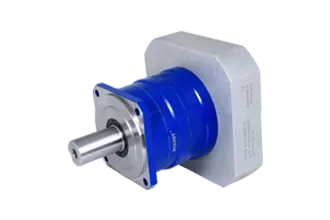
A planetary gearbox is a coaxial gear transmission system generally composed of a sun gear, planetary gears, a planet carrier, and a ring gear. Instead of transferring motion through a simple pair of gears, multiple planetary gears share the load around the central sun gear.
This arrangement provides several practical advantages for motion-control applications.
First, the coaxial structure allows the input and output to remain aligned around the same central axis. This can make mechanical integration easier when the available installation space is limited.
Second, multiple planetary gears can distribute the transmitted load. This makes the planetary configuration suitable for applications requiring a combination of compact dimensions, torque transmission, and controlled motion.
Third, planetary gearboxes can be configured with different reduction ratios by changing the gear arrangement and stage configuration. Depending on the design, they can be used for high-speed motor reduction, precision positioning, robotic joints, AGV drive systems, automation equipment, and other motion-control applications.
For a B2B buyer, however, the term “planetary gearbox” alone says very little about whether a product is suitable. The actual engineering parameters matter much more.
Why Planetary Gearboxes Are Used in Robotic Systems
Robotic systems typically require a motor to operate at a speed and torque range different from that required at the joint or output mechanism.
An electric motor may rotate rapidly while producing relatively limited torque. A robotic joint, on the other hand, may need lower output speed and substantially higher torque. The reducer bridges this difference.
For example, a planetary reducer with an appropriate reduction ratio can convert motor speed into usable joint speed while increasing output torque. The exact relationship depends on the transmission design, efficiency, operating conditions, and motor characteristics.
In robotic applications, the reducer also affects more than torque.
It can influence:
Positioning accuracy
Backlash
Repeatability
Output stiffness
Mechanical vibration
Noise
Motor loading
Joint size
Joint weight
Thermal behavior
Overall system efficiency
This is why robotic equipment manufacturers generally evaluate the reducer together with the motor, encoder, controller, bearing system, and mechanical structure instead of treating it as an isolated component.
What B2B Buyers Should Look for in a Planetary Gearbox Wholesale Supplier
When sourcing planetary gearboxes in volume, purchasing teams should evaluate the supplier from both technical and commercial perspectives.
A suitable supplier should be able to answer several basic questions before an order is placed:
What reduction ratios are available?
What is the rated output torque?
What is the peak or allowable intermittent torque?
What is the backlash?
What is the permissible radial and axial load?
What are the external dimensions?
What is the gearbox weight?
What bearings are used?
What mounting interfaces are available?
What motor interfaces can be supported?
What is the expected service life?
What are the operating temperature limits?
What testing is performed before shipment?
What documentation is available?
What is the normal production lead time?
These questions are particularly important when the buyer plans to integrate the gearbox into a new product rather than simply replace an existing component.
1. Match the Reduction Ratio to the Motor and Application
Reduction ratio is one of the first specifications that should be checked.
A higher ratio generally provides greater speed reduction and allows the motor's output torque to be increased at the gearbox output, subject to efficiency and mechanical limitations. However, selecting the highest available ratio is not automatically the correct approach.
For a robotic joint, the required ratio should be calculated from the motor's operating speed, required joint speed, torque requirements, duty cycle, and control strategy.
For example, if a motor is designed to operate efficiently at a relatively high rotational speed but the joint requires slower movement, a planetary gearbox can provide the necessary speed reduction. If the ratio is too high, however, the joint may become unnecessarily slow or introduce different control characteristics.
Liangzhi Joint's planetary joint product range includes multiple configurations. Its published performance table includes ratios such as 5, 7.75, 10, 25, 28, 36, and 40, depending on the model. The same table lists different torque, speed, voltage, communication, and dimensional parameters for the available configurations.
This type of model range is useful for B2B customers because different robotic joints rarely have identical requirements.
2. Check Rated Torque Instead of Looking Only at Peak Torque
Torque specifications are frequently misunderstood during gearbox sourcing.
Peak torque can be useful when evaluating short-duration acceleration, emergency conditions, or intermittent dynamic loads. It should not automatically be treated as the torque that the gearbox can continuously handle.
For production equipment, rated torque is usually more important when calculating normal operating conditions.
A buyer should therefore compare:
Continuous or rated torque
Peak torque
Duty cycle
Acceleration and deceleration loads
External radial load
External axial load
Shock loading
Operating temperature
Expected service life
For example, Liangzhi Joint's published planetary joint data shows different rated and peak torque values across its models. The LZ12028 configuration is listed with a rated torque of 126 Nm and peak torque of 378 Nm, while smaller configurations such as the LZ4610N are listed at 0.85 Nm rated torque and 2.55 Nm peak torque.
The important point for a buyer is not simply the largest torque number. The correct model must be selected according to the actual operating load and duty cycle.
3. Backlash Matters for Precision Motion
Backlash is the amount of relative movement that can occur within a gear transmission when the direction of movement changes.
In general industrial transmission, a certain amount of backlash may be acceptable. In robotic joints, however, excessive backlash can affect trajectory accuracy, repeatability, positioning behavior, and force-control performance.
For applications such as:
Collaborative robots
Humanoid robots
Robotic arms
Quadruped robots
Exoskeletons
Precision automation
Vision-guided positioning
the buyer should request a clearly defined backlash specification.
It is also important to understand how the supplier measures backlash. A numerical value without a measurement method or test condition may not be sufficient for engineering comparison.
Liangzhi Joint's planetary joint product information describes configurations combining planetary transmission structures with dual encoders and different bearing arrangements. Some of the company's integrated joint products are designed specifically around compact, high-precision robotic motion requirements.
4. Pay Attention to Rigidity and External Loads
Torque capacity alone does not describe how a gearbox will behave inside a robot.
The output shaft may experience radial forces, axial forces, bending moments, and shock loads. These forces can come from the robot's arm geometry, payload, acceleration, or contact with external objects.
For this reason, buyers should ask for permissible radial and axial loads and, where applicable, allowable moment loads.
This is particularly important for robotic joints because the reducer may be integrated directly into a compact joint housing. If the gearbox cannot handle the external loads generated by the mechanism, additional bearings or support structures may be necessary.
Such additional components increase:
Mechanical complexity
Weight
Assembly time
Installation space
Manufacturing cost
A reducer designed with the intended load environment in mind can simplify the overall mechanical architecture.
5. Compare Gearbox Dimensions Before Placing a Bulk Order
A gearbox may satisfy torque requirements and still fail to fit the machine.
For robotics, dimensional constraints can be severe. Joint housings may have limited diameter and axial length, while wiring, encoders, brakes, and bearings must all occupy the same space.
When evaluating a planetary gearbox wholesale supplier, request a complete dimensional drawing rather than relying only on product photographs.
Important dimensions include:
Overall diameter
Overall length
Input diameter
Output diameter
Shaft length
Flange dimensions
Mounting-hole pattern
Pilot diameter
Cable passage
Bearing position
Encoder installation space
For example, Liangzhi Joint's published planetary joint configurations range from compact Φ46 × 38 mm designs to larger Φ120 × 80 mm configurations, depending on the model. The corresponding torque capacities also vary substantially.
This illustrates why gearbox selection should start with the application's mechanical envelope rather than simply selecting a model based on torque.
6. Hollow-Shaft Design Can Simplify Robot Joint Integration
Cable routing is an important consideration in modern robotic systems.
Conventional external cables can interfere with joint movement, increase the risk of snagging, and make the mechanical design less compact. A hollow-shaft or hollow-cabling design can allow electrical cables, encoder wires, or other lines to pass through the joint.
Liangzhi Joint offers hollow-shaft planetary joint configurations. Its LZ9025 product information describes a compact hollow-shaft structure, with a total thickness of approximately 35.5 mm including the flange, together with dedicated interface dimensions for joint integration.
For robotic arm and humanoid robot developers, this type of configuration can be useful when internal cable routing is part of the mechanical design.
However, hollow-shaft capability should not be evaluated in isolation. Buyers should also check the usable internal diameter, cable bending radius, encoder arrangement, bearing structure, and installation method.
7. Evaluate the Motor and Reducer as a Matched System
A planetary gearbox cannot be evaluated correctly without considering the motor.
The motor and gearbox together determine the actual drive characteristics of the joint.
A buyer should examine:
Motor rated speed
Motor peak speed
Motor rated torque
Motor peak torque
Gear ratio
Gearbox efficiency
Output torque
Encoder resolution
Thermal limits
Controller compatibility
For integrated robotic joint applications, the supplier may also provide motor, reducer, encoder, and drive-control integration.
Liangzhi Joint's planetary joint modules, for example, are presented as integrated products incorporating drive and control functions. Published specifications include FOC control, dual encoders, CAN/CAN-FD or EtherCAT communication on certain models, and different operating voltage and speed configurations.
For an OEM developing a complete robotic joint, this approach can reduce the number of separate components that must be sourced and matched.
8. Understand the Difference Between a Reducer and a Complete Joint Module
A planetary reducer and a robotic joint module are not the same product.
A standalone reducer primarily provides mechanical transmission. A joint module may integrate several functions, such as:
Motor
Gear reducer
Encoder
Brake
Drive electronics
Communication interface
Housing
Bearings
Control functions
The correct choice depends on the buyer's development strategy.
If your engineering team already has a motor and servo drive platform, a standalone planetary reducer may be the more appropriate option.
If the objective is to shorten development time and simplify integration, an integrated joint module may provide greater value.
This distinction is especially relevant to robotics startups and OEMs developing multiple joint sizes. A modular product platform can allow the engineering team to standardize electrical and mechanical interfaces while selecting different torque classes for different joints.
9. Check Communication and Control Requirements
Modern robotic joints are increasingly integrated into networked control architectures.
Depending on the application, the system may require CAN, CAN-FD, EtherCAT, or another industrial communication interface.
The gearbox itself does not necessarily determine the communication protocol, but an integrated joint module may include drive electronics and communication functions.
For example, Liangzhi Joint's published LZ9025 information lists CAN/CAN-FD for several configurations and CAN-FD/EtherCAT for larger hollow-shaft configurations.
Before ordering, B2B buyers should confirm:
Supported communication protocol
Connector type
Communication speed
Control mode
Position feedback
Torque/current feedback
Parameter configuration
Software or commissioning tools
Controller compatibility
This can prevent a situation in which the mechanical component is suitable but the electrical interface requires redesign.
10. Manufacturing Consistency Is Critical for Wholesale Orders
For one prototype, a supplier may provide a gearbox that performs adequately.
For a production order of hundreds or thousands of units, consistency becomes much more important.
A B2B buyer should therefore evaluate the supplier's ability to control:
Gear machining accuracy
Assembly tolerances
Bearing installation
Lubrication
Backlash
Noise
Output runout
Concentricity
Torque performance
Final inspection
The supplier's manufacturing capacity should also be considered.
Liangzhi Joint reports production bases in Zhejiang and Dongguan, alongside R&D centers in Hangzhou and Shenzhen. The company states that it has more than 30 national patents and offers a reported 5–7 day delivery cycle for its products.
For wholesale customers, the practical question is whether the stated lead time applies to the required model, quantity, configuration, and customization level. These details should be confirmed before a purchase order is issued.
11. Ask for Samples Before a Production Purchase
A sample order is often the most efficient way to evaluate a new planetary gearbox supplier.
The sample should be tested under conditions that resemble the final application rather than only being inspected visually.
Depending on the application, testing may include:
No-load operation
Rated-load operation
Direction reversal
Acceleration and deceleration
Continuous operation
Temperature monitoring
Noise measurement
Backlash measurement
Output positioning accuracy
Radial and axial load testing
For robotic applications, the gearbox should ideally be evaluated together with the actual motor and controller.
A supplier may provide excellent gearbox test results under laboratory conditions, but system-level integration can reveal different issues. Motor inertia, control-loop settings, encoder resolution, mechanical resonance, and mounting stiffness can all affect the final result.
12. Documentation Is Part of the Product
A B2B gearbox supplier should provide more than a product photo and a basic specification table.
Useful technical documentation can include:
Product datasheet
2D mechanical drawing
3D CAD model
Installation instructions
Performance curves
Torque-speed curves
Backlash specifications
Load specifications
Lubrication information
Motor matching information
Encoder documentation
Communication protocol documentation
Inspection reports
For OEM customers, CAD files can be particularly important because the gearbox needs to be incorporated into the product's mechanical design before purchasing begins.
A supplier that can provide engineering documentation quickly can reduce development delays.
13. Consider Delivery Time as an Engineering Requirement
Lead time is not merely a purchasing issue.
When a gearbox is a critical component in a robotic joint, delayed delivery can stop prototype assembly, testing, certification, and production.
For this reason, B2B customers should discuss delivery requirements at the beginning of the project.
Important questions include:
What is the standard lead time?
Which models are normally stocked?
What is the lead time for customized models?
Is the quoted lead time based on order quantity?
Can prototype quantities be supplied separately from mass-production orders?
What happens if the demand forecast changes?
Can multiple models be shipped in split batches?
Liangzhi Joint states that its products can be delivered within a 5–7 day cycle, positioning short delivery as part of its supply capability.
For an OEM customer, the actual applicable lead time should still be confirmed for the specific model and order quantity.
14. When Should You Buy a Planetary Gearbox in Bulk?
Wholesale purchasing makes sense when the gearbox has already been technically validated and the application has moved toward repeat production.
Typical buyers include:
Robot manufacturers
Automation equipment manufacturers
AGV and AMR developers
Humanoid robot companies
Quadruped robot developers
Collaborative robot manufacturers
Medical and rehabilitation equipment companies
Industrial machinery manufacturers
System integrators
Robotics distributors
Before moving to volume purchasing, the buyer should establish a clear specification.
A typical sourcing specification might include:
Application: robotic joint
Reducer type: planetary
Reduction ratio: 10:1
Rated output torque: application-dependent
Peak torque: application-dependent
Backlash: application-dependent
Input motor: specified motor model
Encoder: dual encoder if required
Communication: CAN-FD or EtherCAT if integrated
Operating voltage: according to motor and drive system
Mounting interface: customer drawing
Quantity: annual forecast
Delivery: required batch schedule
This is much more useful than simply requesting “a high-precision planetary gearbox.”
Planetary Gearbox Applications Beyond Robotics
Although robotics is a major application, planetary reducers can be used across many types of equipment.
Industrial Automation
Automated machinery often requires controlled speed and torque transmission in a compact package. Planetary reducers can be integrated into linear-motion systems, rotary mechanisms, indexing equipment, and automated production machines.
AGV and AMR Systems
Mobile robots require compact drive systems capable of handling repeated acceleration, deceleration, and directional changes. Gearbox selection should consider wheel torque, vehicle weight, gradient, acceleration requirements, and operating duty cycle.
Quadruped Robots
Legged robots place dynamic loads on their joints. The transmission system must handle changing loads while maintaining compact dimensions and low weight.
Liangzhi Joint offers a planetary joint module specifically positioned for quadruped robot applications, alongside other planetary joint configurations.
Humanoid Robots
Humanoid robots have strict requirements for joint size, weight, torque density, controllability, and cable routing. Hollow-shaft and integrated joint designs can therefore be particularly relevant.
Robotic Arms
Industrial and collaborative robotic arms require controlled joint motion and repeatable positioning. The appropriate gearbox depends on the joint's payload, arm length, acceleration, speed, and control requirements.
How to Compare Two Planetary Gearbox Suppliers
When comparing suppliers, avoid creating a decision based on one parameter.
A practical comparison should include at least five categories.
Mechanical Performance
Compare:
Reduction ratio
Rated torque
Peak torque
Backlash
Radial load
Axial load
Stiffness
Efficiency
Service life
Physical Integration
Compare:
Diameter
Length
Weight
Shaft dimensions
Mounting pattern
Flange
Cable routing
Bearing arrangement
Electrical Integration
For integrated joint products, compare:
Motor
Encoder
Brake
Controller
CAN/CAN-FD
EtherCAT
Voltage
Current
Control modes
Manufacturing and Quality
Evaluate:
Production capacity
Quality-control process
Inspection procedures
Batch consistency
Traceability
Customization capability
Commercial Support
Finally, consider:
Sample availability
MOQ
Lead time
Documentation
Engineering support
Warranty terms
Spare parts
Communication efficiency
A supplier that performs well across these categories may be easier to work with during both prototype development and production.
Why Supplier Engineering Support Matters
The most useful planetary gearbox wholesale supplier is not necessarily the company with the longest product list. It is the supplier that can understand the application and provide the correct technical information.
For example, if a customer says:
“We need a 25:1 gearbox for a robotic arm.”
That is not enough information to select a model.
A supplier should ask about:
Motor speed
Motor torque
Required joint speed
Continuous load
Peak load
Duty cycle
Robot payload
Arm length
External moment
Installation space
Required backlash
Encoder requirements
Brake requirements
Communication protocol
This engineering dialogue can prevent incorrect model selection before the gearbox enters production.
A Practical Sourcing Process for OEM Buyers
A structured purchasing process can make gearbox sourcing much more efficient.
Step 1: Define the Application
Start with the machine, not the gearbox.
Define what the joint or transmission mechanism must actually do.
Step 2: Calculate the Load
Determine continuous torque, peak torque, speed, acceleration, external forces, and duty cycle.
Step 3: Define the Mechanical Envelope
Specify maximum diameter, length, mounting pattern, shaft dimensions, and cable requirements.
Step 4: Select the Transmission Type
Compare planetary, harmonic, and other transmission structures according to the application's precision, torque, stiffness, size, speed, and cost requirements.
Step 5: Match the Motor
Select the gearbox and motor as a combined drive system.
Step 6: Test Samples
Run the selected configuration under realistic operating conditions.
Step 7: Confirm Production Specifications
Freeze drawings, tolerances, interfaces, and inspection criteria before mass production.
Step 8: Establish the Supply Plan
Define forecast quantity, purchase batches, delivery schedule, packaging, documentation, and quality requirements.
This process reduces the risk of discovering mechanical or electrical incompatibility after a large order has already been placed.
Liangzhi Joint as a Drive Integration Partner
Liangzhi Joint focuses on robotic joint modules, planetary reducers, harmonic reducers, high-performance joint motors, and other core drive components for robotics and automation.
The company was launched in 2024 with a shareholder team bringing more than 20 years of industry experience. Its R&D resources are located in Hangzhou and Shenzhen, while its production bases are located in Zhejiang and Dongguan. The company states that its high-precision planetary reducer technology can achieve accuracy of up to 1 arcminute and that it holds more than 30 national patents.
Its planetary product range includes compact low-load configurations, higher-torque planetary joint modules, hollow-shaft planetary reducers, and planetary modules designed for specific robotic platforms. Published product data covers configurations with different ratios, torque levels, dimensions, weights, bearing types, encoders, communication interfaces, and operating conditions.
For buyers looking for a planetary gearbox wholesale supplier, this product breadth can be useful when different joints within the same robot require different torque and dimensional specifications.
Final Checklist Before Choosing a Supplier
Before issuing a purchase order, B2B buyers should confirm the following:
Correct reduction ratio
Rated torque meets continuous load requirements
Peak torque meets dynamic load requirements
Backlash is suitable for the application
Radial and axial loads are acceptable
Dimensions fit the mechanical design
Mounting interface matches the machine
Motor compatibility has been confirmed
Encoder requirements are satisfied
Communication protocol is compatible
Operating temperature is suitable
Noise level is acceptable
Service-life requirements are understood
Technical drawings are available
CAD files are available if required
Sample testing has been completed
Production quality requirements are documented
Lead time is confirmed
Packaging and shipping requirements are clear
After-sales and technical support are defined
A planetary gearbox is a relatively small component compared with an entire robotic system, but its influence on joint performance can be significant. The right supplier should therefore be evaluated on engineering capability, product consistency, documentation, customization, and delivery—not only on the purchase price.
For robotics and automation OEMs, Liangzhi Joint provides planetary reducers and integrated planetary joint solutions covering different torque, size, ratio, and integration requirements. Its product portfolio can be reviewed through the company's planetary reducer product page, where buyers can identify suitable configurations before discussing specific motor matching, mechanical interfaces, and production requirements with the engineering team.