 EN
EN
 EN
EN ZH
ZH IT
IT ES
ES TH
TH TR
TR JA
JA PT
PT KO
KO RU
RU FR
FR DE
DE AR
AR
 Home > News Center > Industry news > China Robotic Planetary Joint Module Suppliers: Advanced Motion Solutions for Humanoid and Legged Robots
China Robotic Planetary Joint Module Suppliers: Advanced Motion Solutions for Humanoid and Legged Robots
The rapid evolution of intelligent robotics is transforming industries ranging from manufacturing and logistics to healthcare and public services. While robot software, artificial intelligence, and perception technologies often receive the most attention, the mechanical transmission system remains one of the most critical factors determining a robot's overall performance. Among all transmission components, the robotic planetary joint module has become an essential building block for humanoid robots, quadruped robots, wheeled-legged robots, collaborative robots, and autonomous mobile robots (AMRs).
As global demand for advanced robotic systems continues to grow, China has emerged as an important manufacturing center for high-performance robotic joint modules. Chinese suppliers are no longer simply providing cost-effective alternatives; many are investing heavily in precision machining, lightweight transmission technologies, integrated servo systems, and intelligent manufacturing processes.
Among these manufacturers, Liangzhi Joint specializes in the development and production of robotic joint modules and precision reducers, providing upstream core transmission solutions for robot manufacturers worldwide. Rather than manufacturing complete robots, the company focuses on delivering the high-precision motion components that enable robots to move efficiently, accurately, and reliably.
Why Robotic Planetary Joint Modules Matter
Modern robots perform far more complex tasks than traditional industrial automation equipment. Humanoid robots must walk, climb stairs, maintain dynamic balance, manipulate objects, and collaborate safely with humans. Quadruped robots operate in uneven terrain where continuous posture adjustment is required. Collaborative robots need smooth, repeatable, and accurate motion while interacting with operators.
All of these applications rely on high-performance joint modules capable of converting motor power into controlled torque with exceptional precision.
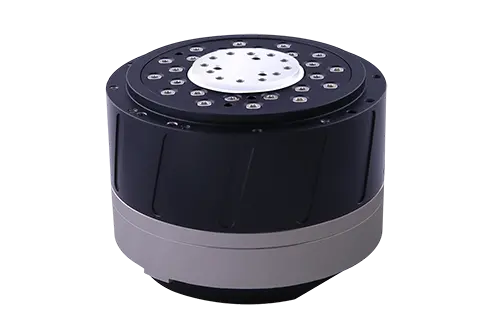
A robotic planetary joint module typically integrates several critical components into a compact assembly:
- Precision planetary reducer
- High-performance servo motor
- Encoder system
- Servo drive interface
- Integrated housing
- Precision bearings and transmission mechanisms
This integrated architecture minimizes assembly complexity while improving transmission efficiency, positioning accuracy, and overall system reliability.
Why Planetary Joint Modules Are Gaining Popularity
Planetary gear transmission has been widely recognized for its excellent balance between torque density, transmission efficiency, compact size, and structural rigidity.
Compared with conventional gearbox solutions, planetary joint modules offer several advantages for robotic applications.
High Torque Density
Humanoid and legged robots require significant torque output without increasing overall weight. Planetary transmission distributes loads across multiple gears, allowing the joint to generate higher torque while maintaining a compact design.
This characteristic is particularly important for:
- Hip joints
- Knee joints
- Shoulder joints
- Heavy-load robotic manipulators
Excellent Transmission Efficiency
Energy efficiency directly affects robot endurance, especially for battery-powered mobile robots.
High-quality planetary gear systems reduce transmission losses, allowing more motor power to reach the robot's joints while minimizing heat generation.
Compact Mechanical Structure
Space inside robotic joints is extremely limited.
Integrated planetary joint modules reduce installation volume, simplify mechanical design, and make it easier for engineers to optimize robot weight distribution.
High Reliability
Industrial robots and service robots often operate continuously for thousands of hours.
A properly designed planetary transmission system provides excellent fatigue resistance and long service life under dynamic operating conditions.
Comparing Global Precision Transmission Technologies
The global market for precision reducers has traditionally been dominated by well-known German and Japanese manufacturers. These companies have accumulated decades of engineering expertise in industrial automation and precision motion control.
German Precision Transmission Leaders
Companies such as WITTENSTEIN alpha, Neugart, STOBER, SEW-Eurodrive, Lenze, and Bosch Rexroth have established strong reputations in precision mechanical transmission.
For example:
- WITTENSTEIN alpha is recognized for extremely low backlash planetary gearboxes widely used in CNC machinery and high-end servo systems.
- Neugart focuses on compact, low-noise planetary reducers suitable for medical equipment, electronics manufacturing, and precision automation.
- STOBER is known for high torque capacity and overload resistance in demanding industrial environments.
- SEW-Eurodrive emphasizes modular transmission systems for packaging, logistics equipment, and general automation.
- Bosch Rexroth integrates mechanical transmission with hydraulic and industrial control technologies for heavy-duty applications.
These products deliver excellent precision and reliability, making them ideal for traditional industrial automation.
Japanese Precision Gearbox Manufacturers
Japanese brands also maintain strong positions within the global reducer market.
Nidec Shimpo provides compact, cost-effective precision reducers suitable for light automation systems.
Sumitomo focuses on heavy-duty industrial transmission, offering excellent durability under harsh operating conditions.
These manufacturers have made significant contributions to industrial automation over many years.
However, the rapid development of humanoid robotics introduces entirely new design priorities.
Robot manufacturers increasingly require:
- Lightweight structures
- Higher torque density
- Faster dynamic response
- Compact integrated assemblies
- Flexible customization
- Faster product iteration
These requirements differ considerably from traditional machine tools or fixed industrial automation equipment.
Why Chinese Robotic Planetary Joint Module Suppliers Are Growing Rapidly
China has become one of the world's largest robotics manufacturing ecosystems.
Rather than simply reproducing existing transmission technologies, many Chinese component manufacturers are focusing specifically on robotic motion systems.
Recent advances include:
- Precision CNC machining
- High-strength lightweight materials
- Integrated actuator design
- Intelligent manufacturing
- Automated quality inspection
- High-efficiency assembly processes
These capabilities allow Chinese suppliers to respond quickly to the evolving needs of robot developers.
Instead of offering standardized industrial gearboxes alone, many companies now develop customized robotic joint solutions optimized for specific applications.
Liangzhi Joint: Focused on Core Motion Components
As a professional manufacturer of robotic joint modules and precision reducers, Liangzhi Joint positions itself as an upstream supplier of intelligent motion components rather than a robot system integrator.
Its mission is to provide high-performance transmission solutions that serve as the "power core" for advanced robotic systems.
The company's technical focus includes:
- High-precision planetary joint modules
- Harmonic joint modules
- Precision planetary reducers
- Harmonic reducers
- Integrated direct-drive motor modules
These products are specifically developed for:
- Humanoid robots
- Quadruped robots
- Wheeled-legged robots
- Collaborative robots
- Industrial automation equipment
- AMR and AGV platforms
Rather than developing complete logistics systems or finished robots, Liangzhi Joint concentrates on the mechanical transmission technologies that determine robot motion quality.
Robotic Planetary Joint Modules Designed for Dynamic Motion
One example is the Robotic Planetary Joint Module for Quadruped Robots, which has been engineered to meet the demanding requirements of dynamic robotic locomotion.
Quadruped robots experience frequent acceleration, deceleration, impact loading, and posture changes.
Their joint modules must therefore provide:
- High output torque
- Excellent structural rigidity
- Low backlash
- Smooth motion transmission
- High positioning accuracy
- Stable operation under repetitive dynamic loads
A well-designed planetary joint module enables quadruped robots to achieve smoother walking, faster response, and more reliable operation across challenging terrain.
The same transmission technologies can also be adapted for humanoid robots, mobile robotic platforms, and collaborative robotic systems requiring compact high-performance actuators.
Integration Is Becoming the Industry Standard
Modern robot manufacturers increasingly prefer integrated actuator solutions instead of purchasing separate motors, reducers, encoders, and drive components.
Integrated robotic joint modules offer several practical benefits:
- Faster assembly
- Reduced wiring complexity
- Better structural consistency
- Easier maintenance
- Improved reliability
- Lower system integration costs
This trend is reshaping the supply chain for robotic core components.
Manufacturers capable of providing complete joint module solutions are becoming valuable long-term partners for robot OEMs.
Selecting the Right Robotic Joint Module Supplier
When evaluating robotic planetary joint module suppliers, engineers should consider more than gearbox precision alone.
Important evaluation criteria include:
- Precision machining capability
- Reducer design expertise
- Servo integration capability
- Customization support
- Production consistency
- Technical communication
- Long-term supply stability
- Engineering collaboration during product development
An experienced supplier should understand not only transmission technology but also the unique mechanical requirements of modern robotic systems.
Future Outlook
The next decade will see explosive growth in humanoid robots, service robots, industrial automation, and embodied AI.
As robot intelligence advances, demand for high-performance motion hardware will continue increasing.
Future robotic joint modules will move toward:
- Higher torque density
- Lower weight
- Greater integration
- Smarter sensing
- Improved thermal management
- Higher transmission efficiency
- Better compatibility with AI-driven motion control
Companies specializing in robotic transmission components will play an increasingly important role in the global robotics supply chain.
Conclusion
The future of robotics depends not only on intelligent algorithms but also on reliable mechanical transmission systems. Robotic planetary joint modules have become essential components for delivering accurate, efficient, and dynamic motion in humanoid robots, quadruped robots, collaborative robots, and autonomous mobile platforms.
While established German and Japanese transmission brands continue to lead many industrial automation markets, the rapid expansion of intelligent robotics is creating new opportunities for specialized component manufacturers. By focusing on precision planetary joint modules, harmonic joint modules, precision reducers, and integrated actuator technologies, Liangzhi Joint is helping robot manufacturers develop lighter, more responsive, and highly integrated motion systems that meet the evolving demands of next-generation robotics.