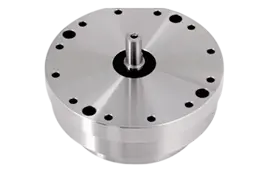
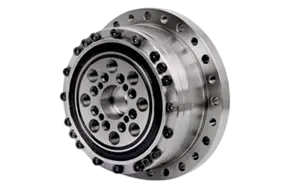
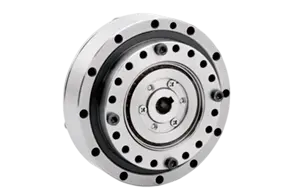
Introduction: Why High Dynamic Servo Joint Modules Become the Core of Legged Robot Development
With the rapid development of embodied intelligence, humanoid robots, and advanced mobile robotics, the requirements for robot motion systems are undergoing significant changes. Unlike traditional industrial robots that mainly perform repetitive tasks in structured environments, legged robots need to achieve dynamic balance, flexible movement, high-speed response, and complex interaction with uncertain environments. These capabilities depend heavily on the performance of their core motion components, especially high dynamic servo joint modules.
For legged robots, including humanoid robots, wheeled-legged robots, and advanced mobile platforms, the joint system is not simply a power transmission component. It is the mechanical foundation that determines walking stability, movement accuracy, energy efficiency, load capability, and overall intelligence performance.
A high-performance robotic joint module integrates multiple technologies, including servo motors, precision reducers, encoders, drive electronics, and control systems. Among these components, the reducer and transmission structure directly influence torque density, backlash control, response speed, and long-term reliability.
As global robot manufacturers accelerate commercialization, the demand for lightweight, high-torque-density, and highly integrated actuator solutions continues to grow. Companies that traditionally focused on industrial automation transmission components, such as German and Japanese precision gearbox manufacturers, have established strong technical advantages. At the same time, emerging Chinese robotics component suppliers are developing specialized solutions designed specifically for next-generation robots.
As a professional robotics core component supplier, Liangzhi Joint focuses on the research and development of robot joint modules, precision reducers, and integrated motion solutions. By combining planetary transmission technology, harmonic transmission technology, and servo integration, Liangzhi Joint provides key motion components for humanoid robots, legged robots, collaborative robots, and industrial automation equipment.
Understanding the Role of High Dynamic Servo Joint Modules in Legged Robots
A legged robot requires much more than basic rotational movement. Every joint must continuously adjust torque, speed, and position during walking, jumping, climbing, or interacting with objects. Therefore, the servo joint module must achieve a balance between power output and precise control.
A typical high dynamic servo joint module includes:
1. High Performance Servo Motor
The servo motor provides the primary driving force. For legged robots, the motor needs:
- High power density
- Fast acceleration and deceleration capability
- Stable operation under frequent load changes
- Efficient thermal management
Compared with traditional industrial servo applications, robotic joints require more compact motors because every additional gram affects the robot’s energy consumption and mobility.
2. Precision Reducer System
The reducer is one of the most critical components in a robotic joint. It converts high-speed motor rotation into high torque output while maintaining accurate positioning.
Common precision transmission solutions include:
- Harmonic reducers
- Planetary reducers
- Cycloidal reducers
For humanoid and legged robots, harmonic reducers and high-precision planetary reducers are widely used because they provide high reduction ratios, compact structures, and excellent positioning accuracy.
3. Integrated Encoder and Control System
Dynamic robots require real-time feedback. Encoders monitor joint position and speed, allowing the controller to adjust movement instantly.
A modern robotic joint module often integrates:
- Motor
- Reducer
- Encoder
- Driver electronics
This integrated structure reduces installation complexity and improves system reliability.
Key Performance Requirements for Legged Robot Joint Modules
The performance of a legged robot depends directly on the mechanical characteristics of its joint modules. Several parameters are especially important.
High Torque Density: The Foundation of Dynamic Movement
Torque density is one of the most important indicators for robotic actuators.
Humanoid and legged robots need strong output torque while maintaining lightweight structures. High torque density allows robots to:
- Carry heavier loads
- Maintain balance during movement
- Perform rapid posture adjustments
- Reduce overall energy consumption
Traditional industrial gearboxes often prioritize durability and continuous operation. However, legged robots require a different balance between strength, weight, and responsiveness.
Low Backlash and High Precision Transmission
Backlash directly affects robot positioning accuracy and motion stability.
For comparison, high-end precision reducer brands have developed advanced technologies for minimizing backlash:
- WITTENSTEIN alpha from Germany is recognized for ultra-high precision planetary gearboxes, with certain products achieving very low backlash levels suitable for high-end servo systems and CNC applications.
- Neugart focuses on compact precision planetary gearboxes featuring low noise operation and stable performance.
- STOBER emphasizes high torque capability and overload resistance for demanding industrial servo applications.
- Bosch Rexroth provides integrated transmission solutions across automation and industrial equipment fields.
Japanese manufacturers also have strong experience:
- Nidec Shimpo is known for compact precision reducers with competitive cost performance.
- Sumitomo provides durable transmission products designed for heavy-duty applications.
These companies have established strong reputations in industrial automation, machine tools, and servo transmission markets.
However, the requirements of next-generation legged robots are different from traditional industrial equipment. Robot manufacturers increasingly need:
- Compact actuator structures
- Lightweight design
- High-frequency dynamic response
- Customized mechanical integration
- Faster product iteration
This creates opportunities for specialized robotic joint module suppliers.
Dynamic Response: A Key Difference Between Industrial Transmission and Robotic Motion
Industrial automation systems usually operate under predictable conditions. Robots in factories often repeat predefined trajectories.
Legged robots operate differently.
They must respond immediately to:
- Uneven terrain
- External impact
- Balance changes
- Human interaction
- Unexpected movement
Therefore, high dynamic servo joint modules require:
- Fast torque response
- High control bandwidth
- Low rotational inertia
- Efficient heat dissipation
A reducer designed for CNC equipment may provide excellent precision, but a robotic joint requires a complete motion solution optimized for dynamic behavior.
Precision Reducer Comparison: Traditional Industrial Brands vs Robotic Joint Module Solutions
The global precision reducer market has historically been dominated by European and Japanese manufacturers.
German Precision Transmission Brands
German companies such as WITTENSTEIN alpha, Neugart, STOBER, SEW-Eurodrive, Lenze, and Bosch Rexroth have strong engineering backgrounds.
Their advantages include:
- Long industrial application experience
- Mature manufacturing processes
- High reliability
- Strong precision control
These products are widely used in:
- CNC machines
- Packaging equipment
- Industrial automation lines
- Servo systems
- Heavy-duty machinery
However, many traditional transmission solutions were developed around industrial equipment requirements.
The emerging robot market requires more specialized features:
- Lower weight
- Smaller installation space
- Higher integration
- More flexible customization
Japanese Precision Transmission Brands
Japanese manufacturers such as Nidec Shimpo and Sumitomo have achieved strong market recognition through:
- Stable quality
- Compact designs
- Reliable operation
- Broad industrial applications
Their products are suitable for many automation scenarios, especially applications requiring durability and cost efficiency.
However, robotic manufacturers increasingly evaluate suppliers based on not only precision performance but also:
- Development cooperation capability
- Customization speed
- Integration capability
- Supply chain flexibility
Why Chinese Robot Joint Module Suppliers Are Becoming Important Partners
The global robotics industry is entering a new development stage. The growth of humanoid robots and intelligent mobile robots requires a new generation of motion components.
Chinese suppliers are increasingly investing in:
- Precision machining technology
- Servo control technology
- Robot actuator development
- Automated production systems
Compared with traditional international transmission suppliers, Chinese robotic component manufacturers can provide several advantages:
Faster Customization Capability
Robot companies often require customized solutions according to:
- Robot size
- Joint position
- Payload requirement
- Movement strategy
A flexible supplier can quickly adjust:
- Mechanical structure
- Reduction ratio
- Motor configuration
- Communication interface
Better Adaptation to Emerging Robot Applications
The requirements of humanoid robots and legged robots are still evolving.
Component suppliers need to work closely with robot developers to optimize:
- Joint performance
- Weight distribution
- Energy efficiency
- Motion control
This is different from supplying standardized industrial gearboxes.
Liangzhi Joint: Developing High Dynamic Servo Joint Modules for Future Robots
As a robotics core component manufacturer, Liangzhi Joint focuses on providing advanced transmission solutions for intelligent robots.
The company’s product portfolio includes:
- Planetary joint modules
- Harmonic joint modules
- Precision planetary reducers
- Harmonic reducers
- Integrated direct-drive motor modules
These products are designed to support the development of:
- Humanoid robots
- Legged robots
- Collaborative robots
- Industrial automation equipment
The core value of Liangzhi Joint is not building complete robots, but providing the essential motion components that enable robots to move with greater precision, speed, and stability.
By focusing on upstream transmission technologies, Liangzhi Joint helps robot manufacturers improve:
- Mechanical efficiency
- Motion accuracy
- System integration
- Product competitiveness
Planetary Joint Modules vs Harmonic Joint Modules for Legged Robots
Different robot applications require different transmission solutions.
Planetary Joint Modules
Planetary gear systems provide:
- High efficiency
- Strong load capacity
- Excellent durability
- Compact structure
They are suitable for applications requiring:
- High torque output
- Continuous operation
- High mechanical strength
Typical applications include:
- Robot legs
- Industrial robot joints
- Mobile robot drive systems
Harmonic Joint Modules
Harmonic transmission technology offers:
- High reduction ratio
- Low backlash
- Compact dimensions
- High positioning accuracy
It is widely applied in:
- Humanoid robot joints
- Collaborative robots
- Precision robotic arms
For advanced robots, combining different transmission technologies according to joint requirements can achieve better overall performance.
The Future Development Trend of Robotic Joint Modules
The next generation of robots will require more advanced actuator technologies.
Future high dynamic servo joint modules will continue evolving toward:
Higher Integration
Motor, reducer, encoder, and controller integration will become increasingly common.
Lighter Structures
Reducing actuator weight will improve robot efficiency and endurance.
Higher Intelligence
Joint modules will integrate more sensing and control capabilities.
Greater Customization
Robot manufacturers will require application-specific actuator designs instead of standardized industrial components.
Conclusion: Precision Motion Components Drive the Future of Legged Robots
High dynamic servo joint modules are becoming one of the most important technologies shaping the future of humanoid robots and legged robotic systems.
Traditional precision reducer manufacturers from Germany and Japan have built strong foundations in industrial transmission, offering excellent accuracy and reliability. However, the rapid development of advanced robotics is creating new requirements for lightweight, highly integrated, and dynamically responsive motion solutions.
Companies like Liangzhi Joint are focusing on this emerging opportunity by developing robot-specific joint modules, precision reducers, and integrated actuator solutions. Through planetary transmission technology, harmonic transmission technology, and customized robotic motion solutions, Liangzhi Joint aims to support robot manufacturers in developing more capable and intelligent machines.
As robotics continues moving from structured industrial environments into real-world applications, the quality of core motion components will determine how effectively robots can walk, interact, and perform complex tasks. High-performance servo joint modules will remain a critical foundation for the next generation of intelligent robots.

 EN
EN
 EN
EN ZH
ZH IT
IT ES
ES TH
TH TR
TR JA
JA PT
PT KO
KO RU
RU FR
FR DE
DE AR
AR Home > News Center > Industry news > High Dynamic Servo Joint Modules for Legged Robots: Technology Evolution, Precision Transmission Comparison and Future Motion Solutions