 EN
EN
 EN
EN ZH
ZH IT
IT ES
ES TH
TH TR
TR JA
JA PT
PT KO
KO RU
RU FR
FR DE
DE AR
AR
 Home > News Center > Industry news > High Efficiency Planetary Gear Reducer: How to Improve Motion Performance and Reduce Energy Loss in Modern Automation
High Efficiency Planetary Gear Reducer: How to Improve Motion Performance and Reduce Energy Loss in Modern Automation
Industrial automation systems are under constant pressure to deliver higher productivity, better positioning accuracy, and lower energy consumption. Whether in robotics, CNC machining, packaging equipment, semiconductor manufacturing, or automated assembly lines, every component within a drive system affects overall performance. Among these components, the gearbox plays a critical role in determining efficiency, torque transmission, motion accuracy, and long-term reliability.
A high efficiency planetary gear reducer has become one of the most widely adopted transmission solutions because it combines compact dimensions, high torque density, low backlash, and excellent power transmission efficiency. Compared with many traditional reduction mechanisms, planetary gear systems can achieve outstanding efficiency while maintaining precise motion control, making them particularly suitable for servo-driven applications.
For equipment manufacturers and automation engineers, understanding how planetary reducers achieve high efficiency—and how to select the right model—is essential for optimizing machine performance and reducing operating costs.
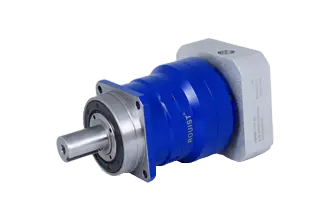
What Is a High Efficiency Planetary Gear Reducer?
A planetary gear reducer is a transmission device that uses multiple gears working together around a central gear. The basic structure consists of:
A sun gear located at the center
Multiple planet gears surrounding the sun gear
A ring gear with internal teeth
A planet carrier that supports the planet gears
As the input shaft drives the sun gear, the planet gears rotate around it while simultaneously engaging with the ring gear. This unique arrangement distributes loads across multiple gears instead of concentrating them on a single gear pair.
Because torque is shared among several gears, planetary reducers can transmit higher loads while maintaining compact dimensions. This design is one of the primary reasons why a high efficiency planetary gear reducer can achieve excellent power density and transmission performance.
Unlike conventional gearboxes that rely on a limited number of gear engagements, planetary systems utilize multiple simultaneous tooth contacts, allowing smoother operation and more effective load distribution.
Why Efficiency Matters in Modern Motion Systems
Efficiency is often overlooked during gearbox selection, yet it directly affects the overall performance of industrial equipment.
When a reducer operates at lower efficiency, a portion of the motor's output energy is converted into heat rather than useful mechanical work. This results in:
Increased energy consumption
Higher operating temperatures
Reduced system reliability
Shorter lubricant life
Greater maintenance requirements
Increased operating costs
In contrast, a high efficiency planetary gear reducer minimizes energy loss and maximizes the amount of motor power delivered to the load.
For example, if a production line operates continuously across multiple shifts, even a small improvement in gearbox efficiency can generate significant energy savings over the lifespan of the equipment.
In industries where hundreds of servo motors operate simultaneously, improving transmission efficiency can contribute substantially to reducing total energy consumption.
How a Planetary Gear Reducer Achieves High Efficiency
The efficiency advantages of planetary gear systems are not accidental. They are the result of specific engineering principles that optimize power transmission.
Load Sharing Across Multiple Planet Gears
One of the most important characteristics of a planetary gearbox is load distribution.
In a traditional gear pair, torque is transferred through a limited number of teeth. This can create localized stress concentrations and higher friction losses.
In a planetary gear system, the torque is shared among multiple planet gears. Depending on the design, three or four planet gears may simultaneously transmit load.
This balanced load distribution provides several benefits:
Reduced tooth stress
Lower wear rates
Improved durability
More stable operation
Higher torque capacity
Because individual gear teeth experience lower loading, friction losses can also be reduced, contributing to higher overall efficiency.
Multiple Tooth Engagement
Another reason a high efficiency planetary gear reducer performs so well is the increased number of teeth in contact during operation.
With multiple gear meshes occurring simultaneously, forces are distributed more evenly throughout the transmission system.
This results in:
Smoother torque transmission
Reduced vibration
Lower noise levels
Improved motion stability
The reduction of vibration and dynamic loads helps minimize energy losses that would otherwise occur due to mechanical instability.
Compact Power Transmission Path
Planetary gear systems transmit torque through a compact and symmetrical arrangement.
The concentric design allows input and output shafts to remain aligned along the same axis, reducing mechanical complexity and minimizing energy losses associated with offset transmission systems.
This compact structure also reduces inertia, allowing servo motors to respond more quickly during acceleration and deceleration.
For high-speed automation applications, lower inertia contributes to improved dynamic performance and reduced power consumption.
Optimized Gear Geometry
Modern planetary reducers use advanced gear tooth profiles designed through sophisticated engineering software.
Optimized tooth geometry helps:
Reduce sliding friction
Improve meshing smoothness
Increase load carrying capacity
Minimize transmission losses
High-precision grinding processes further enhance tooth accuracy, allowing gears to engage smoothly and efficiently throughout their operating life.
Typical Efficiency Levels of Planetary Gear Reducers
The actual efficiency of a planetary reducer depends on its design, manufacturing quality, reduction ratio, lubrication system, and operating conditions.
In general:
| Reduction Stage | Typical Efficiency |
|---|---|
| Single Stage | 95%–98% |
| Two Stage | 94%–97% |
| Three Stage | 90%–95% |
Single-stage planetary gearboxes typically offer the highest efficiency because fewer gear meshes are involved.
As additional stages are added to achieve higher reduction ratios, some efficiency loss occurs due to increased friction and mechanical interactions.
However, even multi-stage planetary reducers often outperform many alternative transmission technologies in terms of overall efficiency.
Key Factors That Influence Planetary Gearbox Efficiency
Not all planetary reducers deliver the same level of performance. Several engineering factors determine whether a gearbox can truly be classified as a high efficiency planetary gear reducer.
Gear Manufacturing Accuracy
Gear accuracy directly affects meshing quality.
Poorly manufactured gears may create:
Excessive friction
Noise
Vibration
Heat generation
High-precision gear grinding ensures consistent tooth geometry and smooth engagement.
Manufacturers capable of achieving micron-level machining tolerances generally produce gearboxes with superior efficiency and reliability.
Bearing Quality
Bearings support rotating components throughout the gearbox.
Low-quality bearings can create excessive friction and energy loss.
Premium bearings provide:
Lower rolling resistance
Better load distribution
Improved rotational stability
Longer service life
In high-performance servo systems, bearing quality significantly influences overall transmission efficiency.
Lubrication System
Lubrication plays a critical role in minimizing friction between moving components.
Proper lubrication:
Reduces wear
Lowers operating temperatures
Improves efficiency
Extends gearbox lifespan
Modern planetary reducers often utilize specially formulated synthetic lubricants that maintain stable performance across a wide temperature range.
Selecting the correct lubricant can improve efficiency while reducing maintenance requirements.
Gear Material Selection
Material properties influence both durability and efficiency.
High-quality alloy steels provide:
Greater hardness
Higher fatigue strength
Better wear resistance
Improved dimensional stability
Advanced heat treatment processes further enhance material performance.
When gear teeth maintain their original geometry over time, efficiency remains more consistent throughout the service life of the gearbox.
Assembly Precision
Even perfectly manufactured gears can lose efficiency if assembly accuracy is inadequate.
Critical assembly parameters include:
Gear alignment
Bearing preload
Shaft concentricity
Tooth contact pattern
Precision assembly ensures optimal force distribution and smooth operation.
For high-performance applications such as robotics and semiconductor equipment, assembly quality is often as important as component quality itself.
The Relationship Between Backlash and Efficiency
When engineers evaluate a high efficiency planetary gear reducer, efficiency is often discussed alongside backlash. While these are different performance parameters, they are closely related in precision motion systems.
Backlash refers to the angular clearance between mating gear teeth. A certain amount of backlash is necessary to allow lubrication and thermal expansion, but excessive backlash can negatively affect motion accuracy and transmission stability.
In high-speed servo applications, excessive backlash may cause:
Positioning errors
Reduced repeatability
Impact loading during direction changes
Increased vibration
Additional energy losses
Low backlash planetary reducers help maintain smooth power transmission because gear engagement remains more consistent throughout operation.
When torque is transferred without excessive clearance, motion becomes more predictable and energy losses caused by shock loading are minimized.
This is particularly important in applications such as:
Industrial robots
CNC machine tools
Semiconductor equipment
Laser cutting machines
Precision assembly systems
Modern precision planetary reducers commonly achieve backlash values below 5 arcminutes, while advanced models can reach 3 arcminutes or less.
For applications requiring high dynamic response, low backlash and high efficiency often go hand in hand.
Why Robotics Demands High Efficiency Planetary Gear Reducers
The rapid growth of industrial robotics has significantly increased demand for precision transmission systems.
Robot joints must continuously perform:
Acceleration
Deceleration
Position holding
Repetitive motion cycles
Any energy lost within the gearbox directly affects overall robot performance.
Improving Dynamic Response
Robots require fast and accurate movement.
A high efficiency planetary gear reducer reduces transmission losses, allowing more motor torque to reach the output shaft.
Benefits include:
Faster response times
Improved acceleration
Better trajectory tracking
Reduced servo load
These advantages are especially important in collaborative robots, SCARA robots, and articulated robotic arms.
Reducing Heat Generation
Heat is one of the most common challenges in robotic systems.
Every percentage point of lost efficiency becomes heat inside the gearbox.
Excessive heat can affect:
Lubricant performance
Bearing life
Servo motor stability
Sensor accuracy
High-efficiency transmission systems generate less heat, helping maintain stable operation during continuous production cycles.
Supporting Energy-Efficient Manufacturing
Manufacturers increasingly focus on reducing energy consumption.
A robotic production line may contain dozens or even hundreds of servo-driven axes.
Improving gearbox efficiency across an entire facility can significantly reduce energy costs over time.
As factories pursue sustainability goals and lower operating expenses, energy-efficient motion control components become increasingly valuable.
Comparing Planetary, Harmonic, and Cycloidal Reducers
Automation engineers often compare three major precision reducer technologies:
Planetary reducers
Harmonic reducers
Cycloidal reducers
Each technology offers unique advantages depending on the application.
Planetary Gear Reducers
Advantages:
High transmission efficiency
Compact structure
High torque density
High input speed capability
Cost-effective solution
Easy integration with servo motors
Limitations:
Backlash higher than harmonic drives in some models
Extremely high reduction ratios may require multiple stages
Best Applications:
Industrial automation
Packaging equipment
CNC machinery
Material handling systems
AGVs and AMRs
Robotic auxiliary axes
Harmonic Reducers
Advantages:
Extremely low backlash
High positioning accuracy
Compact size
Limitations:
Lower efficiency compared with planetary reducers
More sensitive to overload
Higher cost
Best Applications:
Robot wrists
Medical equipment
Semiconductor systems
Precision positioning devices
Cycloidal Reducers
Advantages:
High shock resistance
Large reduction ratios
Robust design
Limitations:
Larger size
More complex structure
Higher vibration in some conditions
Best Applications:
Heavy-duty automation
Mining equipment
Large robotic systems
Performance Comparison
| Parameter | Planetary Reducer | Harmonic Reducer | Cycloidal Reducer |
|---|---|---|---|
| Efficiency | Excellent | Moderate | Good |
| Backlash | Low | Extremely Low | Low |
| Torque Density | High | Moderate | High |
| Speed Capability | High | Moderate | Low |
| Cost Efficiency | Excellent | Moderate | Moderate |
| Maintenance | Low | Moderate | Moderate |
For many industrial automation projects, a high efficiency planetary gear reducer offers the most balanced combination of performance, reliability, and cost-effectiveness.
Major Industrial Applications of High Efficiency Planetary Gear Reducers
The versatility of planetary reducers allows them to be used across a wide range of industries.
Industrial Robotics
Planetary reducers are commonly used in:
Robot positioning systems
Transfer units
Auxiliary axes
Linear motion systems
Pick-and-place robots
Their compact dimensions and high torque density make them ideal for modern robotic designs.
CNC Machine Tools
Machine tool manufacturers require:
Accurate positioning
Smooth motion
High rigidity
Long service life
Planetary reducers help maintain machining precision while supporting rapid feed rates and dynamic motion control.
Packaging Equipment
Packaging systems operate at increasingly high speeds.
Applications include:
Filling machines
Labeling systems
Wrapping equipment
Cartoning machines
High transmission efficiency reduces energy consumption while supporting continuous operation.
Automated Guided Vehicles (AGVs)
AGVs and autonomous mobile robots rely on efficient drive systems to maximize operating time.
A high efficiency planetary gear reducer helps:
Extend battery life
Improve driving performance
Increase payload capability
Reduce maintenance requirements
As logistics automation expands worldwide, planetary reducers continue to play an important role in mobile robotics.
Semiconductor Manufacturing Equipment
Semiconductor production requires exceptional precision.
Planetary reducers support:
Wafer handling systems
Precision positioning stages
Inspection equipment
Automated transport systems
The combination of low backlash and high efficiency contributes to improved process stability.
Medical Equipment
Modern medical devices often require compact and reliable motion control systems.
Applications include:
Diagnostic equipment
Surgical robots
Imaging systems
Laboratory automation
High-efficiency transmission systems help improve operational reliability while minimizing heat generation.
Common Causes of Efficiency Loss in Planetary Gearboxes
Even a well-designed planetary gearbox can experience reduced efficiency if operating conditions are not properly managed.
Poor Lubrication Practices
Using incorrect lubricant types can increase friction and wear.
Common issues include:
Contaminated lubricant
Incorrect viscosity
Insufficient lubricant quantity
Delayed maintenance intervals
Regular lubrication inspections help maintain optimal gearbox performance.
Overloading
Operating beyond rated torque limits increases internal stresses and friction.
Consequences include:
Increased heat generation
Accelerated wear
Reduced efficiency
Shortened service life
Proper sizing is essential for maintaining long-term efficiency.
Misalignment
Improper installation can create unwanted loads on gears and bearings.
Effects may include:
Increased vibration
Higher friction
Premature component failure
Reduced energy efficiency
Precision alignment during installation is critical for achieving expected performance.
Excessive Temperature
High operating temperatures affect lubricant performance and material properties.
As temperatures rise:
Lubricant viscosity changes
Friction increases
Efficiency decreases
Monitoring gearbox temperature can help identify potential issues before they become serious problems.
Inadequate Maintenance
Neglecting preventive maintenance often leads to gradual efficiency loss.
Recommended maintenance activities include:
Lubricant replacement
Bearing inspection
Seal inspection
Vibration monitoring
Thermal analysis
A proactive maintenance strategy helps preserve both efficiency and reliability throughout the gearbox lifecycle.
Understanding Torque Density and Its Role in Efficiency
Torque density refers to the amount of torque transmitted relative to gearbox size and weight.
High torque density is one of the defining characteristics of planetary reducers.
A compact gearbox capable of transmitting high torque offers several benefits:
Reduced machine size
Lower system weight
Improved dynamic performance
Better energy utilization
Because planetary gear arrangements distribute loads efficiently, they can achieve significantly higher torque density than many traditional gearbox designs.
This allows machine designers to create more compact equipment without sacrificing performance.
As automation equipment becomes smaller, faster, and more flexible, torque density will continue to be a major factor influencing gearbox selection.
How to Select the Right High Efficiency Planetary Gear Reducer
Choosing the right gearbox is not simply a matter of selecting a reduction ratio. A planetary reducer directly influences machine performance, positioning accuracy, energy consumption, maintenance requirements, and equipment lifespan.
For machine builders, automation integrators, and robotics manufacturers, selecting the wrong reducer can result in poor dynamic performance, excessive heat generation, premature failures, and increased operating costs.
The following factors should be carefully evaluated before purchasing a high efficiency planetary gear reducer.
Determine the Required Output Torque
The first step is calculating the actual torque demand of the application.
Engineers should consider:
Load weight
Acceleration requirements
Duty cycle
Peak torque conditions
Safety factors
Many gearbox failures occur because only average operating torque is considered while peak loads are ignored.
For example, robotic arms, indexing tables, and packaging equipment often experience significant acceleration and deceleration forces that temporarily create torque spikes.
A properly selected planetary reducer should comfortably handle both continuous and peak torque requirements.
Select the Appropriate Reduction Ratio
Reduction ratio affects:
Output speed
Output torque
Positioning accuracy
Servo motor utilization
Common planetary gearbox ratios include:
3:1
5:1
7:1
10:1
20:1
50:1
100:1
Lower ratios generally provide:
Higher efficiency
Faster response
Greater speed capability
Higher ratios provide:
Higher output torque
Lower output speed
Greater positioning resolution
The optimal ratio depends on the specific requirements of the machine.
Oversized reduction ratios may increase cost and reduce responsiveness, while undersized ratios can overload the motor.
Consider Backlash Requirements
Backlash requirements vary significantly across industries.
Typical examples include:
| Application | Recommended Backlash |
|---|---|
| Conveyors | Less critical |
| Packaging Equipment | <10 arcmin |
| CNC Machinery | <5 arcmin |
| Industrial Robots | <3–5 arcmin |
| Semiconductor Equipment | <3 arcmin |
Lower backlash generally improves positioning accuracy and motion stability.
However, tighter backlash specifications often require more advanced manufacturing processes and may increase gearbox cost.
Therefore, backlash should be selected according to actual application requirements rather than pursuing the lowest possible value.
Evaluate Torsional Rigidity
Torsional rigidity describes a gearbox's resistance to deformation under load.
Higher rigidity provides:
Better positioning accuracy
Faster servo response
Improved repeatability
Reduced vibration
Applications requiring high rigidity include:
Laser cutting systems
CNC machining centers
Robotic joints
Precision assembly equipment
As motion control systems become faster and more precise, rigidity has become an increasingly important selection criterion.
Match the Gearbox with the Servo Motor
Planetary reducers are commonly paired with servo motors.
Proper matching requires evaluation of:
Motor power
Rated speed
Rotor inertia
Torque characteristics
Shaft dimensions
A poorly matched gearbox may prevent the servo system from reaching its full performance potential.
The ideal combination balances:
Dynamic response
Positioning accuracy
Energy efficiency
Equipment lifespan
Many manufacturers now offer planetary reducers specifically designed for direct integration with major servo motor brands.
Analyze Environmental Conditions
Environmental factors significantly affect gearbox reliability.
Questions to consider include:
Is the environment dusty?
Will the gearbox be exposed to moisture?
Are washdown procedures required?
What is the ambient temperature range?
Is corrosion resistance necessary?
Special sealing systems, coatings, and lubricants may be required for challenging operating environments.
Selecting a gearbox designed for the actual application environment helps maintain efficiency and reduce maintenance costs.
Key Performance Indicators Engineers Should Compare
When evaluating multiple gearbox suppliers, engineers should compare more than price.
Important technical indicators include:
Transmission Efficiency
A true high efficiency planetary gear reducer should deliver excellent power transmission while minimizing losses.
Higher efficiency typically results in:
Lower operating temperatures
Reduced energy consumption
Longer lubricant life
Positioning Accuracy
Accuracy directly affects machine performance.
Key metrics include:
Backlash
Repeatability
Torsional stiffness
Applications such as robotics and semiconductor manufacturing often prioritize precision over maximum torque capacity.
Noise and Vibration
Lower vibration levels indicate:
Better gear quality
Improved assembly precision
Enhanced load distribution
Noise reduction is becoming increasingly important in collaborative robotics, medical equipment, and laboratory automation.
Service Life
Long service life depends on:
Material quality
Heat treatment
Bearing selection
Manufacturing precision
A gearbox with a lower purchase price may ultimately cost more if maintenance and replacement requirements are frequent.
Delivery Capability
In today's competitive manufacturing environment, delivery speed can be just as important as technical performance.
Many equipment manufacturers face production delays because critical transmission components are unavailable.
Therefore, supplier responsiveness and delivery capability should be considered during the evaluation process.
Future Trends in High Efficiency Planetary Reducer Technology
The demand for precision transmission systems continues to grow as automation evolves.
Several technological trends are shaping the future of planetary reducer development.
Higher Precision Manufacturing
Advances in CNC machining, gear grinding, and metrology are enabling manufacturers to achieve increasingly tighter tolerances.
Benefits include:
Lower backlash
Improved efficiency
Reduced vibration
Better consistency
As manufacturing technology advances, high-performance planetary reducers are becoming accessible to a broader range of industries.
Smart Condition Monitoring
Modern industrial equipment increasingly incorporates predictive maintenance technologies.
Future planetary reducers may include:
Temperature sensors
Vibration sensors
Torque monitoring systems
Lubrication condition monitoring
These technologies allow users to detect issues before failures occur.
Predictive maintenance can significantly reduce downtime and maintenance costs.
Lightweight Designs
Industrial robots and mobile automation platforms require lighter transmission systems.
Manufacturers are developing:
Optimized housing structures
Advanced alloy materials
Weight-reduction designs
Lighter reducers improve acceleration performance and reduce overall system energy consumption.
Increased Demand from Robotics
The global robotics market continues to expand rapidly.
Growth areas include:
Industrial robots
Collaborative robots
Humanoid robots
Service robots
Logistics robots
Each of these sectors requires compact, efficient, and reliable motion transmission solutions.
As robotic applications become more sophisticated, demand for advanced planetary reducers is expected to increase significantly.
Energy-Efficient Manufacturing
Governments and manufacturers worldwide are focusing on energy reduction initiatives.
As a result, transmission efficiency is becoming a more important purchasing criterion.
Future gearbox designs will increasingly emphasize:
Reduced friction
Improved lubrication systems
Optimized gear geometry
Lower operating temperatures
These improvements will help manufacturers reduce both operating costs and environmental impact.
Why Transmission Efficiency Matters More Than Ever
In the past, gearbox selection often focused primarily on torque capacity.
Today, machine builders face additional challenges:
Rising energy costs
Higher productivity expectations
Sustainability requirements
Greater automation complexity
As a result, efficiency has become a strategic consideration rather than simply a technical specification.
A high efficiency planetary gear reducer helps manufacturers achieve multiple objectives simultaneously:
Lower energy consumption
Better machine performance
Improved motion accuracy
Reduced maintenance requirements
Longer equipment lifespan
For many automation projects, investing in a higher-quality reducer can generate measurable returns throughout the entire lifecycle of the machine.
The next section will focus on Liangzhi Joint's planetary reducer solutions, the company's manufacturing capabilities, engineering strengths, and how buyers can evaluate suppliers when sourcing high-efficiency planetary transmission systems.
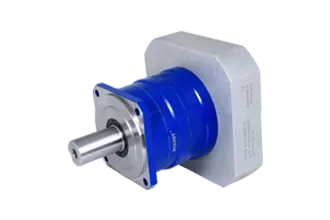
Why More Equipment Manufacturers Are Choosing High-Efficiency Planetary Reducers
As industrial automation systems become faster, more intelligent, and more precise, the expectations placed on transmission components continue to increase.
Machine builders are no longer looking only for a gearbox that can achieve a specific reduction ratio. They need a solution that can simultaneously provide:
High torque output
Precise positioning
Stable operation
Long service life
Low maintenance requirements
Fast delivery
Competitive lifecycle cost
This shift explains why the high efficiency planetary gear reducer has become one of the most widely used transmission technologies across modern industries.
From robotic joints and servo-driven production equipment to semiconductor handling systems and automated warehouses, planetary reducers continue to prove their value through reliable and efficient performance.
However, the performance of a planetary gearbox ultimately depends on the engineering capabilities behind its design and manufacturing.
For buyers evaluating suppliers, understanding the manufacturer's technical strength is just as important as understanding gearbox specifications.
Liangzhi Joint: A Specialized Provider of Precision Drive Integration Solutions
Liangzhi Joint focuses on precision transmission technologies for advanced automation and robotics applications.
As a professional manufacturer specializing in robotic joint modules, harmonic reducers, and high-precision planetary reducers, the company combines extensive industry experience with modern manufacturing capabilities.
Backed by more than 20 years of industry expertise and management experience from its shareholder team, Liangzhi Joint officially launched operations in 2024 with a clear focus on delivering reliable, high-performance transmission solutions for global customers.
The company operates:
R&D centers in Hangzhou and Shenzhen
Modern production facilities in Zhejiang and Dongguan
Advanced testing and quality control systems
Integrated engineering and manufacturing capabilities
This combination of research, development, and production resources enables Liangzhi Joint to support customers throughout the entire product lifecycle—from prototype development to volume production.
High-Precision Planetary Reducers Designed for Modern Automation
A major challenge in motion control systems is balancing efficiency, precision, and durability.
Many reducers perform well in one area but compromise in another.
Liangzhi Joint's planetary reducer development focuses on achieving a practical balance among these critical performance requirements.
Key design objectives include:
High transmission efficiency
Low backlash
High torsional rigidity
Compact dimensions
Stable long-term performance
These characteristics make the products suitable for demanding applications where precision and reliability are equally important.
Examples include:
Industrial robots
Collaborative robots
Automated assembly systems
CNC equipment
Semiconductor machinery
Inspection systems
Packaging automation
Material handling equipment
Precision Performance Down to 1 Arcminute
Positioning accuracy is often one of the most important factors in servo-driven systems.
Even small transmission errors can accumulate over thousands of operating cycles, affecting production quality and repeatability.
Liangzhi Joint has invested heavily in precision manufacturing technologies and process control systems.
As a result, the company has achieved planetary reducer accuracy levels reaching:
Maximum precision: 1 arcminute
This level of accuracy supports demanding motion-control applications where precise positioning is essential.
High-precision reducers help improve:
Repeatability
Path accuracy
Servo response
Process consistency
For robotics and advanced automation equipment, reducing transmission error can directly improve production quality and operational efficiency.
Advanced Engineering and Intellectual Property Strength
Innovation remains a key driver behind transmission technology development.
Liangzhi Joint currently holds more than:
30 national patents
These patents cover multiple aspects of transmission technology and product development.
Continuous investment in research and engineering helps the company:
Improve reducer performance
Enhance manufacturing efficiency
Optimize product reliability
Expand application capabilities
The company's engineering teams in Hangzhou and Shenzhen work closely with customers to address evolving automation requirements across different industries.
Compatibility with Global Industry Standards
Many equipment manufacturers face challenges when changing gearbox suppliers.
Mechanical redesigns often increase development costs and delay projects.
To simplify integration, Liangzhi Joint develops products that align with major international market standards.
The company's planetary reducers offer performance and dimensional compatibility with many well-known European, American, Japanese, and Taiwanese transmission products.
This compatibility can provide several advantages:
Easier system integration
Reduced redesign requirements
Faster qualification processes
Lower engineering costs
For OEMs and machine builders seeking alternative sourcing options, dimensional compatibility can significantly reduce implementation risk.
Fast Delivery for Modern Manufacturing Needs
Lead time has become an increasingly important factor in industrial procurement.
Production schedules are often affected by lengthy component delivery times.
Many traditional gearbox suppliers require extended lead times that can disrupt manufacturing plans.
Liangzhi Joint addresses this challenge through optimized production management and supply chain coordination.
Typical delivery cycles can reach:
5–7 days
For equipment manufacturers operating in fast-moving markets, shorter lead times offer several advantages:
Faster project execution
Reduced inventory requirements
Improved production flexibility
Lower supply chain risk
In many cases, delivery capability becomes a competitive advantage that directly impacts customer success.
What Buyers Should Look for When Selecting a Planetary Reducer Supplier
Choosing the right gearbox supplier involves more than reviewing technical catalogs.
The following evaluation criteria can help buyers make informed decisions.
Engineering Capability
A strong supplier should possess:
Dedicated R&D resources
Product development expertise
Application engineering support
Testing and validation capabilities
Engineering strength often determines how effectively a supplier can support complex projects.
Manufacturing Quality
Evaluate:
Production equipment
Inspection systems
Quality management processes
Traceability procedures
Consistent manufacturing quality is essential for maintaining gearbox performance across production batches.
Product Range
A comprehensive product portfolio allows customers to source multiple transmission solutions from a single supplier.
This may include:
Planetary reducers
Harmonic reducers
Robotic joint modules
Integrated drive solutions
Broader product offerings can simplify supplier management and technical coordination.
Customization Support
Many automation projects require application-specific modifications.
Potential customization requirements include:
Special output shafts
Unique mounting interfaces
Custom ratios
Application-specific sealing systems
Suppliers with flexible engineering resources can often provide better support for specialized projects.
Technical Support
Reliable technical support remains critical throughout the equipment lifecycle.
Important capabilities include:
Product selection assistance
Installation guidance
Troubleshooting support
Performance optimization recommendations
Strong technical support can significantly reduce project risk.
Practical Tips for Maximizing Planetary Reducer Efficiency
Even the best gearbox requires proper implementation to achieve optimal results.
The following practices help maximize efficiency and service life.
Select the Correct Gear Ratio
Avoid excessive reduction ratios whenever possible.
Proper ratio selection improves:
Servo responsiveness
Transmission efficiency
Overall machine performance
Ensure Accurate Alignment
Misalignment creates unnecessary loads on gears and bearings.
Proper installation reduces:
Friction
Wear
Vibration
Energy losses
Follow Lubrication Recommendations
Use manufacturer-recommended lubricants and maintenance intervals.
Effective lubrication helps maintain:
Efficiency
Reliability
Temperature stability
Monitor Operating Conditions
Regular monitoring can identify early signs of performance degradation.
Key parameters include:
Temperature
Noise
Vibration
Torque fluctuations
Predictive maintenance strategies often reduce long-term operating costs.
Avoid Continuous Overloading
Operating within rated parameters preserves gearbox performance and extends service life.
When peak loads are unavoidable, appropriate safety factors should be incorporated during the selection process.
Conclusion
A high efficiency planetary gear reducer is far more than a simple speed reduction device. It is a critical component that influences machine performance, positioning accuracy, energy consumption, reliability, and operating costs.
The unique planetary gear structure enables efficient load distribution, high torque density, compact dimensions, and excellent power transmission efficiency. These advantages make planetary reducers an ideal choice for robotics, CNC machinery, packaging systems, semiconductor equipment, automated logistics, and countless other industrial applications.
As manufacturers continue pursuing higher productivity and lower energy consumption, the importance of transmission efficiency will only increase.
When selecting a gearbox, buyers should evaluate not only specifications such as torque and ratio but also factors including manufacturing quality, precision, engineering support, delivery capability, and long-term reliability.
By combining high-precision manufacturing, advanced engineering expertise, dimensional compatibility with international standards, and fast delivery capabilities, Liangzhi Joint provides practical transmission solutions designed to meet the evolving needs of modern automation.
For machine builders and automation engineers seeking a reliable high efficiency planetary gear reducer, choosing the right transmission partner can play a significant role in achieving better performance, greater efficiency, and long-term operational success.