
 EN
EN
 EN
EN ZH
ZH IT
IT ES
ES TH
TH TR
TR JA
JA PT
PT KO
KO RU
RU FR
FR DE
DE AR
AR
 Home > News Center > Industry news > High Torque Density Actuators for Humanoid Robots
High Torque Density Actuators for Humanoid Robots
As humanoid robotics transitions from research prototypes to real-world industrial and service applications, actuator performance has become one of the most critical determinants of system capability. Among all performance metrics, torque density—the amount of torque generated per unit mass or volume—directly defines how closely a humanoid robot can replicate human-like motion, strength, and agility.
This article explores the engineering principles, system requirements, and design approaches behind high torque density actuators, and why they are fundamental to next-generation humanoid robots.
1. Why Torque Density Matters in Humanoid Robotics
Humanoid robots must operate in environments designed for humans, which imposes strict constraints on:
Compact joint geometry (human-scale limb proportions)
Low system weight for energy efficiency
High dynamic response for balance and locomotion
Safe interaction with humans
In this context, increasing torque alone is not sufficient. A large, heavy actuator may produce high torque but will degrade mobility and energy efficiency.
Torque density becomes the defining metric:
Higher torque density → smaller and lighter joints
Smaller joints → better anthropomorphic design
Lower inertia → faster, more stable motion control
2. Fundamental Physics Behind Actuator Torque
At the joint level, torque is governed by the classical relationship:
τ=rFsin(θ)
Where:
( \tau ): output torque
( r ): lever arm radius
( F ): force generated by the motor/transmission
( \theta ): force application angle
For humanoid robots, the engineering challenge is maximizing τ while minimizing r and total system mass.
3. What Defines a High Torque Density Actuator?
A high torque density actuator is typically characterized by:
3.1 High Torque-to-Weight Ratio
Maximized Nm/kg performance
Lightweight rotor and housing design
High-efficiency magnetic circuits (in servo motors)
3.2 Compact Transmission System
Harmonic drive or planetary gear reduction
Low-backlash mechanical architecture
High reduction ratio without bulk increase
3.3 Integrated Motor + Gear + Control Architecture
Modern humanoid actuators are rarely standalone motors. Instead, they are:
Motor + reducer + encoder + controller integrated into a joint module
Designed as a “servo joint unit”
4. Key Engineering Approaches to Increase Torque Density
4.1 High-Efficiency Motor Design
High copper fill factor stators
Rare-earth permanent magnets (e.g., NdFeB)
Optimized electromagnetic flux paths
4.2 Advanced Gear Reduction Systems
Two dominant architectures:
Harmonic Drive Systems
Extremely high reduction ratios in compact size
Zero backlash characteristics (ideal for precision humanoid joints)
Common in shoulder, wrist, and ankle joints
Planetary Gear Systems
Higher mechanical robustness
Better load distribution
Preferred in hip and knee joints where torque demand is high
4.3 Lightweight Structural Materials
Aluminum alloys (6061, 7075)
Magnesium alloys for ultra-light designs
Carbon composite housings in premium systems
Reducing structural mass directly improves torque density without changing motor output.
4.4 Thermal Management Optimization
High torque density inevitably leads to heat accumulation. Advanced actuators use:
Hollow shaft heat dissipation paths
Integrated heat sinks in housing
Thermal coupling between motor and chassis
Temperature-based torque derating control
5. System-Level Integration: The Joint Module Approach
Modern humanoid robots are moving away from discrete motor assemblies toward integrated joint modules.
A typical high-performance joint module includes:
Brushless servo motor
Precision harmonic or planetary reducer
Absolute encoder system
Embedded drive electronics
Communication interface (CAN, EtherCAT, etc.)
Advantages:
Reduced wiring complexity
Lower assembly tolerance stack-up
Higher mechanical rigidity
Improved reliability in dynamic motion
6. Application in Humanoid Robot Architectures
Different joints in humanoid robots demand different torque density profiles:
| Joint Position | Requirement | Preferred Solution |
|---|---|---|
| Neck / Wrist | High precision, low load | Harmonic actuator |
| Shoulder | Medium torque, wide range | Harmonic + hybrid |
| Hip / Knee | High torque, shock loads | Planetary actuator |
| Ankle | Dynamic stability control | High-response hybrid system |
7. Control System Synergy
High torque density actuators must be paired with equally advanced control systems:
Field-Oriented Control (FOC)
Torque loop + position loop cascaded control
Sensor fusion (encoder + IMU)
Model predictive control for gait stability
Without advanced control, high torque density cannot be effectively utilized.
8. Future Trends in High Torque Density Actuation
The next generation of humanoid actuators will focus on:
8.1 Higher Integration Levels
Motor, reducer, driver, and sensors fully embedded into a single compact module.
8.2 Artificial Muscle-Like Behavior
Variable stiffness actuators
Elastic energy storage systems
Bio-inspired actuation dynamics
8.3 AI-Driven Torque Optimization
Real-time torque adaptation based on terrain and load
Learning-based motion efficiency optimization
8.4 Ultra-Lightweight Robotics
Target torque density improvements driven by:
New magnetic materials
Structural topology optimization
Additive manufacturing (3D printed housings)
9. Conclusion
High torque density actuators are the foundation of functional humanoid robotics. They enable robots to achieve:
Human-scale motion dynamics
Stable bipedal locomotion
Safe physical interaction
Energy-efficient operation
As actuator technology evolves toward higher integration and intelligence, the boundary between mechanical hardware and control software continues to blur—pushing humanoid robots closer to human-level dexterity and responsiveness.

Related news
-
 2026-07-23
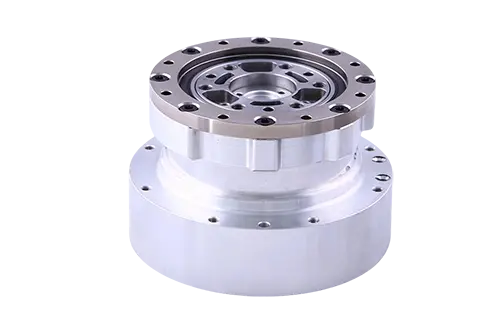
Robotic Planetary Reducer System: Design Principles, Selection Criteria, and Custom Solutions for Advanced Automation
-
 2026-08-07
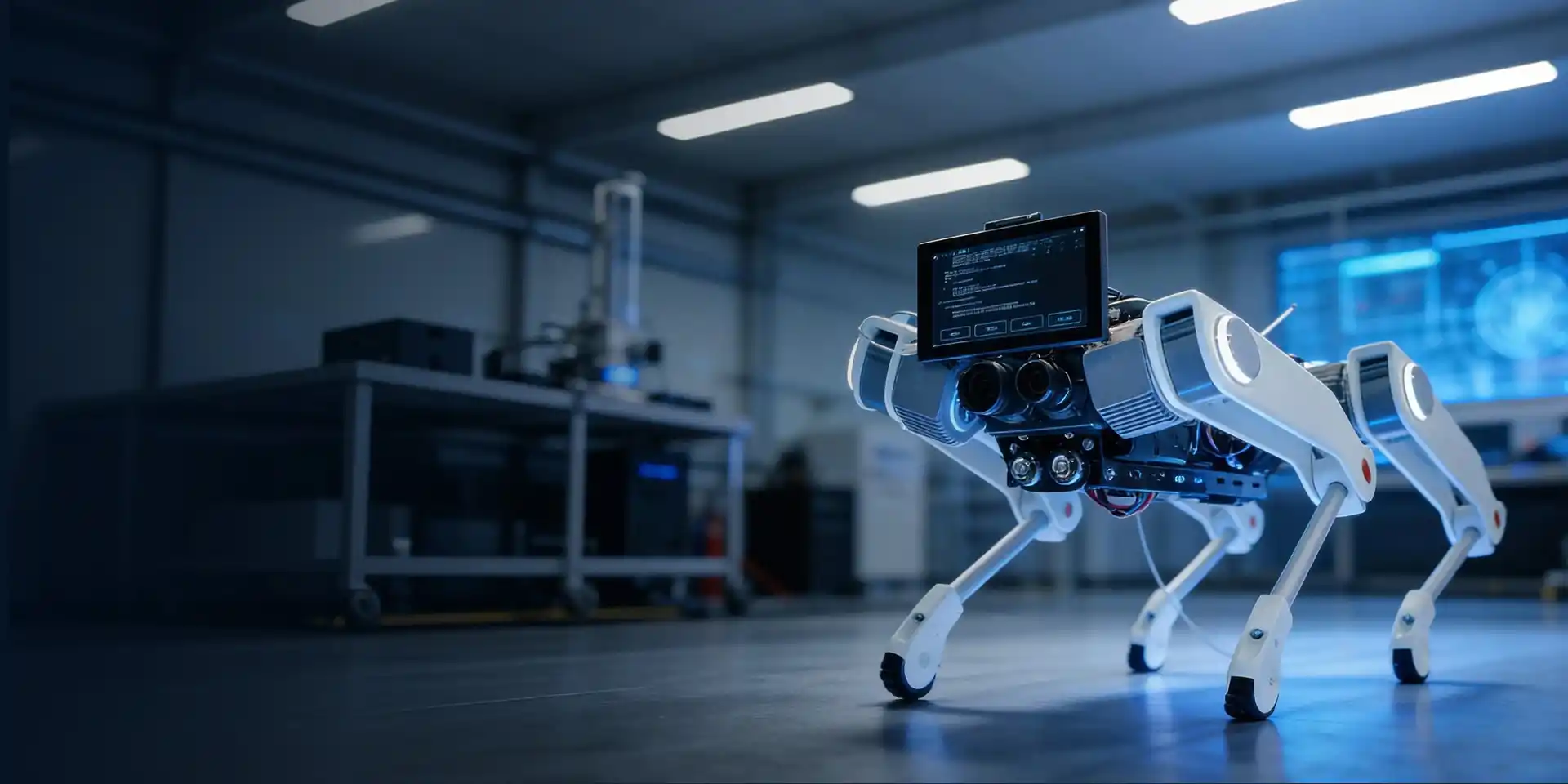
High Dynamic Servo Joint Modules for Legged Robots: Technology Evolution, Precision Transmission Comparison and Future Motion Solutions
-
 2026-08-26
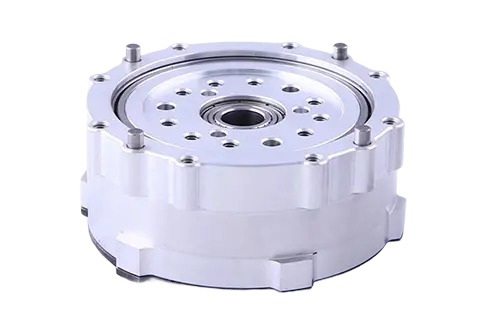
How to Select a Planetary Drive Joint Actuator for Robotic Applications