 EN
EN
 EN
EN ZH
ZH IT
IT ES
ES TH
TH TR
TR JA
JA PT
PT KO
KO RU
RU FR
FR DE
DE AR
AR
 Home > News Center > Industry news > Planetary Reducer for Robotic Precision Drive: A Practical Guide to High-Performance Motion Transmission
Planetary Reducer for Robotic Precision Drive: A Practical Guide to High-Performance Motion Transmission
The rapid evolution of robotics has placed unprecedented demands on motion transmission systems. Whether in humanoid robots, wheeled-legged platforms, collaborative robots, or industrial automation equipment, precision movement depends on one critical component—the robotic drive system. At the heart of many of these systems is the planetary reducer, a compact transmission solution that converts motor speed into controlled torque while maintaining positioning accuracy and operational stability.
As robots become lighter, faster, and more intelligent, the expectations placed on every mechanical component continue to increase. A reducer is no longer viewed as a simple gearbox. Instead, it has become a key contributor to motion accuracy, repeatability, energy efficiency, and long-term reliability. Engineers today evaluate reducers not only by gear ratio but also by backlash, torsional rigidity, transmission efficiency, weight, service life, and integration capability.
For robot manufacturers, selecting the right planetary reducer is an important engineering decision. A well-designed reducer helps improve motion control, reduces mechanical vibration, minimizes maintenance requirements, and supports compact joint designs. These advantages directly affect the overall performance of robotic systems operating in dynamic environments.
This article explores the role of planetary reducers in modern robotic precision drive systems, explains how they work, compares them with other transmission technologies, and provides practical guidance for selecting the appropriate solution for different robotic applications.
The Growing Importance of Robotic Precision Drive Systems
Every robot converts electrical energy into mechanical movement. Between the electric motor and the moving joint lies the transmission system responsible for delivering torque accurately and efficiently.
This transmission system, often referred to as the robotic precision drive, determines how smoothly the robot moves, how accurately it reaches target positions, and how reliably it performs repetitive tasks.
Unlike conventional industrial machinery, robots frequently experience:
Continuous acceleration and deceleration
Frequent direction changes
High dynamic loads
Multi-axis coordinated movement
Compact installation space
Strict weight limitations
These characteristics require transmission components capable of maintaining precision under constantly changing operating conditions.
The planetary reducer has become one of the preferred solutions because it combines high torque density with compact dimensions and excellent mechanical efficiency.
Today, robotic precision drive technology is widely used in:
Humanoid robots
Wheeled-legged robots
Collaborative robots (Cobots)
Industrial robotic arms
Autonomous mobile robots
Medical robotic equipment
Semiconductor automation
Precision assembly systems
Inspection robots
Laboratory automation equipment
Although each application has different performance priorities, they all rely on accurate motion transmission.
What Is a Planetary Reducer?
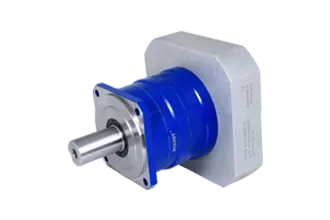
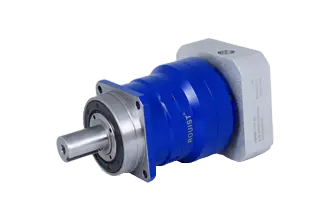
A planetary reducer is a precision gearbox that transmits power through multiple planetary gears rotating around a central sun gear while engaging with an internal ring gear.
Unlike traditional spur gearboxes that transfer torque through only one gear pair, planetary gear mechanisms distribute the load across multiple gears simultaneously.
A typical planetary reducer consists of:
Sun gear
Planet gears
Planet carrier
Internal ring gear
Bearings
Output shaft
Housing
Lubrication system
Because several gears share the transmitted load, planetary reducers achieve significantly higher torque density than many conventional gearbox designs.
The symmetrical load distribution also improves operational stability while reducing gear wear over long service periods.
How Planetary Gear Transmission Works
Understanding the working principle helps explain why planetary reducers are widely adopted in robotic applications.
When the motor rotates the sun gear:
The sun gear drives multiple planet gears.
Planet gears rotate around both their own axes and the central axis.
The internal ring gear constrains planetary motion.
The planet carrier outputs reduced speed with increased torque.
Instead of concentrating force on one gear pair, the transmission distributes mechanical stress across several planetary gears.
This design offers several engineering benefits:
Higher Torque Capacity
Multiple gear contacts increase the allowable torque without dramatically increasing gearbox size.
Better Load Distribution
Balanced forces reduce localized stress and improve fatigue resistance.
Compact Structure
Coaxial input and output shafts simplify robotic joint design.
High Transmission Efficiency
Well-designed planetary reducers often achieve efficiencies above 95%, helping minimize energy losses.
Smooth Rotation
Continuous multi-point gear engagement reduces vibration during motion.
These characteristics make planetary reducers highly suitable for robotic precision drive systems requiring stable performance under dynamic operating conditions.
Why Precision Matters in Robotics
Robotic movement is fundamentally different from conventional mechanical motion.
For example, an industrial conveyor may tolerate positional deviations measured in millimeters, while a collaborative robot assembling electronic components may require repeatability within fractions of a millimeter.
Similarly, humanoid robots must coordinate dozens of joints simultaneously to maintain balance during walking.
Any transmission error accumulates across multiple joints.
Even minor backlash can lead to:
Reduced positioning accuracy
Oscillation during movement
Control instability
Increased vibration
Lower trajectory precision
Poor force control
This explains why precision reducers have become indispensable components in modern robots.
A robotic precision drive is expected to maintain consistent performance throughout millions of operating cycles without significant degradation.
Key Characteristics of a High-Performance Planetary Reducer
Although specifications vary across manufacturers, engineers typically evaluate planetary reducers using several critical parameters.
Backlash
Backlash refers to the angular clearance between mating gears.
Lower backlash generally enables:
More accurate positioning
Improved repeatability
Better servo response
Reduced vibration
Higher motion stability
Precision robotic applications often require backlash measured in only a few arcminutes.
Torsional Rigidity
Torsional rigidity indicates how much the reducer twists under applied torque.
Higher rigidity improves:
Motion responsiveness
Servo tuning
Dynamic accuracy
Force transmission
Low rigidity may introduce delays between motor commands and joint movement.
Transmission Efficiency
Efficiency directly influences robot energy consumption.
Higher efficiency provides:
Lower operating temperatures
Reduced motor load
Longer battery life for mobile robots
Improved overall system efficiency
Planetary reducers generally offer excellent efficiency due to optimized gear meshing.
Torque Density
Torque density represents the amount of torque delivered relative to gearbox size or weight.
For robots, higher torque density means:
Smaller joints
Reduced overall weight
Improved payload capacity
Greater design flexibility
Compact transmission systems are especially valuable for humanoid robots where every kilogram affects balance and energy consumption.
Service Life
Robotic equipment often operates continuously in factories, warehouses, or research environments.
Long service life depends on:
Gear material quality
Heat treatment
Bearing selection
Lubrication design
Precision machining
Assembly accuracy
Reliable reducers minimize maintenance intervals and reduce total operating costs.
Why Planetary Reducers Are Widely Used in Robotic Precision Drive
Planetary reducers occupy an important position within robotic transmission systems because they provide an effective balance between precision, torque capacity, efficiency, and cost.
Compared with many traditional gearbox designs, planetary reducers offer several practical advantages.
Compact Integration
Robotic joints have limited internal space.
The coaxial structure of planetary reducers simplifies mechanical integration while allowing motors, encoders, brakes, and controllers to be packaged within compact joint modules.
This is particularly important for lightweight robotic arms and humanoid robots where installation space is extremely limited.
Excellent Dynamic Performance
Modern robots constantly accelerate, decelerate, and reverse direction.
Planetary reducers are well suited to these dynamic operating conditions because their balanced internal structure minimizes vibration while maintaining smooth torque transmission.
This contributes to more stable motion trajectories and improved control performance.
Flexible Reduction Ratios
Manufacturers can configure planetary reducers with different reduction stages to achieve a wide range of gear ratios.
This flexibility allows engineers to optimize joint performance according to specific application requirements, whether prioritizing speed, torque, or positioning precision.
Planetary Reducer vs. Harmonic Reducer: Choosing the Right Solution
Planetary reducers and harmonic reducers are both widely used in robotic precision drive systems, but they are designed for different engineering priorities. Understanding their strengths and limitations helps robot manufacturers select the most suitable transmission solution instead of relying solely on specifications such as reduction ratio or maximum torque.
Motion Accuracy
Harmonic reducers are known for their extremely low backlash, making them an excellent choice for applications requiring ultra-high positioning accuracy.
Modern precision planetary reducers, however, have significantly narrowed the performance gap. With optimized gear profiles, precision machining, and controlled assembly processes, they can achieve low backlash while providing greater mechanical robustness in many applications.
For robots performing repetitive industrial tasks, a high-quality planetary reducer often delivers sufficient positioning accuracy with higher efficiency and lower ownership costs.
Torque Capacity
Planetary reducers distribute torque across multiple planet gears. This balanced load-sharing mechanism allows them to transmit relatively high torque within a compact housing.
Harmonic reducers concentrate force through a flexible spline, making them suitable for compact precision joints but generally less favorable for applications involving sustained heavy shock loads.
Robotic systems that frequently experience high payloads or rapid acceleration may benefit from the structural advantages of planetary gear transmission.
Efficiency
Transmission efficiency directly affects motor power consumption and heat generation.
Planetary reducers typically provide high mechanical efficiency because rolling contact dominates the gear engagement process.
Higher efficiency contributes to:
Reduced motor current
Lower operating temperature
Improved battery utilization in mobile robots
Reduced energy consumption
Better continuous-duty performance
Durability
Many robotic applications require years of continuous operation with minimal maintenance.
Planetary reducers are recognized for their durable mechanical structure and stable load distribution, making them well suited for long operating cycles in industrial environments.
Proper lubrication, precision bearings, and optimized heat treatment further improve long-term reliability.
Cost Considerations
Engineering decisions rarely depend on performance alone.
Factors such as procurement cost, production scalability, maintenance requirements, and lifecycle value also influence component selection.
For many robot manufacturers, planetary reducers provide an effective balance between precision, durability, efficiency, and overall system cost.
Rather than viewing planetary and harmonic reducers as competing technologies, designers often consider them complementary solutions. Different robot joints may even use different reducer types depending on motion characteristics and load requirements.
Applications of Planetary Reducers in Humanoid Robots
Humanoid robots represent one of the most demanding applications for robotic precision drive systems.
Unlike conventional industrial robots that operate within fixed workspaces, humanoid robots continuously perform coordinated multi-axis movements while maintaining balance and interacting with dynamic environments.
Every joint contributes to overall stability.
Typical humanoid robots contain dozens of actuated joints, including:
Shoulder joints
Elbow joints
Wrist joints
Hip joints
Knee joints
Ankle joints
Waist joints
Neck mechanisms
Each joint requires compact, lightweight, and highly reliable transmission components.
Planetary reducers are commonly selected for joints requiring:
High torque output
Compact dimensions
High transmission efficiency
Stable continuous operation
Excellent structural strength
For example, lower-limb joints experience repeated impact forces during walking, climbing, and running.
Planetary reducers can effectively transmit these cyclic loads while maintaining smooth operation.
Upper-body joints also benefit from compact gear arrangements that simplify integrated actuator design.
As humanoid robots continue evolving toward higher payload capacity and longer operating durations, efficient robotic precision drive systems become increasingly important.
Supporting Wheeled-Legged Robot Mobility
Wheeled-legged robots combine the advantages of wheels and articulated legs.
These hybrid machines operate across environments that are difficult for traditional mobile robots, including:
Uneven terrain
Staircases
Slopes
Gravel roads
Industrial facilities
Construction sites
Unlike standard wheeled platforms, wheeled-legged robots continuously switch between driving and walking modes.
This creates complex motion requirements.
Transmission systems must tolerate:
Frequent acceleration
Sudden braking
Direction reversal
High impact loading
Continuous torque variation
Planetary reducers provide several practical advantages for these operating conditions.
Compact Joint Architecture
Space inside robotic legs is extremely limited.
Compact planetary reducers enable designers to integrate motors, encoders, controllers, and reducers into highly integrated joint modules.
Smaller joints reduce overall robot weight while improving dynamic response.
Reliable Torque Transmission
Walking robots generate continuously changing joint loads.
Balanced planetary gear engagement distributes these forces more evenly than many traditional gearbox configurations.
This improves operational stability while reducing localized gear stress.
High Mechanical Efficiency
Mobile robots depend on battery power.
Higher transmission efficiency directly contributes to longer operating time between charging cycles.
Reducing drivetrain losses becomes increasingly valuable for robots operating in outdoor inspection, logistics, or field service applications.
Planetary Reducers in Collaborative Robots
Collaborative robots, commonly called cobots, are designed to operate safely alongside human workers.
Compared with conventional industrial robots, cobots emphasize:
Smooth movement
Accurate positioning
Compact size
Energy efficiency
Quiet operation
Reliable force control
Transmission quality directly influences each of these performance characteristics.
A planetary reducer contributes to collaborative robot performance by providing predictable torque transmission and stable servo response.
Engineers often prioritize the following features:
Low Backlash
Reduced backlash improves repeatability during assembly operations.
Examples include:
Electronic assembly
Laboratory automation
Precision dispensing
Small-part handling
High Rigidity
Higher torsional rigidity helps maintain stable tool positioning under varying loads.
This is particularly important during screw driving, polishing, inspection, and precision insertion tasks.
Smooth Motion
Well-designed planetary reducers minimize vibration throughout acceleration and deceleration.
Smoother motion improves both productivity and user experience when robots operate close to people.
Industrial Automation Beyond Traditional Robots
Although robotics represents one of the fastest-growing markets, planetary reducers are equally valuable across broader industrial automation.
Modern automated equipment increasingly requires compact motion systems capable of delivering precise and repeatable movement.
Typical applications include:
Automated assembly equipment
Packaging machinery
Semiconductor production
CNC auxiliary systems
Precision positioning platforms
Inspection equipment
Medical devices
Optical manufacturing
Laboratory automation
Material handling equipment
In many of these systems, robotic precision drive technology improves production consistency while reducing maintenance requirements.
For equipment manufacturers, selecting standardized planetary reducer platforms also simplifies product development and inventory management.
Key Factors When Selecting a Planetary Reducer
Choosing a planetary reducer should begin with a clear understanding of the application's operating conditions rather than focusing on a single specification.
Output Torque Requirements
The reducer must provide sufficient continuous and peak torque for the intended motion profile.
Undersized reducers may experience accelerated wear, while oversized models can increase cost and weight unnecessarily.
Reduction Ratio
The selected reduction ratio affects:
Output speed
Motor utilization
Positioning resolution
Dynamic response
An appropriate balance should be determined according to the robot's motion requirements.
Backlash Requirements
Different robotic systems have different precision expectations.
For example:
Pick-and-place robots require excellent repeatability.
Mobile robots often prioritize efficiency and durability.
Humanoid robots require a balance between precision and torque capacity.
Selecting unnecessarily low backlash may increase cost without providing practical benefits.
Installation Space
Joint geometry determines allowable gearbox dimensions.
Designers should evaluate:
Diameter
Length
Mounting interface
Shaft configuration
Weight
Compact solutions simplify mechanical integration.
Duty Cycle
Continuous industrial operation places different demands on reducers than intermittent laboratory equipment.
Duty cycle affects:
Lubrication selection
Bearing life
Thermal management
Housing design
Understanding actual operating conditions helps maximize service life.
Manufacturing Quality Determines Long-Term Performance
The performance of a planetary reducer is not defined solely by its design. Even an optimized gear structure cannot deliver consistent results without precise manufacturing processes and rigorous quality control. For robot manufacturers, the repeatability and reliability of every reducer directly influence the performance of the finished machine.
As robotic systems become more sophisticated, the acceptable margin for mechanical error becomes increasingly small. Tiny deviations in gear geometry or assembly alignment can lead to higher noise, increased vibration, reduced efficiency, or premature wear.
A high-quality planetary reducer is the result of careful engineering throughout the manufacturing process rather than a single machining operation.
Precision Gear Machining
Gear accuracy is one of the most important factors affecting transmission performance.
Modern robotic reducers rely on precision manufacturing techniques to achieve consistent tooth profiles and smooth meshing characteristics.
Key machining processes typically include:
CNC turning
Gear hobbing
Gear shaping
Gear grinding
Precision honing
Surface finishing
These processes help ensure:
Stable tooth engagement
Lower transmission noise
Reduced vibration
Consistent backlash
Improved load distribution
Even slight improvements in machining accuracy can significantly enhance the overall performance of a robotic precision drive.
Material Selection for Robotic Planetary Reducers
Robotic joints experience continuous cyclic loading throughout their service life. Material selection therefore plays a critical role in maintaining strength, wear resistance, and dimensional stability.
Manufacturers typically evaluate materials based on several engineering properties:
Tensile strength
Fatigue resistance
Surface hardness
Impact toughness
Thermal stability
Machinability
High-strength alloy steels are commonly used for gears because they provide an excellent balance between durability and manufacturability.
Bearings, shafts, and housings are also selected according to expected operating conditions, including load, rotational speed, and environmental exposure.
Rather than focusing on a single premium material, experienced manufacturers optimize the combination of materials across the entire transmission system.
Heat Treatment and Surface Engineering
Heat treatment is essential for improving gear durability.
Without proper hardening, gear teeth may deform or wear rapidly under repeated loading.
Common heat treatment objectives include:
Increasing surface hardness
Improving fatigue strength
Enhancing wear resistance
Maintaining core toughness
Reducing deformation during operation
Surface finishing processes can further improve gear performance by reducing friction and enhancing lubrication retention.
For robotic applications requiring millions of operating cycles, these manufacturing details have a measurable impact on product lifespan.
Assembly Accuracy Is Just as Important as Component Accuracy
Precision components alone cannot guarantee a high-performance reducer.
Assembly quality determines whether each component functions as intended within the complete transmission system.
Critical assembly procedures typically include:
Bearing preload adjustment
Gear alignment verification
Shaft concentricity inspection
Backlash measurement
Torque testing
Lubrication control
Modern production lines often use dedicated assembly fixtures and automated measurement equipment to improve consistency.
This systematic approach helps reduce variation between production batches while maintaining stable product quality.
Quality Inspection Throughout Production
Reliable robotic components require inspection at multiple stages rather than only after final assembly.
Typical quality control procedures include:
Incoming Material Inspection
Raw materials are verified before production begins.
Checks may include:
Material certification
Hardness testing
Dimensional inspection
Surface condition evaluation
In-Process Inspection
During machining, manufacturers monitor:
Gear dimensions
Tooth profile accuracy
Runout
Surface finish
Concentricity
Early detection helps prevent defective components from progressing through production.
Final Performance Testing
Completed reducers are typically evaluated for:
Backlash
Transmission efficiency
Rotational smoothness
Noise level
Torque capacity
Temperature rise
Vibration
These tests help ensure every reducer meets its intended performance specifications before delivery.
The Advantages of Integrated Joint Modules
As robotics continues to evolve, many manufacturers are moving away from purchasing motors, reducers, encoders, and controllers separately.
Instead, integrated joint modules combine multiple functions into a compact, pre-engineered assembly.
A typical integrated joint module may include:
Servo motor
Planetary reducer
Encoder
Brake
Bearings
Housing
Drive interface
This integrated approach simplifies system design while reducing engineering effort during robot development.
Faster Development Cycles
Using standardized joint modules allows robot manufacturers to shorten product development timelines.
Instead of designing every transmission component independently, engineers can focus on higher-level system optimization, software development, and application-specific functions.
Improved Reliability
Integrated modules are assembled and tested as complete systems.
Because the motor, reducer, and mechanical interfaces are designed to work together, potential compatibility issues are minimized.
This contributes to more stable performance during long-term operation.
Easier Maintenance
Modular joint assemblies also simplify servicing.
If maintenance becomes necessary, replacing a complete module is often faster than disassembling multiple individual components.
For equipment operating in production environments, reduced maintenance time translates into higher overall equipment availability.
Matching the Right Reducer to Different Robot Joints
Not every robotic joint has the same performance requirements. Selecting a reducer based on the specific function of each joint can improve both system efficiency and overall cost-effectiveness.
Shoulder and Hip Joints
These joints typically support higher loads and require substantial torque output.
Important considerations include:
High torque density
Strong structural rigidity
Long service life
Stable continuous operation
Planetary reducers are often well suited to these requirements due to their balanced load-sharing characteristics.
Elbow and Knee Joints
These joints combine relatively high loads with frequent acceleration and deceleration.
Design priorities generally include:
Compact size
High efficiency
Smooth motion
Reliable fatigue performance
Wrist and End-Effector Joints
These joints often prioritize precision and responsiveness over maximum torque.
Engineers may select compact planetary reducers or other precision transmission solutions depending on the application's accuracy requirements.
Selecting reducers according to actual joint functions helps optimize robot performance while avoiding unnecessary weight or cost.
Common Design Challenges in Robotic Precision Drive Systems
As robots become more capable, engineers face increasingly complex design trade-offs.
Some of the most common challenges include:
Balancing Torque and Weight
Higher torque generally requires larger transmission components.
However, increasing joint weight can reduce robot agility and energy efficiency.
Planetary reducers help address this challenge by providing relatively high torque density within compact dimensions.
Managing Thermal Performance
Heat generated by motors and gearboxes affects both efficiency and component life.
Effective thermal management may involve:
Optimized housing design
High-efficiency gear transmission
Appropriate lubrication
Material selection
Reducing transmission losses helps maintain stable operating temperatures.
Minimizing Noise and Vibration
In collaborative robots and service robots, quiet operation improves the working environment.
Precision machining, optimized gear geometry, and accurate assembly all contribute to smoother and quieter transmission performance.
Future Trends in Robotic Precision Drive
The robotics industry continues to evolve rapidly, creating new opportunities for transmission technology.
Several trends are shaping the future of planetary reducer development.
Higher Torque Density
Robot manufacturers increasingly seek smaller and lighter components without sacrificing output capability.
Advances in materials, gear design, and manufacturing processes are enabling more compact reducers with improved performance.
Greater System Integration
Future robotic joints are expected to integrate even more functions into a single module, including advanced sensing, intelligent control, and optimized thermal management.
Integrated actuator solutions reduce wiring complexity and simplify robot assembly.
Improved Manufacturing Precision
Continuous improvements in CNC machining, automated inspection, and digital manufacturing are helping reduce production variation while enhancing consistency.
These advancements support higher-quality robotic precision drive systems for demanding applications.
Customization for Specific Applications
Rather than relying solely on standard catalog products, robot manufacturers increasingly require customized transmission solutions tailored to unique payloads, joint geometries, and motion characteristics.
Component suppliers capable of collaborative engineering will play a growing role in future robotics development.
Engineering Support Is Becoming a Competitive Advantage
As the robotics industry matures, purchasing decisions are increasingly influenced by engineering capability rather than component specifications alone. Robot manufacturers are looking for suppliers that can contribute to product development, shorten design cycles, and provide dependable technical support throughout the project.
For upstream component suppliers, this means offering more than standard catalog products. Engineering collaboration, customization, and application expertise have become equally important.
Areas where technical support can add value include:
Selecting the appropriate reduction ratio for different joints
Matching torque capacity to dynamic load requirements
Optimizing reducer dimensions for compact joint designs
Assisting with motor and encoder integration
Providing interface customization for OEM platforms
Supporting prototype development and validation
Early collaboration between robot manufacturers and transmission specialists often helps identify potential design challenges before they become production issues, reducing both development time and engineering costs.
Selecting a Reliable Planetary Reducer Supplier
Choosing a supplier involves more than comparing technical specifications. Long-term product performance depends on manufacturing capability, quality management, engineering resources, and supply chain stability.
When evaluating a supplier, robot manufacturers should consider the following factors.
Precision Manufacturing Capability
High-performance robotic reducers require consistent production quality. Look for suppliers with advanced machining equipment, standardized assembly processes, and comprehensive inspection systems that ensure repeatable product performance.
Product Portfolio
Robotic applications vary widely in terms of payload, motion profile, and installation constraints. Suppliers offering multiple product families—including planetary reducers, harmonic reducers, and integrated joint modules—can provide greater flexibility for different projects.
Customization Support
Many robotic systems require customized mounting interfaces, shaft configurations, reduction ratios, or integrated actuator solutions. A supplier with engineering customization capabilities can better support unique application requirements.
Stable Production Capacity
As robotic products move from prototype development to mass production, stable manufacturing capacity becomes increasingly important. Reliable delivery schedules help manufacturers maintain production continuity and reduce supply chain risks.
Technical Documentation
Complete technical documentation simplifies product selection and system integration. Useful resources may include:
3D CAD models
Performance curves
Installation drawings
Technical datasheets
Operating guidelines
Maintenance recommendations
Well-prepared documentation reduces engineering effort and accelerates product development.
Supporting the Next Generation of Robotic Precision Drive Solutions
The demand for high-performance robotic systems continues to expand across industries. From intelligent manufacturing and warehouse automation to healthcare, service robotics, and advanced research, designers are seeking transmission solutions that combine precision, efficiency, and long-term reliability.
As one of the core components within a robotic precision drive system, the planetary reducer plays a significant role in achieving these objectives. Its compact structure, high torque density, smooth power transmission, and excellent mechanical efficiency make it suitable for a wide range of robotic applications.
At the same time, the market is moving toward higher levels of integration. Rather than sourcing individual components separately, many robot manufacturers prefer complete joint solutions that simplify assembly, reduce interface complexity, and improve overall system consistency.
This trend creates new opportunities for suppliers capable of delivering both precision reducers and integrated motion solutions.
Liangzhi Joint: Precision Transmission Solutions for Robot Manufacturers
Liangzhi Joint specializes in the development and production of robotic joint modules and precision transmission components for robot manufacturers and automation equipment developers.
Rather than building complete robots or logistics systems, the company focuses on the upstream technologies that enable reliable robotic motion.
Its core product portfolio includes:
Planetary joint modules
Harmonic joint modules
High-precision planetary reducers
Harmonic reducers
Integrated direct-drive motor modules
These products are designed to support a broad range of robotic applications, including:
Humanoid robots
Wheeled-legged robots
Collaborative robots
Industrial robotic arms
Intelligent automation equipment
Other advanced robotic systems requiring compact and precise motion transmission
By concentrating on core transmission technologies, Liangzhi Joint helps customers build efficient, lightweight, and high-performance robotic joints tailored to their specific application requirements.
Engineering-Oriented Collaboration
Every robotic platform presents different engineering challenges. Factors such as payload, joint configuration, motion profile, installation space, and control strategy all influence reducer selection.
Liangzhi Joint works with equipment manufacturers during the development process to support:
Joint transmission architecture selection
Precision reducer matching
Compact mechanical integration
Performance optimization
Prototype verification
Product customization for OEM and ODM projects
This engineering-focused approach helps customers shorten development cycles while improving overall system performance.
Commitment to Quality
Reliable robotic components require consistency throughout the manufacturing process. Liangzhi Joint emphasizes precision machining, controlled assembly, and systematic quality inspection to ensure that each reducer and joint module meets demanding industrial requirements.
By combining manufacturing expertise with continuous product development, the company aims to provide dependable transmission solutions for the evolving robotics industry.
Conclusion
The performance of a robot depends on the coordination of many components, but few are as fundamental as the transmission system connecting the motor to the moving joint. A well-designed planetary reducer not only multiplies torque but also improves positioning accuracy, enhances dynamic response, and contributes to the long-term reliability of the entire machine.
As robotics advances toward higher precision, lighter structures, and greater intelligence, the requirements placed on robotic precision drive technologies will continue to grow. Engineers must evaluate transmission solutions from multiple perspectives, including backlash, rigidity, efficiency, durability, integration, and lifecycle cost.
Planetary reducers remain a practical and versatile choice for many robotic applications because they offer an effective balance of compact size, torque density, transmission efficiency, and mechanical robustness. Whether used in humanoid robots, wheeled-legged platforms, collaborative robots, or industrial automation equipment, they provide the stable motion transmission required for modern robotic systems.
For manufacturers developing next-generation robots, selecting the right transmission partner is just as important as selecting the right component. Working with an experienced supplier that understands robotic joint design, precision manufacturing, and system integration can simplify development, improve product consistency, and support long-term innovation.
As a dedicated supplier of robotic joint modules and precision reducers, Liangzhi Joint remains focused on delivering reliable motion transmission solutions that help robot manufacturers build more capable, efficient, and dependable robotic systems.