
 EN
EN
 EN
EN ZH
ZH IT
IT ES
ES TH
TH TR
TR JA
JA PT
PT KO
KO RU
RU FR
FR DE
DE AR
AR
 Home > News Center > Industry news > High Torque Planetary Reducer Robotics: Enabling the Next Generation of Intelligent Motion Systems
High Torque Planetary Reducer Robotics: Enabling the Next Generation of Intelligent Motion Systems
In modern robotics engineering, mechanical precision and torque density determine whether a system can perform real-world industrial tasks or remain a laboratory prototype. Among all motion transmission technologies, the high torque planetary reducer robotics solution has emerged as a foundational component for robotic joints, servo systems, and automation platforms.
A planetary reducer is not simply a gear assembly; it is a compact torque amplification mechanism that enables small motors to drive heavy loads with stability and precision. In robotics applications, this capability is essential for robotic arms, AGVs, humanoid systems, CNC automation, and collaborative robots. Companies such as Liangzhi Joint, specializing in high torque planetary reducer robotics, are driving innovations that directly impact industrial efficiency, precision control, and system miniaturization.
This article explores in depth how high torque planetary reducer robotics technology works, why it is essential in modern automation, and how it is evolving to meet the increasing demands of intelligent robotic systems.
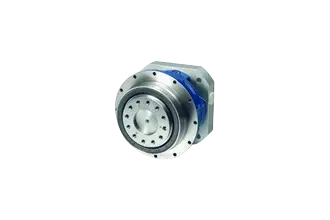
1. Understanding High Torque Planetary Reducer Robotics Systems
A high torque planetary reducer robotics system is based on a planetary gear mechanism consisting of three main components: a sun gear, multiple planet gears, and an outer ring gear. The motor drives the sun gear, which distributes torque across multiple planet gears, significantly increasing output torque while maintaining compact dimensions.
This structure allows load sharing across multiple gear contact points, which is why high torque planetary reducer robotics designs are widely used in systems requiring both strength and precision.
In robotics, this mechanism ensures:
High torque density in compact spaces
Low backlash for precise positioning
High efficiency under continuous load
Stable operation in dynamic environments
These advantages make high torque planetary reducer robotics technology essential for modern industrial automation systems.
2. Why Robotics Systems Depend on High Torque Planetary Reducers
Robotic systems require motion solutions that are not only powerful but also precise and repeatable. A standard motor alone cannot provide sufficient torque for heavy-duty robotic joints. This is where high torque planetary reducer robotics solutions become critical.
In industrial robotics, applications include:
Multi-axis robotic arms
Welding and assembly robots
Autonomous guided vehicles (AGVs)
Medical robotic systems
Logistics automation platforms
Each of these systems relies on high torque planetary reducer robotics components to translate high-speed motor rotation into controlled, high-force motion.
Without planetary reducers, robotic actuators would require significantly larger motors, increasing cost, size, and energy consumption.
3. Working Principle of High Torque Planetary Reducer Robotics
The operation of a high torque planetary reducer robotics system is based on epicyclic gear motion. The sun gear rotates, causing multiple planet gears to orbit while engaging with the internal ring gear. The output is transmitted through a carrier structure.
This multi-contact load distribution is what enables torque multiplication.
The key functional characteristics include:
Torque amplification: Output torque increases proportionally to gear ratio
Speed reduction: Motor speed is reduced for controlled motion
Load sharing: Multiple gears share mechanical stress
Compact coaxial design: Input and output share the same axis
Modern high torque planetary reducer robotics systems are engineered using precision grinding, hardened steel alloys, and optimized tooth geometry to maximize efficiency and reduce backlash.
Research in robotics dynamics confirms that planetary reducers are essential for achieving high-torque outputs in compact actuator systems while maintaining mechanical stability under dynamic loads (MDPI).
4. Advantages of High Torque Planetary Reducer Robotics Technology
The rapid adoption of high torque planetary reducer robotics solutions is driven by several engineering advantages:
4.1 High Torque Density
The most important benefit is torque density. Multiple planet gears distribute force evenly, allowing compact gearboxes to generate extremely high output torque. This makes high torque planetary reducer robotics systems ideal for space-constrained robotic joints.
4.2 Compact Structure
Robotic systems often require embedded actuators. Planetary reducers provide coaxial alignment, allowing motors and reducers to be integrated into compact joint modules.
4.3 High Efficiency
Modern planetary gear systems achieve efficiency levels between 90% and 97%, making high torque planetary reducer robotics solutions suitable for continuous industrial operation.
4.4 Low Backlash and High Precision
Precision-ground gear teeth reduce mechanical play, ensuring accurate positioning. This is critical in robotics applications requiring repeatability.
4.5 High Rigidity and Load Stability
Robotic joints must resist external forces and dynamic loads. The structural rigidity of high torque planetary reducer robotics systems ensures stability even under high stress conditions.
5. Role of High Torque Planetary Reducers in Robotics Engineering
In robotics engineering, the actuator is the heart of motion control. A high torque planetary reducer robotics system is typically integrated with:
Servo motors
BLDC motors
Torque motors
Encoder feedback systems
This integration forms a complete motion unit capable of precise angular control.
In robotic arms, for example, each joint may rely on a separate planetary reducer to control:
Shoulder torque
Elbow lifting force
Wrist rotational precision
Without high torque planetary reducer robotics systems, achieving smooth multi-joint coordination would be mechanically inefficient.
6. Application Scenarios of High Torque Planetary Reducer Robotics
6.1 Industrial Automation
Factories rely heavily on robotic arms powered by high torque planetary reducer robotics systems for:
Welding
Pick-and-place operations
CNC auxiliary motion
6.2 Collaborative Robots (Cobots)
Cobots require safe, controlled torque output. Planetary reducers ensure smooth force transmission without sudden motion spikes.
6.3 Autonomous Mobile Robots
AGVs and AMRs depend on torque-efficient drive systems, where high torque planetary reducer robotics enables high load transport with energy efficiency.
6.4 Medical Robotics
Surgical robots require extremely precise motion control. Low backlash planetary reducers are essential for stability.
6.5 Humanoid Robotics
Humanoid systems require compact joint actuators capable of mimicking human motion, making high torque planetary reducer robotics a core enabling technology.
7. Design Considerations in High Torque Planetary Reducer Robotics Systems
Engineering a reliable high torque planetary reducer robotics system requires careful optimization of multiple parameters:
7.1 Gear Ratio Selection
Higher gear ratios increase torque but reduce speed. Robotics designers must balance responsiveness and load capacity.
7.2 Material Selection
Common materials include:
Hardened alloy steel
Carburized steel
High-strength aluminum housing
7.3 Backlash Control
Low backlash is critical for precision robotics. Preloaded bearing systems and precision machining are required.
7.4 Thermal Management
High torque operation generates heat, requiring lubrication systems and thermal-resistant materials.
7.5 Lubrication Systems
Proper lubrication ensures longevity and reduces wear in continuous robotic operation.
8. High Torque Planetary Reducer Robotics in Intelligent Automation
With the rise of Industry 4.0, high torque planetary reducer robotics systems are increasingly integrated into intelligent manufacturing systems.
Key trends include:
AI-driven motion control
Smart servo feedback loops
Predictive maintenance systems
Energy-efficient actuator design
These developments are transforming planetary reducers from mechanical components into intelligent motion systems.
9. Liangzhi Joint and High Torque Planetary Reducer Robotics Innovation
Liangzhi Joint focuses on developing advanced high torque planetary reducer robotics solutions for modern automation industries.
Key focus areas include:
High-load robotic joint reducers
Compact integrated servo modules
Custom torque optimization systems
Robotics-grade precision transmission units
The company’s engineering approach emphasizes balancing torque output, size optimization, and durability—three core requirements of modern robotic systems.
In robotic integration, Liangzhi Joint’s high torque planetary reducer robotics products are designed to support:
High-cycle industrial operations
Precision robotic positioning
Heavy-load automation systems
10. Performance Optimization of High Torque Planetary Reducer Robotics Systems
To maximize performance, engineers optimize:
10.1 Load Distribution Efficiency
Even load sharing across planetary gears reduces wear and increases lifespan.
10.2 Vibration Reduction
Advanced tooth profiles reduce operational noise and vibration.
10.3 Efficiency Optimization
Surface finishing and lubrication reduce friction losses.
10.4 Structural Reinforcement
Reinforced carriers improve resistance to torsional stress.
11. Future Development of High Torque Planetary Reducer Robotics
The future of high torque planetary reducer robotics is evolving toward:
Ultra-compact joint modules
Integrated motor-reducer systems
AI-optimized torque control
Lightweight composite materials
High-speed precision robotics applications
Emerging robotics fields such as humanoid robots and surgical automation will heavily depend on improved planetary reducer technology.
Conclusion
The high torque planetary reducer robotics technology is a core mechanical foundation of modern robotics systems. It enables compact, high-efficiency, and high-precision motion control that is essential across industrial automation, collaborative robotics, medical systems, and humanoid robotics.
As robotics continues to evolve toward smarter and more autonomous systems, companies like Liangzhi Joint play a crucial role in advancing high torque planetary reducer robotics solutions that meet the increasing demands of torque density, precision, and integration.
In essence, without high torque planetary reducers, modern robotics as we know it would not be possible.

Related news
-
 2026-08-07
China Robotic Planetary Joint Module Suppliers: Advanced Motion Solutions for Humanoid and Legged Robots
-
 2026-07-03
Planetary Reducer Robotics Actuator Module: Engineering Guide for High-Precision Motion Systems
-
 2026-09-10
Heavy Duty Planetary Reducer: Selection, Design and Application Guide