 EN
EN
 EN
EN ZH
ZH IT
IT ES
ES TH
TH TR
TR JA
JA PT
PT KO
KO RU
RU FR
FR DE
DE AR
AR
 Home > News Center > Industry news > Planetary Drive Module for Robots: Advanced Motion Solutions for Modern Robotics
Planetary Drive Module for Robots: Advanced Motion Solutions for Modern Robotics
Introduction to Planetary Drive Module for Robots
The rapid evolution of robotics across industrial automation, service systems, and intelligent manufacturing has significantly increased demand for high-performance motion transmission systems. Among these, the planetary drive module for robots has emerged as a core mechanical component enabling precision, torque density, and compact integration. Liangzhi Joint focuses on delivering engineered solutions that support next-generation robotic architectures, where stability and efficiency are essential for performance consistency.
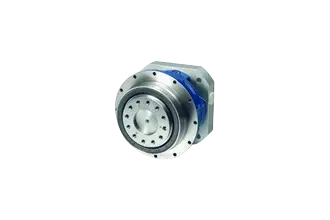
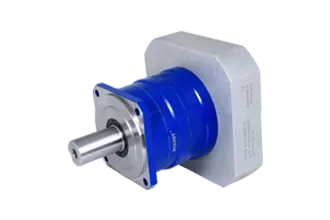
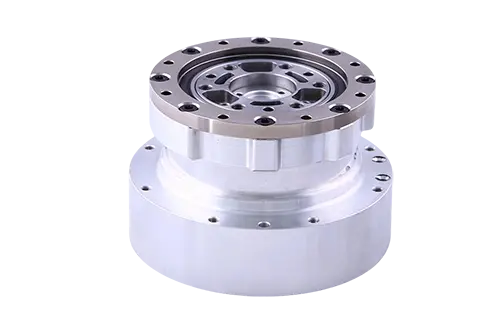
A planetary drive module for robots is designed to transmit power through a planetary gear arrangement that distributes load across multiple gear contacts. This structural advantage allows robots to achieve higher torque output while maintaining compact dimensions. In modern robotics, where space optimization and payload efficiency are critical, such modules are becoming indispensable in articulated arms, collaborative robots, and mobile robotic platforms.
As industries increasingly rely on automation, the demand for durable and high-precision motion systems continues to rise. The planetary drive module for robots plays a vital role in meeting these requirements by ensuring smooth transmission, reduced backlash, and long operational lifespan.
Structural Principles of Planetary Drive Module for Robots
The fundamental design of a planetary drive module for robots consists of a sun gear, multiple planet gears, a ring gear, and a carrier system. This configuration allows torque to be distributed evenly, reducing stress concentration on individual gear teeth. Liangzhi Joint integrates optimized gear ratios and precision machining to enhance transmission efficiency and mechanical stability.
One of the key advantages of the planetary drive module for robots is its coaxial structure, which aligns input and output shafts along the same axis. This design minimizes vibration and improves rotational accuracy, making it ideal for robotic joints that require smooth and controlled movement.
Additionally, the compact architecture of the planetary drive module for robots enables integration into confined robotic joints without compromising power output. This is particularly important in humanoid robotics and industrial automation arms, where multiple axes of movement must be tightly coordinated within limited spatial constraints.
Advantages of Planetary Drive Module for Robots in Industrial Applications
In industrial environments, efficiency, durability, and precision are critical factors influencing system performance. The planetary drive module for robots offers several advantages that make it a preferred choice for engineers and system designers.
First, it provides high torque density, allowing robots to perform heavy-load tasks without increasing motor size. The planetary drive module for robots distributes mechanical load across multiple contact points, reducing wear and extending service life.
Second, it ensures high transmission efficiency. With optimized gear meshing, energy loss is minimized, which improves overall system performance. In automated production lines, this efficiency directly translates into reduced energy consumption and operational costs.
Third, the planetary drive module for robots offers excellent backlash control. This is essential in precision tasks such as assembly, welding, and semiconductor handling, where even minimal positional deviation can affect product quality.
Application Scenarios of Planetary Drive Module for Robots
The versatility of the planetary drive module for robots allows it to be widely used across multiple industries. In industrial robotics, it is commonly applied in robotic arms used for welding, painting, and assembly. These applications require consistent torque output and precise angular positioning, both of which are supported by planetary drive technology.
In collaborative robots (cobots), the planetary drive module for robots ensures safe interaction between humans and machines by providing smooth motion control and responsive feedback. Its compact size also allows integration into lightweight robotic joints.
Medical robotics is another important field where the planetary drive module for robots is utilized. Surgical robots and rehabilitation devices rely on precise motion control to ensure patient safety and procedural accuracy.
In logistics and warehousing automation, mobile robots equipped with planetary drive module for robots systems can achieve stable navigation and load handling, improving operational efficiency in supply chain environments.
Engineering Design Considerations for Planetary Drive Module for Robots
Designing a high-performance planetary drive module for robots requires careful consideration of mechanical strength, material selection, and gear precision. Liangzhi Joint emphasizes the importance of hardened alloy steel and advanced heat treatment processes to ensure durability under continuous load conditions.
Gear ratio optimization is another critical factor in the planetary drive module for robots design process. Different robotic applications require varying torque-speed balances, and selecting the appropriate ratio directly affects system responsiveness and power efficiency.
Lubrication systems also play a key role. A well-designed planetary drive module for robots incorporates efficient lubrication channels to reduce friction and heat generation, ensuring stable long-term operation.
Furthermore, tolerance control and machining accuracy are essential. Even slight deviations in gear geometry can impact the performance of a planetary drive module for robots, leading to vibration, noise, or reduced efficiency.
Performance Optimization in Planetary Drive Module for Robots
To achieve optimal performance, continuous improvements in the planetary drive module for robots focus on reducing energy loss, enhancing stiffness, and improving load distribution. Advanced simulation tools are often used to analyze stress distribution across gear surfaces, allowing engineers to refine structural design before manufacturing.
Dynamic balancing is another important aspect. A well-optimized planetary drive module for robots minimizes rotational imbalance, resulting in smoother motion and reduced mechanical wear.
Thermal management is also crucial, especially in high-speed robotic systems. Efficient heat dissipation ensures that the planetary drive module for robots maintains performance stability even under continuous operation.
Noise reduction techniques, such as precision grinding and optimized gear tooth profiles, further enhance the usability of the planetary drive module for robots in environments requiring low acoustic output, such as laboratories or medical facilities.
Integration of Planetary Drive Module for Robots in Smart Manufacturing
Smart manufacturing systems rely heavily on automation and digital control technologies. The planetary drive module for robots serves as a foundational component in these systems by enabling precise motion execution.
When integrated with sensors and control algorithms, the planetary drive module for robots supports real-time feedback and adaptive motion control. This allows robotic systems to adjust dynamically to changes in workload or environmental conditions.
In Industry 4.0 environments, predictive maintenance systems also benefit from data collected through the planetary drive module for robots. By monitoring vibration, temperature, and torque levels, potential failures can be detected early, reducing downtime and maintenance costs.
The modular nature of the planetary drive module for robots further simplifies system upgrades and customization, making it highly suitable for flexible manufacturing setups.
Reliability and Durability of Planetary Drive Module for Robots
Reliability is a defining characteristic of any robotic motion system. The planetary drive module for robots is engineered to withstand long-term operational stress while maintaining consistent performance.
Through uniform load distribution, the planetary drive module for robots reduces localized wear, significantly extending service life. This makes it ideal for continuous production environments where downtime must be minimized.
Corrosion-resistant coatings and high-strength materials further enhance the durability of the planetary drive module for robots, allowing it to operate in harsh industrial conditions such as high humidity, dust exposure, or chemical environments.
Rigorous testing procedures, including fatigue testing and load simulation, ensure that each planetary drive module for robots meets strict quality standards before deployment.
Future Development Trends of Planetary Drive Module for Robots
As robotics technology continues to evolve, the planetary drive module for robots is expected to become even more advanced. One major trend is miniaturization, enabling smaller yet more powerful robotic systems for precision applications.
Another trend involves the integration of smart sensing capabilities. Future versions of the planetary drive module for robots may include embedded sensors that monitor performance in real time, enabling predictive analytics and autonomous system optimization.
Lightweight composite materials are also being explored to reduce overall system weight while maintaining strength. This will further enhance the efficiency of the planetary drive module for robots in mobile and aerial robotics.
In addition, improvements in manufacturing techniques such as additive manufacturing and ultra-precision machining will contribute to higher performance and lower production costs.
Conclusion
The planetary drive module for robots represents a critical advancement in robotic motion technology, combining high torque density, precision control, and compact design. Liangzhi Joint continues to focus on engineering excellence in this field, supporting industries that rely on automation and intelligent systems.
From industrial automation to medical robotics and smart manufacturing, the planetary drive module for robots plays an essential role in enabling reliable and efficient motion control. As technology advances, its importance will only continue to grow, shaping the future of robotics with greater precision, intelligence, and adaptability.