 EN
EN
 EN
EN ZH
ZH IT
IT ES
ES TH
TH TR
TR JA
JA PT
PT KO
KO RU
RU FR
FR DE
DE AR
AR
 Home > News Center > Industry news > Compact Harmonic Joint Module: Redefining Precision, Stability, and Dynamic Performance in Advanced Motion Systems
Compact Harmonic Joint Module: Redefining Precision, Stability, and Dynamic Performance in Advanced Motion Systems
Introduction: Why Traditional Joint Modules Fall Short in High-Precision Applications
In modern robotics and precision automation systems, motion accuracy and long-term operational stability are no longer optional—they are fundamental requirements. However, traditional mechanical joint modules, typically composed of discrete components such as planetary gearboxes, ball screws, and external bearings, often struggle to meet these demands under real-world conditions.
When subjected to high loads or continuous operation cycles, these conventional systems frequently exhibit several critical limitations:
Backlash accumulation, leading to positioning errors and degraded motion accuracy
Precision decay over time, caused by wear, thermal effects, and mechanical fatigue
Response delays, resulting from insufficient transmission stiffness and control lag
These issues directly impact system-level performance. For industrial robots, this translates into reduced path accuracy and inconsistent product quality. For automated equipment, it leads to slower cycle times and increased downtime. In medical devices, even minor inaccuracies can compromise operational reliability and safety.
As a result, engineers and system integrators face a persistent challenge: how to achieve high-precision transmission, fast dynamic response, and long-term stability within increasingly constrained mechanical architectures.
The answer lies in a new generation of integrated motion solutions—specifically, the compact harmonic joint module.
Section 1: How Integrated Harmonic Drive Design Delivers Superior Performance
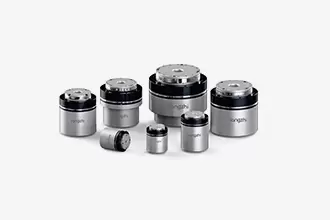
At the core of the compact harmonic joint module is a deeply integrated harmonic drive architecture that fundamentally redefines how motion is transmitted and controlled. Unlike traditional gear-based systems, harmonic drives operate on the principle of elastic deformation, enabling multiple teeth to engage simultaneously. This unique mechanism eliminates many of the inherent limitations found in conventional transmission technologies.
Zero Backlash: A Structural Advantage, Not a Calibration Feature
One of the most critical differentiators of the compact harmonic joint module is its true zero-backlash characteristic. In traditional systems, backlash compensation often relies on software correction or mechanical preloading, both of which degrade over time.
In contrast, the harmonic drive structure inherently eliminates backlash through its continuous tooth engagement mechanism. This results in:
Highly accurate micro-positioning capability
Superior trajectory tracking consistency
Elimination of dead zones during directional changes
For applications such as semiconductor handling, laser processing, or precision dispensing, this level of control precision is indispensable.
High Torque Density: Maximizing Output Within Constrained Architectures
Another defining feature of the compact harmonic joint module is its exceptional torque density. Through advanced structural optimization of the flexspline, wave generator, and load distribution geometry, the module achieves significantly higher torque output relative to its size.
This capability provides several critical advantages:
Enhanced acceleration and deceleration performance
Ability to handle higher payloads without oversizing the system
Improved energy efficiency due to optimized torque utilization
Compared to planetary gear systems, which rely on discrete gear engagement, the harmonic mechanism distributes load more evenly, reducing localized stress concentrations and improving overall mechanical efficiency.
High Repeatability: Ensuring Consistent Performance Over Time
Repeatability is often a more critical metric than absolute accuracy in industrial environments. The compact harmonic joint module excels in this regard due to its integrated architecture and high structural rigidity.
Key contributing factors include:
Direct feedback from high-resolution encoders positioned close to the output
Reduced cumulative error due to minimized component interfaces
High torsional stiffness, limiting deformation under load
As a result, the module consistently delivers exceptional repeat positioning accuracy, even in high-frequency operation scenarios. This is particularly valuable in automated assembly lines, where even minor deviations can lead to cumulative defects.
Reduced Mechanical Fatigue Under High-Frequency Operation
Traditional transmission systems often experience accelerated wear under high-duty cycles due to intermittent gear engagement and uneven load distribution. The compact harmonic joint module, however, operates with continuous multi-tooth contact, significantly reducing stress fluctuations.
This leads to:
Lower mechanical fatigue rates
Extended component lifespan
Stable performance even under intensive, repetitive motion cycles
In high-throughput manufacturing environments, this translates directly into improved uptime and reduced maintenance interventions.
Section 2: High Responsiveness and Multi-Interface Capability in Real-World Workflows
Beyond mechanical performance, modern motion systems demand seamless integration with advanced control architectures. The compact harmonic joint module is engineered not only as a transmission unit but as a fully integrated drive solution capable of supporting complex, multi-axis coordination.
High-Speed Signal Response: Enabling Real-Time Motion Control
In dynamic applications such as robotic manipulation or precision assembly, response time is a critical parameter. The compact harmonic joint module is designed with optimized signal pathways and high-speed feedback mechanisms, ensuring minimal latency between command input and mechanical output.
This enables:
Faster control loop convergence
Reduced lag in high-speed trajectory execution
Improved synchronization across multiple axes
For example, in collaborative robots performing human-interactive tasks, rapid response ensures both operational efficiency and safety.
Multi-Interface Integration: Supporting Complex System Architectures
The module supports a wide range of electrical and communication interfaces, allowing it to integrate seamlessly into diverse control environments. Typical interface capabilities include:
High-speed encoder feedback protocols
Compatibility with mainstream servo drive systems
Support for multi-axis coordinated control architectures
This flexibility allows engineers to deploy the compact harmonic joint module across various platforms without extensive customization.
Multi-Axis Coordination: Precision in Complex Motion Scenarios
In applications such as 6-axis industrial robots or medical robotic arms, coordinated motion across multiple joints is essential. Any delay or inconsistency in one axis can disrupt the entire system.
The compact harmonic joint module addresses this challenge through:
Consistent dynamic response across units
Minimal phase lag between axes
Stable torque output under synchronized motion
As a result, systems can achieve:
Smooth, continuous motion trajectories
High-precision path execution
Reduced vibration and mechanical stress
Application Scenarios: From Robotics to Medical Precision Systems
The benefits of the compact harmonic joint module become especially evident across a range of high-performance applications:
Industrial Robots
Improved cycle times due to faster response and higher torque output
Enhanced path accuracy for welding, assembly, and material handling
Reduced recalibration requirements over long-term operation
Collaborative Robots (Cobots)
Safe and precise human-robot interaction
Smooth motion control with minimal jitter
Reliable performance in variable load conditions
Precision Assembly Lines
Consistent positioning accuracy for micro-components
Reduced defect rates due to stable motion control
High throughput with minimal downtime
Medical Robotic Systems
Ultra-precise motion for surgical assistance
Stable operation over extended procedures
High reliability in safety-critical environments
Section 3: Long-Term Stability and Durability Under Continuous High Load
While peak performance metrics are important, long-term stability is often the decisive factor in industrial adoption. The compact harmonic joint module is engineered to maintain its performance characteristics over extended operational lifecycles, even under demanding conditions.
Proven Longevity: 50,000+ Hours of Continuous Operation
Under a standard maintenance cycle, the compact harmonic joint module is capable of exceeding 50,000 hours of continuous operation with minimal performance degradation.
This level of durability is achieved through:
Advanced material selection for critical components
Optimized stress distribution within the harmonic drive structure
Precision manufacturing processes that ensure consistent quality
For industrial users, this translates into:
Significantly extended service intervals
Reduced total cost of ownership (TCO)
Higher system availability and productivity
Stability Under High Load Conditions
In many real-world applications, joint modules are subjected to sustained high loads rather than intermittent operation. Under such conditions, conventional systems often experience:
Gradual increase in backlash
Loss of positioning accuracy
Increased vibration and noise
The compact harmonic joint module is specifically designed to resist these effects. Its high torsional rigidity and uniform load distribution ensure that:
Positioning accuracy remains stable over time
Backlash does not develop, even after prolonged use
Dynamic performance remains consistent
Minimal Maintenance Requirements
Maintenance is a major cost driver in automated systems. Frequent component replacement or recalibration not only increases operational expenses but also disrupts production schedules.
The compact harmonic joint module addresses this challenge through:
Long-life lubrication systems
Reduced number of wear-prone components
Stable performance characteristics that minimize recalibration needs
As a result, users benefit from:
Lower maintenance frequency
Reduced spare parts inventory
Simplified service procedures
Why Long-Term Stability Matters for Industrial and Precision Systems
For industrial robots and precision automation equipment, stability is not merely a performance metric—it is a business-critical requirement.
In manufacturing, consistent accuracy ensures uniform product quality
In automation, reliability minimizes downtime and maximizes throughput
In medical systems, stability is directly linked to safety and effectiveness
Any degradation in joint performance can cascade through the system, leading to:
Increased defect rates
Unplanned downtime
Higher operational costs
By maintaining stable performance over extended periods, the compact harmonic joint module enables users to achieve predictable, reliable outcomes in even the most demanding applications.
Conclusion: A New Standard for Integrated Motion Performance
The transition from traditional transmission systems to integrated solutions represents a fundamental shift in motion system design. The compact harmonic joint module embodies this evolution by combining zero-backlash harmonic drive technology with high torque density, rapid response capability, and long-term operational stability.
Rather than addressing individual performance parameters in isolation, it delivers a system-level optimization that enhances:
Positioning accuracy
Dynamic responsiveness
Reliability under continuous operation
Integration efficiency within complex architectures
For engineers and manufacturers seeking to push the boundaries of robotic and automation performance, the compact harmonic joint module is not just an incremental improvement—it is a strategic enabler of next-generation precision systems.