 EN
EN
 EN
EN ZH
ZH IT
IT ES
ES TH
TH TR
TR JA
JA PT
PT KO
KO RU
RU FR
FR DE
DE AR
AR
 Home > News Center > Industry news > How to Choose a Robotic Arm Planetary Reducer for Precision Motion Applications
How to Choose a Robotic Arm Planetary Reducer for Precision Motion Applications
A robotic arm is only as precise as its transmission system allows. Servo motors provide the speed and torque required for movement, but the reducer determines how that motor power is converted into controlled motion at the joint. For this reason, selecting the right robotic arm planetary reducer is an important engineering decision for robot manufacturers, automation companies, and system integrators.
The reducer must match the motor, load, operating cycle, installation space, required accuracy, and expected service life. A unit that works well in a light-duty pick-and-place robot may not be suitable for a six-axis industrial arm handling a heavy payload. Similarly, a reducer with a high nominal torque rating may still perform poorly if its backlash, torsional rigidity, or thermal characteristics do not match the application.
This guide explains the main technical factors to consider when selecting a planetary reducer for robotic arms. It also outlines how planetary transmission differs from other reduction technologies and what buyers should check before placing a production order.
Why Planetary Reducers Are Used in Robotic Arms
A servo motor typically operates at a relatively high rotational speed while producing torque within a specific range. A robotic joint, however, often requires lower rotational speed and significantly higher output torque. A reducer bridges this difference.
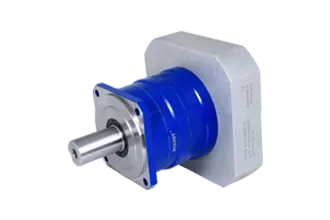
A planetary reducer uses a central sun gear, multiple planetary gears, and an outer ring gear. The planetary gears distribute the transmitted load across several contact points instead of relying on a single gear pair. This arrangement allows the reducer to achieve a relatively high torque density while keeping its overall dimensions compact.
For robotic applications, several characteristics are particularly useful:
High torque transmission capacity
Compact radial dimensions
Low backlash
High torsional rigidity
Efficient power transmission
Good repeatability
Flexible reduction ratios
Coaxial input and output arrangements
These characteristics make planetary transmission suitable for robotic arms where the available joint space is limited and the drive system must deliver controlled movement under changing loads.
A robotic arm planetary reducer is normally installed between the servo motor and the mechanical joint. The actual configuration depends on the robot architecture. Some designs use the reducer directly at the joint, while others integrate the reducer with a motor, encoder, brake, bearing assembly, and housing to create a complete joint module.
The First Step: Define the Robot Joint Requirements
Before comparing reducer models, the robot manufacturer should define the actual requirements of each joint.
Using only the motor's rated torque is not enough. The reducer needs to withstand the combined effects of payload, arm geometry, acceleration, deceleration, external forces, and repeated operation.
Important parameters include:
Required output torque
Peak torque
Rated or continuous torque
Maximum input speed
Required output speed
Reduction ratio
Backlash
Torsional rigidity
Radial and axial loads
Operating cycle
Installation dimensions
Expected service life
Operating temperature
Required positioning accuracy
Motor and encoder compatibility
These values should be determined separately for each robot axis.
For example, the base and shoulder joints of a six-axis robotic arm may experience substantially higher loads than the wrist joints. Selecting one reducer specification for every axis can therefore result in unnecessary cost and weight, or worse, insufficient capacity in the heavily loaded joints.
Calculate Torque Based on the Real Load
Torque selection is one of the most important parts of choosing a planetary reducer.
The basic relationship between motor torque and reducer output torque can be expressed as:
Tₒ = Tᵢ × i × η
Where:
Tₒ is output torque
Tᵢ is input torque
i is the reduction ratio
η is transmission efficiency
This equation provides a useful starting point, but it does not represent the complete operating condition of a robotic joint.
The actual design should also consider acceleration torque, external loads, gravity, friction, emergency stops, and dynamic impacts. A robot arm moving a payload rapidly can generate significantly higher transient torque than its static holding torque would suggest.
For vertical or articulated joints, gravity is another important factor. When a payload is extended away from the joint, the resulting moment increases with the distance from the rotational axis.
A simplified relationship is:
T = F × L
Where F represents the effective force and L represents the distance from the rotational axis.
In practical robot design, the engineering calculation should include the complete arm structure, payload, acceleration profile, center of gravity, and operating cycle.
Rated Torque vs. Peak Torque
Buyers should distinguish between rated torque and peak torque.
Rated torque describes the load that a reducer can handle under defined continuous operating conditions. Peak torque refers to a short-duration load that may occur during acceleration, deceleration, collision recovery, or other transient conditions.
A reducer should not be selected simply because its peak torque appears higher than the motor output. The continuous operating condition also needs to remain within the manufacturer's specifications.
For production robots, it is useful to establish a defined safety margin rather than selecting a reducer at the absolute limit of its published rating.
Reduction Ratio and Robot Motion
The reduction ratio affects both output speed and torque.
For example, if a servo motor operates at 3,000 rpm and a reducer has a 30:1 ratio, the theoretical output speed before considering control and load effects is approximately:
3,000 ÷ 30 = 100 rpm
Increasing the ratio generally increases available output torque while reducing output speed.
However, higher reduction is not automatically better. A robot axis that needs rapid movement may suffer from excessive reduction if the resulting output speed becomes too low. Conversely, a heavy lifting axis may require a higher ratio to provide sufficient torque and controllability.
The ideal ratio therefore depends on the motor characteristics and the required joint motion.
When evaluating a robotic arm planetary reducer, engineers should check the complete motor-reducer combination rather than choosing the reduction ratio independently.
Backlash Matters for Robot Positioning
Backlash is the relative movement that can occur when the direction of rotation changes because of clearance within the transmission system.
For general industrial machinery, a small amount of backlash may be acceptable. In robotic arms, however, backlash can affect positioning accuracy, repeatability, path quality, and the stability of the end effector.
This is particularly important for:
Welding robots
Assembly robots
Vision-guided systems
Precision handling equipment
Small machining robots
Electronic component handling
Collaborative robotic systems
A low-backlash planetary reducer can help reduce unwanted positional deviation when the joint reverses direction.
However, buyers should not evaluate backlash in isolation. The robot's total positioning performance also depends on encoder resolution, servo tuning, structural deformation, bearing clearance, mechanical stiffness, and control algorithms.
A reducer with very low backlash cannot compensate for a mechanically flexible robot structure.
Torsional Rigidity Is Equally Important
Torsional rigidity describes how much a transmission system resists twisting under torque.
When a robotic joint experiences a high load, the reducer and mechanical structure can deform slightly. Excessive torsional deformation can reduce the accuracy of the robot's motion, especially during rapid changes in direction.
A high-rigidity transmission helps the servo system respond more predictably to changes in commanded position and external load.
This is particularly relevant to robotic arms performing repetitive movements with short cycle times. If the transmission system has insufficient stiffness, the robot may experience oscillation or settling time after reaching a target position.
Therefore, when comparing planetary reducers, procurement teams should request technical data for both backlash and torsional rigidity instead of using reduction ratio and torque as the only selection criteria.
Compact Design and Joint Integration
Robot manufacturers are often working with very limited installation space.
The reducer must fit inside the joint housing while leaving sufficient room for the motor, encoder, brake, wiring, bearings, and structural components. Excessive reducer diameter or length can increase the overall size of the robot.
A planetary transmission can offer a compact coaxial arrangement, making it easier to integrate into a robotic joint.
For high-volume robot production, the mounting interface is also important. Key dimensions may include:
Input shaft diameter
Output flange dimensions
Bolt-hole pattern
Pilot diameter
Overall length
Housing diameter
Mounting orientation
Cable clearance
Bearing interface
Even a reducer with suitable performance may require additional mechanical adaptation if these dimensions do not match the robot design.
For this reason, dimensional drawings and interface specifications should be reviewed before sample orders are approved.
Planetary Reducer vs. Harmonic Reducer
Planetary and harmonic reducers are both used in robotics, but they have different mechanical characteristics.
A harmonic reducer uses a flexible spline-based transmission mechanism and can provide very low backlash with a high reduction ratio in a compact package. It is widely used in robotic joints that require high precision and compact integration.
A planetary reducer uses conventional gear transmission with multiple planetary gears. It is valued for load distribution, high torque density, efficiency, rigidity, and flexible ratio selection.
Neither transmission type is suitable for every robot joint.
The appropriate choice depends on the required torque, speed, accuracy, stiffness, size, duty cycle, and mechanical architecture.
For some robot designs, planetary reducers are especially attractive where high torque capacity and rigid transmission are priorities. In other applications, a harmonic design may be preferred because of its specific packaging and precision characteristics.
Robot manufacturers should therefore compare the actual performance requirements rather than selecting a reducer type based only on general industry preferences.
How to Match the Reducer With a Servo Motor
A reducer and servo motor should be treated as a complete drive system.
The motor must provide sufficient input torque and speed, while the reducer must operate within its permitted input speed and load range.
Several compatibility factors should be checked:
Motor Shaft Compatibility
The reducer input interface must match the motor shaft or use a suitable coupling or adapter.
Mounting Compatibility
The motor flange, reducer input flange, and robot housing must be mechanically compatible.
Input Speed
The motor's maximum operating speed should remain within the reducer's permissible input speed.
Inertia Matching
The reflected inertia of the load through the reducer affects servo response. An unsuitable combination may make servo tuning more difficult.
Brake Integration
For vertical robot axes, a motor brake may be necessary to prevent the arm from moving when power is removed. The brake arrangement should be considered during the reducer and joint design process.
Encoder Arrangement
The encoder may be mounted on the motor side, output side, or integrated into the joint depending on the control architecture.
A reducer supplier with experience in robotic drive integration can help engineers identify interface issues before they reach the production stage.
Accuracy Does Not Mean One Specification
Robot buyers often ask for a single accuracy value when evaluating a reducer. In practice, several different parameters influence the final motion accuracy.
These may include:
Backlash
Transmission error
Torsional deformation
Gear manufacturing accuracy
Bearing clearance
Output shaft runout
Assembly tolerance
Thermal expansion
Load-induced deformation
A planetary reducer designed for precision robotics therefore requires consistent manufacturing tolerances throughout the gear train and assembly process.
For a manufacturer, production consistency can be just as important as the specification of an individual sample. A prototype reducer may perform well during testing, but a robot OEM needs the same mechanical characteristics across repeated production batches.
This is why buyers should ask suppliers about quality control procedures, dimensional inspection, gear accuracy control, assembly processes, and batch traceability.
Thermal Performance and Continuous Operation
Heat generation is another factor that is sometimes overlooked during reducer selection.
A reducer converts mechanical power efficiently, but some energy is inevitably lost as heat. When a robot operates continuously at high speed or high torque, the resulting temperature rise can affect lubrication, component life, and dimensional stability.
The thermal condition depends on several factors:
Input speed
Output torque
Reduction ratio
Operating cycle
Ambient temperature
Lubricant
Installation orientation
Housing design
Cooling conditions
A reducer that performs well during a short laboratory test may experience different thermal conditions in a production robot operating for many hours per day.
For this reason, endurance testing should reflect the intended duty cycle as closely as possible.
Service Life and Duty Cycle
Robot manufacturers should evaluate reducer life based on the actual application rather than relying on a single theoretical number.
A robotic arm used for intermittent material handling may have a very different duty cycle from a high-speed assembly robot operating continuously in three shifts.
When specifying a reducer, provide the supplier with information such as:
Hours of operation per day
Number of operating days per year
Typical cycle time
Average torque
Peak torque
Input speed
Direction changes
Acceleration and deceleration
Load distribution
Ambient temperature
This information allows the reducer supplier to evaluate whether a particular model is appropriate for the application.
Lubrication and Maintenance
Lubrication affects gear wear, friction, heat generation, and service life.
For robotic applications, the reducer may be installed in a position where regular maintenance is inconvenient. Therefore, the selected product should have a lubrication strategy that matches the robot's maintenance requirements.
Buyers should confirm:
Recommended lubricant type
Factory lubrication status
Lubricant quantity
Relubrication interval
Permitted installation orientations
Operating temperature range
Maintenance procedure
A maintenance-friendly design can reduce downtime in automated production lines.
Manufacturing Quality Is Critical for Volume Orders
For OEM customers, reducer performance is only one part of the purchasing decision.
Once a robot enters mass production, delivery consistency and manufacturing capability become equally important.
A supplier should be able to provide stable dimensional tolerances, repeatable gear quality, controlled assembly processes, and reliable production capacity.
This is particularly important when the reducer is integrated into a proprietary robot joint. Changing the reducer later may require modifications to the housing, motor interface, control parameters, and mechanical calibration.
A supplier that can support engineering samples, small-batch testing, and subsequent volume production can reduce the transition risk between prototype and commercialization.
What to Ask a Planetary Reducer Manufacturer
Before purchasing a robotic arm planetary reducer, an engineering or procurement team should request a complete technical package.
At minimum, the documentation should cover:
Product dimensions
Reduction ratios
Rated torque
Peak torque
Maximum input speed
Backlash
Torsional rigidity
Transmission efficiency
Permissible radial load
Permissible axial load
Weight
Lubrication requirements
Operating temperature
Mounting orientation
Motor compatibility
Expected service life
Inspection standards
For OEM projects, it is also useful to discuss customization options before finalizing the mechanical design.
Customization may involve mounting dimensions, shaft configurations, flange interfaces, gear ratios, housing dimensions, or integration with motors and other joint components.
Why Production Lead Time Matters to Robot OEMs
A technically suitable reducer does not help much if it cannot be supplied on the required production schedule.
Robot manufacturers often need several development stages:
Prototype → Engineering validation → Pilot production → Mass production
Each stage may require different quantities.
During development, the customer may need a small number of samples for mechanical testing. After validation, the required quantity can increase quickly.
A reducer manufacturer that supports short engineering lead times can help shorten this development cycle. Liangzhi Joint states that its planetary reducer products can support delivery cycles of approximately 5–7 days for relevant orders, depending on product and production requirements.
For procurement teams, delivery claims should still be confirmed according to the specific model, quantity, customization requirements, and current production schedule.
Liangzhi Joint Planetary Reducers for Robotic Applications
Liangzhi Joint focuses on robotic joint modules, harmonic reducers, planetary reducers, and related drive components for robotics and automation applications.
The company was officially launched in 2024, supported by a shareholder team with more than 20 years of industry and management experience. Its R&D operations are located in Hangzhou and Shenzhen, while production bases are located in Zhejiang and Dongguan.
Its planetary reducer development focuses on high-precision transmission for robotic and automation applications. The company reports a maximum planetary reducer accuracy of 1 arcminute and more than 30 national patents.
For robot manufacturers evaluating a planetary transmission, the relevant product range can be reviewed here:
Robotic Arm Planetary Reducer – Liangzhi Joint
The important point for OEM buyers is not simply the headline specification. The reducer needs to be evaluated against the actual robot joint requirements, including torque, speed, backlash, stiffness, dimensions, motor interface, and duty cycle.
Practical Checklist for Selecting a Robotic Arm Planetary Reducer
Before sending an RFQ to a supplier, prepare the following information:
Robot Information
Robot type
Number of axes
Payload
Reach
Joint configuration
Intended application
Motion Requirements
Maximum joint speed
Acceleration
Deceleration
Cycle time
Positioning requirements
Continuous operating hours
Load Requirements
Continuous torque
Peak torque
External radial load
External axial load
Static holding torque
Load inertia
Mechanical Requirements
Available installation space
Motor model
Motor shaft size
Mounting flange
Output interface
Encoder requirements
Brake requirements
Environmental Requirements
Ambient temperature
Dust exposure
Humidity
Installation environment
Required service interval
Providing this information at the quotation stage allows the manufacturer to recommend a more appropriate reducer and reduces the need for repeated mechanical modifications.
Common Mistakes When Buying a Planetary Reducer
Several mistakes occur repeatedly in robotic transmission projects.
Choosing Only by Reduction Ratio
The correct ratio does not guarantee sufficient torque, stiffness, or service life.
Choosing Only by Maximum Torque
A high peak torque rating does not necessarily mean the reducer is suitable for continuous operation.
Ignoring External Loads
Robot joints can experience substantial radial and axial forces in addition to rotational torque.
Treating Backlash as the Only Accuracy Indicator
Robot accuracy depends on the complete mechanical and control system.
Ignoring Installation Dimensions
A reducer can meet all performance requirements and still fail to fit the robot joint.
Testing Only Under Static Conditions
Dynamic acceleration, deceleration, direction changes, and thermal conditions should be included in validation.
Failing to Plan for Mass Production
A reducer that works for five prototype units may require additional supplier qualification before being used in thousands of production robots.
Final Considerations for Robot Manufacturers
Selecting a robotic arm planetary reducer should begin with the robot's actual operating requirements rather than a catalog specification.
Torque, speed, reduction ratio, backlash, torsional rigidity, external load, thermal behavior, service life, and mounting dimensions all need to be considered together. The relationship between the reducer, servo motor, bearings, encoder, brake, and robot structure is equally important.
For OEM and automation projects, supplier capability also matters. Consistent manufacturing quality, technical support, customization capability, documentation, and delivery capacity can directly affect the development and production schedule.
A well-matched planetary reducer provides more than mechanical speed reduction. It becomes part of the robot's motion-control architecture, influencing how accurately, efficiently, and reliably the joint can respond to commands.
For this reason, robot manufacturers should provide detailed application data when requesting a reducer quotation and validate the complete motor-reducer-joint combination before moving into volume production.