 EN
EN
 EN
EN ZH
ZH IT
IT ES
ES TH
TH TR
TR JA
JA PT
PT KO
KO RU
RU FR
FR DE
DE AR
AR
 Home > News Center > Industry news > How to Select a Planetary Drive Joint Actuator for Robotic Applications
How to Select a Planetary Drive Joint Actuator for Robotic Applications
Robotic joint design is moving toward a more integrated architecture. Instead of treating the motor, reducer, encoder, brake, housing, and controller interface as separate components, many robotics developers now evaluate the joint as a complete drive unit. This shift is particularly important for collaborative robots, humanoid robots, quadruped robots, autonomous mobile platforms, industrial manipulators, and other systems where installation space, weight, accuracy, dynamic response, and reliability must be considered together.
Among the available transmission architectures, planetary gearing is widely used when a compact package must deliver high torque, controlled backlash, and a broad range of reduction ratios. When planetary transmission is combined with a motor and other joint-level components, it can form a highly integrated solution for robotic motion.
For engineering teams evaluating a planetary drive joint actuator, the important question is not simply whether the reducer can achieve a specified ratio. The more useful question is whether the complete actuator can meet the mechanical, electrical, thermal, control, and integration requirements of the target robot.
This article explains the key factors that should be considered when selecting and integrating a planetary-based robotic joint actuator, including torque requirements, reduction ratio, accuracy, backlash, speed, inertia, thermal performance, mechanical dimensions, encoder configuration, structural stiffness, delivery requirements, and supplier support.
What Is a Planetary Drive Joint Actuator?
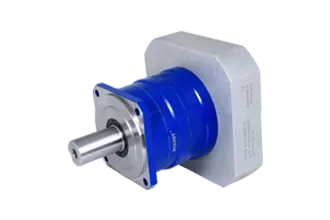
A planetary drive joint actuator is an integrated motion unit that typically combines a motor, planetary reduction mechanism, housing, bearings, encoder or position-sensing components, and interfaces required to connect the actuator to a robotic mechanism.
The planetary reducer is the transmission element. Its primary function is to convert the relatively high rotational speed and lower torque of the motor into lower output speed and higher usable torque.
A typical planetary gear system contains a sun gear, multiple planet gears, a planet carrier, and a ring gear. Depending on which component is fixed, which component receives input, and which component provides output, different transmission ratios and operating characteristics can be achieved.
For robotic applications, planetary transmission offers several practical advantages:
High torque density
Compact axial dimensions
Multiple reduction ratio options
Good load distribution through multiple planetary gears
High torsional stiffness
Low backlash potential when properly designed
Suitable integration with servo motors
Efficient transmission for dynamic motion
Flexible packaging for robotic joint structures
However, the reducer alone does not define actuator performance. A high-quality gearbox can still produce poor joint behavior if the motor is incorrectly matched, the bearings are undersized, the encoder resolution is insufficient, the housing lacks rigidity, or the thermal design is inadequate.
This is why actuator selection should be performed at the system level rather than by comparing gearbox specifications alone.
Why Planetary Transmission Is Important in Robotic Joints
Robotic joints often need to produce high output torque from a relatively small motor. Direct-drive systems can eliminate transmission losses and backlash, but they normally require a much larger motor to achieve the same torque at low speed.
A reduction mechanism changes this relationship.
If a motor produces 2 Nm of torque and the transmission ratio is 20:1, the theoretical output torque before losses is approximately 40 Nm. Actual output torque will be lower because of transmission efficiency and other mechanical losses.
This basic principle makes geared actuators attractive for compact robots.
Planetary gearing is especially useful when the actuator must maintain a relatively small envelope while handling repeated acceleration and deceleration. Because multiple planet gears share the transmitted load, the transmission can achieve a favorable balance between torque capacity and package size.
For a robotic joint, this can translate into a smaller actuator housing, reduced structural requirements around the joint, and greater freedom for mechanical designers.
At the same time, engineers should avoid selecting a reduction ratio simply because a higher ratio provides more output torque. A very high ratio may reduce output speed, increase reflected inertia characteristics, and influence the robot's backdrivability and dynamic response.
The correct ratio depends on the complete motion profile.
Start With the Robot's Motion Profile
Before selecting a planetary drive joint actuator, define how the joint will actually operate.
A basic specification sheet may state a peak torque, rated torque, maximum speed, and reduction ratio. These values are useful, but they do not fully describe the workload.
The engineering team should ideally define:
Continuous output torque
Peak output torque
Peak torque duration
Joint operating speed
Maximum acceleration
Deceleration profile
Duty cycle
Number of operating cycles
External radial load
External axial load
Holding requirements
Operating temperature
Required service life
Required positioning accuracy
Allowable backlash
Available installation space
For example, a robot shoulder joint may experience high peak torque during lifting or rapid movement but operate at moderate torque during most of its working cycle. A mobile robot wheel actuator may experience a very different load pattern, with continuous operation and frequent acceleration.
The actuator should therefore be evaluated against the actual torque-speed-time relationship rather than a single maximum torque number.
Continuous Torque vs. Peak Torque
One common mistake is to select an actuator based only on peak torque.
Suppose a robotic joint requires 100 Nm for a short acceleration event but normally operates at 40 Nm. Selecting a unit based solely on the 100 Nm value may result in an unnecessarily large and heavy actuator.
On the other hand, selecting a unit rated for 40 Nm without considering the repeated 100 Nm peaks may result in premature wear, excessive temperature rise, or reduced service life.
A practical selection process should distinguish between:
Rated or continuous torque: The torque the actuator can sustain under specified operating conditions.
Peak torque: The maximum torque available for a limited duration.
Permissible peak torque: The maximum transient load the transmission can tolerate without unacceptable mechanical stress.
These values should be considered together with duty cycle and temperature.
How Reduction Ratio Affects Joint Performance
Reduction ratio is one of the most important parameters in robotic actuator selection.
A higher ratio generally provides higher output torque for the same motor torque, but the output speed decreases accordingly.
For example, if a motor rotates at 4,000 rpm and the reduction ratio is 20:1, the theoretical output speed is approximately 200 rpm before considering operating losses and other factors.
If the ratio is increased to 40:1, output speed becomes approximately 100 rpm.
This may be beneficial for a high-load joint that does not need rapid movement. However, it may be unsuitable for a dynamic robotic joint that must move quickly.
Reduction ratio also affects reflected inertia. From the load side, the motor effectively experiences a transformed load inertia related to the square of the transmission ratio. This is one reason why transmission selection has a significant influence on servo response.
A high-ratio transmission can make a high-load mechanism easier for a motor to drive, but it can also change the joint's dynamic characteristics.
The ideal ratio is therefore the one that balances:
Required torque
Required speed
Motor operating range
Acceleration requirements
Servo control performance
Efficiency
Backdrivability requirements
Joint weight
Thermal conditions
Mechanical service life
Accuracy and Backlash Matter in Robotic Applications
Robotic positioning performance depends on more than encoder resolution.
The transmission introduces its own mechanical error. Backlash, torsional deformation, gear manufacturing tolerance, bearing clearance, housing deformation, and assembly accuracy can all influence the final output position.
Backlash is particularly important in applications involving frequent direction changes.
When a robot changes direction, excessive clearance between transmission components can create a small region in which motor movement does not immediately produce corresponding output movement. This can reduce positioning repeatability and make force control more difficult.
For applications such as precision assembly, welding, optical inspection, semiconductor handling, and high-accuracy manipulation, the transmission should therefore be evaluated according to its actual backlash and positioning characteristics rather than simply its nominal reduction ratio.
Liangzhi Joint focuses on high-precision planetary reducers, with products designed to achieve accuracy down to 1 arcminute under applicable configurations and specifications.
For actuator developers, this level of transmission precision can be valuable when the mechanical design requires controlled angular positioning without unnecessarily increasing the complexity of downstream compensation algorithms.
However, it is important to distinguish reducer accuracy from complete robot accuracy. The final positioning performance of a robot also depends on encoder resolution, servo tuning, structural deformation, calibration, assembly tolerance, payload, and control software.
Torsional Stiffness Is Often Overlooked
Torsional stiffness describes how much a transmission deforms under applied torque.
Consider a robotic elbow joint carrying a payload. When torque increases, the gears, shafts, bearings, housing, and other components experience elastic deformation.
If the joint is insufficiently stiff, the output position may change slightly as the load changes.
This is not necessarily a problem for every robot. In some applications, controlled compliance is desirable. In precision manipulation, however, excessive elastic deformation can affect trajectory accuracy and force control.
For this reason, a planetary transmission should be evaluated not only by torque capacity but also by its stiffness characteristics.
The overall joint stiffness is determined by the complete mechanical chain, including:
Gear tooth deformation
Shaft torsion
Bearing deformation
Housing deformation
Coupling deformation
Mounting interface stiffness
Robot arm structural stiffness
A strong reducer cannot compensate for a weak actuator housing or flexible mounting structure.
Bearing Selection and External Loads
A robotic joint rarely experiences pure torque.
Depending on its mechanical location, the actuator may also be subjected to radial forces, axial forces, bending moments, or combinations of these loads.
This is particularly relevant for joints located in robot arms, legs, and rotating platforms.
For example, a leg actuator in a quadruped robot may experience a combination of vertical load, horizontal impact, bending moment, and dynamic torque. A shoulder joint in a humanoid robot may experience a substantial bending moment because the payload is offset from the actuator axis.
The actuator's bearing arrangement must therefore be considered together with the external load.
When evaluating a planetary drive joint actuator, engineers should ask:
What radial load can the joint support?
What axial load is permissible?
What moment load can the output structure withstand?
Is an external bearing required?
How is the output flange connected to the robot?
What mounting tolerance is required?
How does the load affect service life?
Ignoring these factors can lead to premature bearing wear even when the planetary gears themselves have sufficient torque capacity.
Motor and Reducer Matching
A planetary reducer should not be selected independently from the motor.
The motor must operate within a practical speed and torque range for the required joint output.
A good motor-reducer combination considers:
Motor rated torque
Motor peak torque
Motor rated speed
Motor peak speed
Motor thermal characteristics
Reduction ratio
Transmission efficiency
Required output speed
Required output torque
Motor inertia
Encoder configuration
Controller compatibility
The goal is to keep the motor operating in a useful region rather than continuously pushing it toward its limits.
For example, if the actuator requires a very high reduction ratio to meet torque requirements, the engineer should determine whether the selected motor has adequate speed and whether the resulting joint remains sufficiently responsive.
Similarly, if the reduction ratio is too low, the motor may need to operate at high torque for extended periods, increasing heat generation and reducing efficiency.
Thermal Design Should Be Evaluated Early
Heat is a practical limitation in compact robotic joints.
A small actuator may contain a motor, gearbox, bearings, encoder, brake, and electronics within a confined housing. There may be limited surface area for heat dissipation.
Transmission losses and motor copper losses eventually become heat.
If the actuator operates continuously at high load, temperature can rise significantly. Excessive temperature can affect lubricant performance, motor insulation, encoder reliability, bearing life, and overall system durability.
Thermal analysis should therefore consider:
Continuous torque
Motor current
Transmission efficiency
Operating speed
Ambient temperature
Housing material
Cooling conditions
Duty cycle
Installation orientation
Heat transfer path into the robot structure
An actuator that meets a peak torque requirement for several seconds may still be unsuitable for a continuously operating application.
This is why procurement teams should request operating conditions alongside torque specifications when comparing actuator suppliers.
Weight and Torque Density
For mobile robots, humanoid robots, and legged robots, actuator mass has a direct influence on system performance.
A heavier joint can increase the load that another joint must move. This effect becomes particularly important in articulated robot arms and legs, where distal mass can increase the torque requirement at proximal joints.
For example, adding 500 grams to a robot's lower leg does not only increase the total robot mass. It can also increase the dynamic load experienced by the knee and hip during acceleration.
This makes torque density an important actuator metric.
Torque density can be considered as output torque relative to actuator mass or volume, depending on the application.
A planetary-based actuator can provide a useful combination of compactness and torque capability because the planetary transmission distributes load across multiple gears while maintaining a relatively compact structure.
However, torque density should not be evaluated without considering thermal performance and service life. An extremely compact actuator that can produce high short-term torque but cannot dissipate heat under continuous operation may not provide a practical advantage.
Why Integration Can Simplify Robot Design
Traditional robot development often requires separate sourcing of the motor, reducer, encoder, brake, coupling, housing, and other mechanical components.
The engineering team then has to design interfaces between them.
This approach can provide flexibility, but it also creates additional integration work.
A joint actuator with a higher level of integration can reduce the number of individual interfaces.
Instead of separately designing:
Motor mounting
Gearbox mounting
Encoder mounting
Output shaft arrangement
Cable routing
Bearing support
Housing alignment
the actuator supplier can provide a more coordinated assembly.
This can shorten the mechanical development cycle and reduce potential alignment errors.
For companies developing multiple robot platforms, integrated joint modules can also improve standardization. A common actuator platform may be adapted for different joint positions by changing mounting interfaces, gearing, motor specifications, or control parameters.
Planetary Joint Actuators for Humanoid Robots
Humanoid robots place unusual demands on joint actuators.
The joints need to be compact enough to fit within human-like mechanical structures while providing sufficient torque for walking, standing, lifting, and manipulation.
Leg joints such as hips, knees, and ankles generally require substantial torque. Arm joints require a combination of moderate torque, speed, compact dimensions, and accurate position control.
The actuator also needs to tolerate frequent acceleration and deceleration.
A planetary transmission can be suitable for these applications when the required combination of torque, speed, stiffness, and precision aligns with the transmission's operating characteristics.
For humanoid developers, another important consideration is actuator standardization.
If several joints use related actuator architectures, the engineering team may simplify:
Mechanical integration
Electrical interfaces
Firmware development
Spare parts management
Assembly procedures
Testing
Maintenance
A supplier capable of producing different planetary reducer and joint actuator configurations can therefore be more valuable than a supplier offering only a single standard unit.
Planetary Joint Actuators for Quadruped Robots
Quadruped robots place significant dynamic loads on their leg joints.
During walking and running, each leg alternates between supporting body weight and moving through the swing phase. During faster motion, impact loads and rapid changes in torque can become significant.
This means actuator selection should consider both steady-state and transient loads.
A quadruped joint may require:
High peak torque
Fast acceleration
Repeated direction changes
High torsional stiffness
Compact dimensions
Low weight
Controlled backlash
Reliable bearings
Efficient heat dissipation
The transmission ratio must also be matched to the gait strategy.
A high reduction ratio may provide high torque but can limit joint speed and affect the robot's ability to respond quickly. A lower ratio can support faster movement but may require a larger or more powerful motor.
The appropriate configuration depends on the robot's mass, leg geometry, target speed, gait pattern, payload, and control architecture.
Industrial Robotic Arms Require a Different Balance
Industrial robot arms typically emphasize repeatability, stiffness, service life, and predictable performance.
A high-speed pick-and-place robot may prioritize rapid acceleration and low inertia. A welding robot may place greater emphasis on repeatability and long operating cycles. A collaborative robot may require additional attention to force sensing and safe interaction.
These applications can all use geared joint architectures, but their actuator requirements are different.
For an industrial application, procurement engineers should examine not only the nominal specifications but also the supplier's consistency between batches.
A transmission that performs well in a prototype is useful, but a production robot requires repeatable dimensional accuracy, stable gear quality, controlled assembly tolerances, and reliable inspection procedures.
This becomes especially important when the actuator is integrated into a high-volume robot platform.
The Importance of Manufacturing Consistency
Precision transmission components require more than good design drawings.
Gear accuracy, material treatment, grinding quality, bearing fit, assembly tolerance, lubrication, and final inspection all influence the performance of the finished actuator.
For high-precision robotic joints, production consistency can be as important as peak specification.
Liangzhi Joint combines more than 20 years of industry experience within its shareholder and management team with dedicated R&D resources in Hangzhou and Shenzhen and production bases in Zhejiang and Dongguan.
The company focuses on robotic joint modules and harmonic and planetary transmission technologies, with more than 30 national patents and a stated maximum planetary reducer accuracy of 1 arcminute.
For B2B customers, this experience is relevant because actuator development is rarely a simple catalog purchase. Many projects require repeated technical communication between the supplier and robot developer.
Prototype Development vs. Mass Production
The actuator requirements during prototype development can differ from those during production.
During the prototype stage, engineers may prioritize:
Rapid samples
Flexible specifications
Engineering support
Fast design changes
Mechanical customization
Testing support
Once the robot enters production, the priorities often shift toward:
Stable quality
Repeatable dimensions
Consistent performance
Supply continuity
Production capacity
Documentation
Quality control
Delivery predictability
A supplier should be able to support both stages.
For robotics companies working on short development cycles, delivery time can become a significant factor. Liangzhi Joint states that its standard delivery cycle can be as short as 5–7 days for applicable products and orders.
The actual lead time for a specific project will depend on configuration, quantity, customization, and production requirements, but a short standard cycle can help engineering teams reduce waiting time during iterative development.
What Should Be Included in an Actuator Specification Sheet?
When requesting quotations or technical proposals, engineers should avoid sending only a required torque value.
A more useful specification request includes the following information.
Mechanical Requirements
Define:
Required output torque
Continuous torque
Peak torque
Maximum output speed
Reduction ratio
Backlash requirement
Torsional stiffness requirement
Radial load
Axial load
Moment load
Service life
Mounting dimensions
Output flange dimensions
Weight limit
Motor Requirements
Specify:
Rated voltage
Rated power
Rated speed
Peak speed
Rated torque
Peak torque
Motor dimensions
Encoder type
Brake requirements
Operating Environment
Include:
Ambient temperature
Humidity
Dust exposure
Vibration
Shock
Installation orientation
Continuous operating time
Cooling conditions
Control Requirements
Define:
Position control
Velocity control
Torque control
Encoder resolution
Communication interface
Servo drive compatibility
Control frequency
Feedback requirements
The more complete the initial specification, the easier it is for the supplier to recommend an appropriate configuration.
How to Compare Different Planetary Actuators
When comparing products from multiple suppliers, avoid comparing isolated numbers.
A better approach is to create a common evaluation matrix.
For example, compare each candidate according to:
| Parameter | Supplier A | Supplier B | Supplier C |
|---|---|---|---|
| Continuous torque | |||
| Peak torque | |||
| Output speed | |||
| Reduction ratio | |||
| Backlash | |||
| Torsional stiffness | |||
| Weight | |||
| Diameter | |||
| Length | |||
| Encoder option | |||
| Brake option | |||
| Operating temperature | |||
| Service life | |||
| Lead time |
This makes the technical comparison more objective.
It is also important to ask whether specifications are measured under the same conditions. A torque value without a defined duty cycle, temperature, speed, or service-life criterion may not be directly comparable with another supplier's value.
When a Planetary Drive Is a Better Choice
Planetary transmission can be particularly attractive when the application requires a combination of:
Compact size
High torque density
High stiffness
Low backlash
Multiple ratio options
Efficient power transmission
Servo motor integration
It can be a practical option for robot joints where the designer wants a high-performance geared actuator without relying on a large direct-drive motor.
However, it is not automatically the best transmission architecture for every robot.
The correct choice depends on the application's speed, torque, precision, compliance, cost, mechanical envelope, and control requirements.
A professional actuator supplier should be able to explain these trade-offs rather than simply recommending the highest-specification product.
Planetary vs. Other Transmission Architectures
Robot developers often compare planetary gear systems with harmonic, cycloidal, spur, or direct-drive architectures.
Each has different characteristics.
Planetary Transmission
Planetary gearing is known for high torque density, compact construction, good stiffness, and efficient power transmission. It is often suitable for high-speed motor input combined with moderate-to-high reduction ratios.
Harmonic Transmission
Harmonic gearing can provide very high reduction ratios and extremely low backlash in a compact package. It is widely considered for precision robot joints, particularly where high reduction ratio and compact dimensions are priorities.
Cycloidal Transmission
Cycloidal systems can offer high shock-load resistance and high torque capacity. They may be attractive in applications where durability under dynamic loads is important.
Direct Drive
Direct-drive motors eliminate the mechanical reduction stage and can provide excellent backdrivability and dynamic response. The trade-off is usually a larger motor size and different requirements for torque generation and thermal management.
For this reason, robot manufacturers should evaluate the complete actuator architecture instead of assuming that one transmission type is universally superior.
Customization Requirements in Robotics
Robotic platforms are rarely identical.
The actuator may need to fit within a specific joint cavity, use a particular output flange, accommodate a particular encoder, or connect to a proprietary motor controller.
Common customization requirements include:
Output flange geometry
Mounting hole pattern
Shaft configuration
Gear ratio
Motor winding
Encoder
Brake
Cable outlet
Housing dimensions
Connector
Lubrication specification
A supplier with both transmission development and actuator integration capabilities can reduce the number of separate engineering interfaces.
For example, a robotics company may begin with a standard planetary reducer for initial testing and later develop a customized actuator housing for production.
This approach can reduce development risk because the mechanical transmission architecture is validated before a fully customized version is introduced.
Questions to Ask a Joint Actuator Supplier
Before placing a development order, technical teams should ask several practical questions.
1. What is the continuous torque under the intended operating conditions?
Do not rely only on peak torque.
2. How is backlash measured?
Measurement conditions should be clearly defined.
3. What is the expected service life?
Service life should be related to actual load and operating conditions.
4. What external loads can the output bearing support?
This is important for articulated joints.
5. What encoder options are available?
Encoder selection influences control performance.
6. Can the motor and reducer be supplied as an integrated unit?
Integration can simplify mechanical development.
7. What customization options are available?
Check housing, mounting, motor, encoder, brake, and cable requirements.
8. What is the normal delivery cycle?
This matters during prototype iteration and production planning.
9. What quality inspection is performed?
Ask about dimensional, gear, backlash, torque, noise, and assembly inspection as applicable.
10. Can the supplier support engineering changes?
This is particularly important for early-stage robotics projects.
Why Delivery Time Matters in Robotics Development
Robot development is iterative.
A mechanical engineer may test a joint, discover that the actuator is too long, change the mounting structure, modify the reduction ratio, and then require another sample.
If every iteration takes several weeks, development slows down quickly.
A shorter delivery cycle can support faster validation.
This is particularly useful when a company is developing:
Humanoid robot prototypes
Quadruped robots
Collaborative robot arms
Autonomous mobile robots
Robotic exoskeletons
Industrial automation equipment
Special-purpose robotic mechanisms
For these projects, the ability to move from engineering specification to physical sample quickly can have a direct impact on development efficiency.
Liangzhi Joint states that applicable products can be delivered within 5–7 days, giving customers an option for rapid development cycles where the required configuration is available within that production schedule.
From Reducer Supplier to Drive Integration Partner
The growing complexity of robotic systems is changing how engineering teams evaluate component suppliers.
A reducer supplier provides a transmission component.
A drive integration partner can potentially support a broader portion of the joint architecture.
This distinction matters because a robot joint has multiple interacting parameters.
Changing the motor may require changing the reducer ratio.
Changing the reducer ratio may change the motor speed.
Changing the motor size may affect housing dimensions.
Changing the housing may affect bearing support.
Changing the encoder may affect controller compatibility.
Changing the duty cycle may affect thermal performance.
An integrated development approach helps engineers consider these relationships earlier.
Liangzhi Joint positions its business around drive integration solutions, with a product portfolio covering robotic joint modules and planetary and harmonic transmission technologies.
For customers developing robotic platforms, this type of supplier can be useful when the project requires both transmission performance and actuator-level integration.
Building a Practical Selection Process
A straightforward actuator selection process can be divided into seven stages.
Stage 1: Define the Load
Calculate continuous torque, peak torque, speed, external forces, and moment loads.
Stage 2: Define the Motion
Determine acceleration, deceleration, operating cycle, travel range, and frequency of direction changes.
Stage 3: Select the Transmission
Compare planetary, harmonic, cycloidal, or other architectures according to the required torque, speed, precision, stiffness, and package size.
Stage 4: Match the Motor
Select motor power and speed based on the transmission ratio and required output performance.
Stage 5: Evaluate Thermal Performance
Check continuous operating temperature under the actual duty cycle.
Stage 6: Validate Integration
Confirm dimensions, mounting, encoder, brake, connectors, cables, controller compatibility, and bearing loads.
Stage 7: Test a Prototype
Measure actual torque, speed, temperature, noise, backlash, positioning behavior, and mechanical performance under representative operating conditions.
This process is more reliable than selecting a product solely from a catalog table.
Prototype Testing Recommendations
A prototype actuator should be tested under conditions that approximate the final robot.
Useful tests may include:
No-load speed test
Rated-load torque test
Peak-load test
Temperature-rise test
Repeated acceleration test
Direction reversal test
Positioning test
Backlash test
Noise and vibration test
Endurance test
The purpose of prototype testing is not simply to confirm that the actuator works.
It is to identify whether the actuator remains within the required performance range when exposed to the actual mechanical and thermal conditions of the robot.
For example, an actuator may perform well during a short laboratory test but exhibit significant temperature rise after several hours of continuous operation.
Testing should therefore reflect the intended duty cycle whenever possible.
The Role of Precision in Closed-Loop Control
Modern robotic systems increasingly depend on closed-loop control.
The controller receives feedback from encoders and adjusts motor output according to position, speed, or torque requirements.
Mechanical transmission errors can affect this control loop.
Low backlash and controlled transmission deformation can make the relationship between motor position and output position more predictable.
This does not mean that mechanical precision eliminates the need for control compensation. Instead, a predictable mechanical system gives the control system a more stable foundation.
For high-performance robots, mechanical design and control engineering should therefore be considered together.
The actuator should provide the controller with a mechanical system that behaves consistently across its intended operating range.
Documentation Matters for B2B Projects
A technically capable supplier should also provide usable engineering documentation.
Depending on the project, customers may need:
Mechanical drawings
CAD models
Performance curves
Torque-speed data
Reduction ratio information
Encoder specifications
Mounting information
Bearing load data
Electrical specifications
Operating temperature limits
Lubrication information
Installation instructions
Test reports
Good documentation reduces the amount of time engineers spend asking basic interface questions.
It also makes the actuator easier to integrate into mechanical and electrical design systems.
For B2B robotics projects, documentation quality should therefore be considered part of the overall supplier evaluation.
What Makes a Reliable Long-Term Actuator Supplier?
Long-term supplier evaluation should go beyond product specifications.
A reliable supplier should be able to demonstrate capabilities in:
Engineering: The supplier should understand the mechanical requirements of robotic joints.
Production: The supplier should have controlled processes for precision transmission components.
Quality: Critical dimensions and performance parameters should be consistently inspected.
Customization: The supplier should be able to adapt products to real application requirements.
Delivery: Production and inventory planning should support development and production schedules.
Technical communication: Engineers should be able to communicate directly about load, speed, interface, and performance requirements.
Product development: The supplier should be capable of improving or adapting actuator configurations as the robot evolves.
These factors become increasingly important when the actuator is used in a commercial robot rather than a one-off prototype.
Liangzhi Joint's Approach to Robotic Drive Integration
Liangzhi Joint is focused on robotic joint modules and precision transmission products.
The company's shareholder and management team brings more than 20 years of industry experience, while the current business officially launched in 2024.
Its R&D resources are based in Hangzhou and Shenzhen, with production facilities in Zhejiang and Dongguan.
The company develops planetary reducers with stated accuracy of up to 1 arcminute and reports more than 30 national patents.
Its product strategy is based on providing performance and dimensions intended to align with established European, American, Japanese, and Taiwanese transmission benchmarks while maintaining a shorter delivery cycle for applicable products.
For robotics companies, the practical value of this approach is the ability to evaluate the reducer and joint actuator as parts of the same drive architecture.
Instead of asking only, "Which gearbox should we purchase?", engineering teams can consider a broader question:
"Which actuator configuration can meet the torque, speed, precision, thermal, dimensional, and control requirements of our robot?"
That question usually leads to a more useful technical discussion.
Final Checklist for Selecting a Planetary Joint Actuator
Before approving a planetary actuator for a robotic project, verify the following:
The continuous torque matches the actual duty cycle.
Peak torque is sufficient for acceleration and transient loads.
Output speed meets the robot's motion requirements.
Reduction ratio is appropriate for both torque and speed.
Backlash is within the required range.
Torsional stiffness is adequate.
External radial and axial loads are supported.
Moment loads are within the bearing capacity.
Motor and reducer are properly matched.
Encoder resolution and interface meet control requirements.
Thermal performance is acceptable under continuous operation.
Actuator dimensions fit the available joint space.
Total actuator weight is acceptable.
Brake requirements have been considered where applicable.
Mounting and output interfaces are compatible.
Service life is appropriate for the intended application.
Prototype testing can be completed under representative conditions.
Documentation is sufficient for mechanical and electrical integration.
Delivery capability matches the development schedule.
Customization support is available if the robot requires non-standard interfaces.
Conclusion
Selecting a robotic actuator is not simply a matter of finding a reducer with a high torque rating. A practical selection requires a complete understanding of the robot's load profile, speed, acceleration, precision, stiffness, thermal environment, mechanical envelope, control architecture, and expected service life.
A planetary drive joint actuator can provide an effective combination of torque density, compactness, stiffness, transmission efficiency, and precision when its configuration is properly matched to the application.
For humanoid robots, quadruped robots, industrial manipulators, collaborative robots, and other automated systems, the most useful actuator is not necessarily the one with the highest specification. It is the one that consistently meets the required performance under real operating conditions while fitting the mechanical and electrical architecture of the robot.
For this reason, engineering teams should evaluate the complete actuator rather than treating the reducer as an isolated component. Motor selection, reduction ratio, bearing capacity, encoder feedback, thermal performance, housing stiffness, and output interface all influence the final joint.
Liangzhi Joint provides robotic joint modules and precision planetary and harmonic transmission solutions for customers developing robotic and automated systems. With more than two decades of industry experience within its core team, R&D centers in Hangzhou and Shenzhen, production bases in Zhejiang and Dongguan, more than 30 national patents, and high-precision planetary reducer capabilities, the company supports customers looking for practical drive integration solutions.
For projects that require a compact, precise, and application-matched robotic actuator, starting with the actual motion profile and engineering requirements is the most reliable way to select the right transmission architecture and joint configuration.