 EN
EN
 EN
EN ZH
ZH IT
IT ES
ES TH
TH TR
TR JA
JA PT
PT KO
KO RU
RU FR
FR DE
DE AR
AR
 Home > News Center > Industry news > Robot Joint Modules: The Core Technology Behind AI Robots
Robot Joint Modules: The Core Technology Behind AI Robots
Artificial intelligence has become one of the most transformative technologies of the 21st century. From large language models and autonomous decision-making systems to computer vision and machine learning, AI is reshaping how machines perceive, analyze, and interact with the world.
However, intelligence alone does not create a robot.
For AI to move beyond software and become a physical system capable of interacting with real-world environments, it requires a mechanical platform that can transform digital decisions into precise physical actions. At the heart of this transformation lies one critical technology: robot joint modules.
Whether in humanoid robots, wheeled-legged robots, collaborative robots, service robots, or industrial automation systems, robot joint modules serve as the fundamental building blocks that enable movement, force generation, and interaction with the physical world.
As embodied AI becomes the next major frontier in robotics, robot joint modules are emerging as one of the most important technologies driving the industry forward.
From Artificial Intelligence to Embodied Intelligence
Traditional AI systems primarily exist in digital environments.
Examples include:
Language models
Recommendation systems
Computer vision platforms
Data analytics engines
These systems can process information and generate decisions, but they cannot physically interact with the world.
Embodied AI changes this paradigm.
Embodied AI combines:
Perception
Decision-making
Motion control
Environmental interaction
within a physical robotic system.
For a robot to perform tasks such as:
Walking
Grasping objects
Climbing stairs
Opening doors
Carrying loads
it must possess highly capable motion hardware.
Robot joint modules provide this capability.
Without advanced joint technology, even the most sophisticated AI algorithms cannot produce useful physical actions.
What Is a Robot Joint Module?
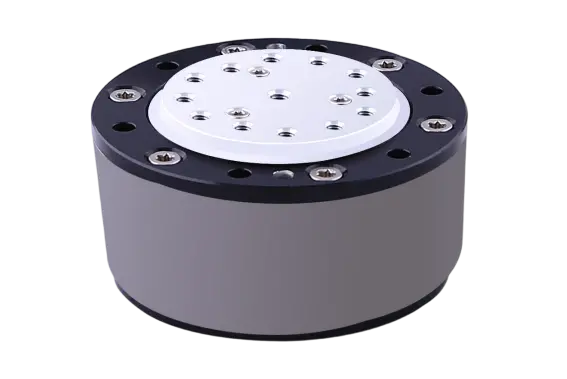
A robot joint module is an integrated motion unit responsible for generating and controlling movement at a robot's joints.
Modern robot joint modules typically integrate several key components:
Precision reducer
Electric motor
Encoder
Servo drive
Sensors
Structural housing
Together, these components create a compact actuator system capable of delivering precise rotational motion and torque output.
Joint modules function similarly to muscles and joints in the human body.
Just as human movement depends on coordinated muscle activity, robotic movement depends on coordinated operation of multiple joint modules.
Why Robot Joint Modules Matter
Every movement performed by a robot originates from its joints.
The performance of these joints directly affects:
Mobility
Precision
Stability
Payload capacity
Energy efficiency
Dynamic response
As robots become increasingly intelligent, the quality of their mechanical execution becomes just as important as their software capabilities.
A powerful AI system cannot compensate for poor motion hardware.
The most advanced robots require both intelligent decision-making and high-performance actuation.
The Growing Demand for Humanoid Robots
Humanoid robots represent one of the fastest-growing sectors in robotics.
Unlike traditional industrial robots, humanoid robots are designed to operate in environments built for humans.
This requires them to:
Walk naturally
Maintain balance
Manipulate tools
Navigate obstacles
Interact safely with people
Achieving these capabilities requires highly advanced joint systems.
A typical humanoid robot may contain:
Hip joints
Knee joints
Ankle joints
Shoulder joints
Elbow joints
Wrist joints
Each joint must deliver precise and responsive motion while remaining lightweight and compact.
As a result, robot joint modules have become a core enabling technology for humanoid robotics.
High Torque Density Drives Performance
One of the most important characteristics of a modern robot joint module is torque density.
Torque density refers to the amount of torque generated relative to the size and weight of the actuator.
Higher torque density provides several advantages:
Smaller joints
Reduced robot mass
Improved mobility
Greater payload capacity
Better energy efficiency
Humanoid robots and legged robots often operate under strict weight constraints.
To achieve human-like movement, developers must maximize torque output while minimizing system mass.
High torque density has therefore become a critical design objective across the robotics industry.
Precision Motion Is Essential for AI Robots
AI robots must execute complex movements with exceptional accuracy.
Examples include:
Object manipulation
Tool handling
Human interaction
Dynamic balancing
These tasks require highly accurate motion control.
Key performance metrics include:
Position accuracy
Repeatability
Low backlash
Response speed
Modern robot joint modules increasingly incorporate high-precision reducers and advanced encoder systems to achieve the level of control demanded by next-generation AI applications.
Lightweight Design Enables Better Mobility
Weight is one of the most important factors influencing robot performance.
Every additional kilogram affects:
Energy consumption
Joint load
Walking efficiency
Battery life
This challenge becomes even more significant in humanoid robots where multiple joints operate simultaneously.
Modern joint modules focus heavily on:
Lightweight materials
Compact structures
Integrated architectures
These design strategies help improve overall robot mobility and endurance.
Integration Is Transforming Robot Architecture
The robotics industry is rapidly moving toward integrated actuator systems.
Traditional robot joints often require separate:
Motor
Reducer
Encoder
Driver
Sensors
This approach increases complexity and assembly requirements.
Modern robot joint modules integrate these components into a unified platform.
Benefits include:
Reduced weight
Smaller installation space
Improved reliability
Faster development cycles
Simplified system integration
As robot manufacturers seek greater efficiency and scalability, integrated architectures are becoming increasingly attractive.
Robot Joint Modules and Embodied AI
Embodied AI is expected to become one of the most important technology trends over the coming decade.
Unlike conventional AI systems, embodied AI must interact physically with its surroundings.
This creates new requirements for:
Motion capability
Environmental adaptation
Force control
Dynamic interaction
Robot joint modules act as the interface between intelligence and physical action.
They translate AI-generated decisions into movement.
As embodied AI continues to evolve, demand for advanced joint technologies is expected to increase significantly.
Future Trends in Robot Joint Modules
The next generation of robot joint modules will focus on:
Higher torque density
Greater integration
Lower weight
Improved thermal management
Enhanced sensing capabilities
Smarter control systems
Future actuator systems may incorporate:
Embedded intelligence
Predictive maintenance functions
Real-time performance optimization
AI-assisted motion control
These innovations will further improve robot capability and accelerate industry adoption.
Conclusion
Artificial intelligence may be the brain of a robot, but robot joint modules are the technology that enables physical action.
Without advanced actuation systems, AI remains confined to software.
Robot joint modules provide the motion, precision, and power required for robots to interact with the real world. They are the foundation of humanoid robots, collaborative robots, wheeled-legged robots, and countless future embodied AI systems.
As the robotics industry continues to evolve, robot joint modules will remain one of the most critical technologies determining how intelligent machines move, work, and interact with humanity.
In many ways, the future of AI robotics will be defined not only by advances in intelligence, but also by the performance of the joints that bring that intelligence to life.