 EN
EN
 EN
EN ZH
ZH IT
IT ES
ES TH
TH TR
TR JA
JA PT
PT KO
KO RU
RU FR
FR DE
DE AR
AR
 Home > News Center > Industry news > Robotic Planetary Reducer System: Design Principles, Selection Criteria, and Custom Solutions for Advanced Automation
Robotic Planetary Reducer System: Design Principles, Selection Criteria, and Custom Solutions for Advanced Automation
As robotics and industrial automation continue to evolve, precision motion control has become a critical factor in determining system performance. Whether in collaborative robots, humanoid robots, automated production lines, autonomous mobile platforms, or specialized industrial equipment, the transmission system directly influences positioning accuracy, stability, service life, and energy efficiency.
Among various transmission technologies, the robotic planetary reducer system has become one of the most widely adopted solutions due to its compact structure, high torque density, excellent efficiency, and reliable performance. For equipment manufacturers seeking customized motion control solutions, understanding how planetary reducer systems work and how to select the right configuration is essential for achieving optimal results.
This article explores the structure, working principles, advantages, applications, selection factors, and customization opportunities of robotic planetary reducer systems, helping engineers, procurement teams, and automation solution providers make informed decisions.
Understanding the Robotic Planetary Reducer System
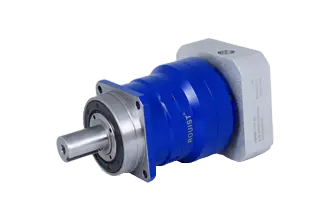
A robotic planetary reducer system is a precision transmission mechanism that uses multiple planetary gears rotating around a central sun gear while meshing with an internal ring gear. This arrangement distributes load across several gear teeth simultaneously, allowing the system to achieve high torque transmission in a compact footprint.
The basic structure typically consists of:
Sun gear
Planet gears
Planet carrier
Internal ring gear
Input shaft
Output shaft
Bearings and sealing components
When the motor drives the sun gear, the planet gears rotate around it while engaging with the ring gear. The coordinated movement produces speed reduction and torque multiplication, enabling the robotic planetary reducer system to convert high-speed motor output into precise, controllable motion.
Compared with conventional gear mechanisms, planetary systems provide higher power density and better load-sharing characteristics, making them ideal for robotic applications that require compact dimensions and high precision.
Why Planetary Reducers Are Important in Robotics
Modern robots demand a combination of:
High positioning accuracy
Compact design
Lightweight construction
High torque output
Smooth motion control
Long-term reliability
Direct-drive motors can eliminate mechanical transmission, but they often require larger motor sizes and higher costs. Planetary reducers provide an efficient solution by increasing torque while maintaining manageable motor dimensions.
A well-designed robotic planetary reducer system helps:
Improve motion accuracy
Reduce motor load
Enhance dynamic response
Increase payload capacity
Optimize energy consumption
Extend equipment lifespan
These benefits make planetary reducers a fundamental component in many robotic joints and automation systems.
Key Advantages of a Robotic Planetary Reducer System
High Torque Density
One of the most significant advantages is the ability to deliver high torque within a relatively small package.
Because multiple planet gears share the transmitted load simultaneously, torque distribution becomes more balanced. This design allows robotic systems to generate substantial output force without requiring oversized transmission assemblies.
For robotic arms and humanoid robots where space is limited, high torque density is particularly valuable.
Compact Structural Design
Space constraints are common in robotics. Joint modules often need to integrate motors, sensors, reducers, brakes, and control components within a confined housing.
A robotic planetary reducer system offers:
Small installation dimensions
Reduced overall weight
Flexible integration
Efficient use of internal space
This compactness supports advanced robot designs while maintaining mechanical performance.
High Transmission Efficiency
Planetary gear reducers typically achieve transmission efficiencies ranging from 90% to 98%, depending on design and operating conditions.
High efficiency contributes to:
Lower heat generation
Reduced energy consumption
Improved battery life in mobile robots
Higher operational stability
For robots operating continuously in industrial environments, efficiency directly impacts productivity and operating costs.
Excellent Load Distribution
Unlike traditional gear systems where load may concentrate on a limited number of teeth, planetary gear arrangements distribute forces among multiple gears.
Benefits include:
Reduced wear
Longer service life
Higher shock resistance
Improved reliability
This load-sharing mechanism is one reason why robotic planetary reducer systems are widely used in demanding automation applications.
Low Backlash Performance
Backlash refers to the small amount of free movement between gear teeth.
Excessive backlash can negatively affect:
Positioning accuracy
Motion smoothness
Repeatability
High-precision planetary reducers are engineered with optimized gear geometry and assembly processes to minimize backlash, supporting precise robotic movements.
Strong Adaptability
Planetary reducers can be configured with various:
Reduction ratios
Mounting styles
Output interfaces
Shaft structures
Motor connections
This flexibility enables customization for different robotic architectures and application requirements.
Core Components Affecting Performance
Not all planetary reducers offer the same performance. Several design elements significantly influence the effectiveness of a robotic planetary reducer system.
Gear Manufacturing Precision
Gear accuracy directly impacts:
Noise levels
Backlash
Efficiency
Lifespan
Advanced machining technologies such as:
CNC grinding
Gear hobbing
Precision shaping
Heat treatment
help ensure consistent performance under demanding operating conditions.
Bearing Quality
Bearings support rotational stability and load capacity.
Premium bearings improve:
Radial load resistance
Axial load resistance
Rotational smoothness
Durability
For robotic applications involving frequent acceleration and deceleration, bearing quality becomes especially important.
Housing Rigidity
A rigid housing minimizes deformation during operation.
Benefits include:
Better alignment
Stable transmission accuracy
Reduced vibration
Longer service life
Lightweight aluminum alloys and high-strength steel materials are commonly used depending on application requirements.
Lubrication System
Proper lubrication reduces friction and wear.
An optimized lubrication strategy supports:
Consistent efficiency
Temperature control
Reduced maintenance
Longer operational life
Industrial robotic systems often rely on long-life grease formulations designed specifically for precision reducers.
Applications of Robotic Planetary Reducer Systems
Industrial Robotic Arms
Industrial robots remain one of the largest application areas.
Typical functions include:
Welding
Assembly
Material handling
Packaging
Inspection
Each robotic joint requires precise torque control and positioning accuracy, making planetary reducers a preferred transmission solution.
Collaborative Robots
Collaborative robots operate alongside human workers and require smooth, accurate motion.
A robotic planetary reducer system helps cobots achieve:
Stable movement
Compact joint design
High repeatability
Efficient torque transmission
These characteristics are essential for safe and productive human-machine collaboration.
Humanoid Robots
Humanoid robots represent one of the fastest-growing sectors in robotics.
Joint systems in humanoid robots must provide:
High torque output
Lightweight construction
Compact dimensions
Dynamic responsiveness
Planetary reducer technology supports these requirements while enabling realistic and coordinated movement.
Automated Guided Vehicles (AGVs)
AGVs and autonomous mobile robots rely on precise drive systems to navigate complex environments.
Planetary reducers contribute to:
Smooth acceleration
Accurate steering
High energy efficiency
Reliable operation
These advantages improve navigation accuracy and overall vehicle performance.
Medical Robotics
Medical robots require exceptional precision and reliability.
Applications include:
Surgical systems
Rehabilitation devices
Diagnostic equipment
Low backlash and stable motion characteristics make robotic planetary reducer systems suitable for these specialized applications.
Logistics Automation
Warehouses increasingly depend on automated systems.
Planetary reducers support:
Sorting equipment
Conveyor systems
Robotic picking stations
Palletizing robots
The combination of precision and durability helps maintain continuous operation in high-throughput environments.
Planetary Reducers vs. Harmonic Reducers
Engineers often compare planetary reducers with harmonic reducers when designing robotic systems.
Both technologies offer unique advantages.
Planetary Reducers
Advantages:
High efficiency
Strong shock resistance
Higher torque capacity
Cost-effective production
Long service life
Ideal for:
Heavy-duty robotics
Industrial automation
Mobile robots
High-speed applications
Harmonic Reducers
Advantages:
Extremely low backlash
High reduction ratios
Compact size
Ideal for:
Precision robotic joints
Surgical robots
Lightweight articulated systems
In many advanced robotic designs, planetary reducers and harmonic reducers may be combined to achieve specific performance objectives.
Critical Factors When Selecting a Robotic Planetary Reducer System
Required Torque
Torque requirements should be calculated based on:
Payload
Acceleration
Motion profile
Safety factor
Underestimating torque can lead to premature failure and reduced reliability.
Reduction Ratio
The reduction ratio determines the relationship between motor speed and output speed.
Common robotic applications use ratios ranging from:
3:1
5:1
10:1
20:1
50:1 and above
Selecting the appropriate ratio ensures optimal balance between speed and torque.
Backlash Requirements
Different applications require different accuracy levels.
Typical examples include:
| Application | Backlash Requirement |
|---|---|
| Material handling | Standard |
| Packaging robots | Moderate |
| Collaborative robots | Low |
| Surgical robots | Ultra-low |
Understanding application-specific accuracy requirements helps determine the appropriate reducer design.
Load Conditions
Load analysis should consider:
Continuous loads
Peak loads
Impact loads
Cyclic loads
The robotic planetary reducer system must be capable of handling real-world operating conditions rather than theoretical averages.
Installation Space
Space constraints influence:
Reducer diameter
Length
Mounting interface
Output configuration
Custom designs may be necessary when standard products cannot meet dimensional requirements.
Environmental Conditions
Operating environments can affect reducer performance.
Important factors include:
Temperature
Dust exposure
Humidity
Corrosion risks
Vibration levels
Customized sealing and material selection may be required for harsh environments.
The Growing Demand for Customized Reducer Solutions
As robotics become more specialized, standardized transmission components are not always sufficient.
Equipment manufacturers increasingly seek customized robotic planetary reducer system solutions that address specific requirements.
Customization may involve:
Special reduction ratios
Unique mounting dimensions
Integrated motor interfaces
Lightweight structures
Enhanced torque capacity
Custom output shafts
Special coatings
Application-specific sealing systems
These modifications enable optimal integration into complex robotic platforms.
From Concept to Production: The Custom Development Process
A successful customization project typically follows several stages.
Requirement Analysis
Engineers evaluate:
Application scenarios
Performance objectives
Space limitations
Load characteristics
This stage establishes the foundation for the entire development process.
Technical Design
The design team develops:
Gear configurations
Structural layouts
Material selection
Bearing arrangements
Simulation tools may be used to verify performance before prototyping.
Prototype Manufacturing
Precision machining technologies are applied to produce prototype units for validation.
Critical processes include:
Gear cutting
Grinding
Heat treatment
Surface finishing
Assembly
Testing and Validation
Testing verifies:
Torque capacity
Efficiency
Backlash
Noise levels
Service life
This stage ensures the design meets project requirements.
Mass Production
After validation, the project transitions into volume production with strict quality control procedures.
Why Fast Delivery Matters in Robotics Projects
The robotics industry moves rapidly.
Delays in key transmission components can affect:
Prototype schedules
Product launches
Customer commitments
Market competitiveness
Manufacturers with integrated R&D and production capabilities can significantly reduce lead times.
A mature supplier of robotic planetary reducer systems can often accelerate development by providing:
Engineering consultation
Rapid design revisions
Prototype support
Flexible production scheduling
These capabilities help customers shorten development cycles and respond faster to market opportunities.
Quality Control in Precision Reducer Manufacturing
Consistency is essential in robotic applications.
Comprehensive quality control typically includes:
Incoming Material Inspection
Verification of:
Raw materials
Bearings
Seals
Purchased components
Precision Measurement
Inspection equipment checks:
Gear accuracy
Surface finish
Concentricity
Dimensional tolerances
Assembly Verification
Assembly processes ensure:
Correct preload
Proper alignment
Lubrication consistency
Functional Testing
Finished products undergo testing for:
Noise
Vibration
Backlash
Efficiency
Load performance
These procedures help ensure stable long-term operation.
Future Trends in Robotic Planetary Reducer Systems
The robotics industry continues to push transmission technology toward higher performance.
Emerging trends include:
Lightweight Design
Reducing component weight improves:
Robot agility
Energy efficiency
Payload capacity
Higher Precision
Advanced manufacturing methods continue to reduce backlash and improve positioning accuracy.
Smart Monitoring
Integrated sensors enable predictive maintenance by monitoring:
Temperature
Vibration
Torque
Operational status
Modular Architecture
Modular reducer platforms simplify:
Customization
Maintenance
Product upgrades
Humanoid Robot Expansion
The rapid development of humanoid robotics is driving demand for compact, high-performance transmission systems capable of supporting increasingly sophisticated joint structures.
Conclusion
The robotic planetary reducer system has become a cornerstone technology in modern robotics and industrial automation. Its combination of compact size, high torque density, excellent efficiency, low backlash, and robust durability makes it suitable for a wide range of applications, from industrial robotic arms and collaborative robots to AGVs, medical devices, and emerging humanoid robots.
As automation systems become more specialized, the need for customized transmission solutions continues to grow. Manufacturers that combine deep reducer expertise, precision engineering capabilities, advanced machining resources, and rapid production capacity can provide significant value throughout the product development process.
With more than two decades of reducer industry experience, Liangzhi Joint delivers customized robotic joint modules, harmonic reducers, planetary reducers, and non-standard transmission solutions tailored to specific application requirements. Through integrated R&D, intelligent manufacturing, rigorous quality control, and fast-response engineering support, Liangzhi Joint helps robotics and automation companies transform innovative concepts into reliable, high-performance products with confidence.