
 EN
EN
 EN
EN ZH
ZH IT
IT ES
ES TH
TH TR
TR JA
JA PT
PT KO
KO RU
RU FR
FR DE
DE AR
AR
 Home > News Center > Industry news > Integrated Actuator Trends in Next-Generation Robots
Integrated Actuator Trends in Next-Generation Robots
The robotics industry is undergoing a significant transformation. As robots become more intelligent, mobile, and capable of operating in dynamic environments, the demand for compact, efficient, and highly integrated motion systems continues to grow. Traditional robot architectures that rely on separately assembled motors, reducers, encoders, drivers, and sensors are increasingly giving way to a new generation of integrated actuator solutions.
Integrated actuators are rapidly becoming one of the most important enabling technologies behind humanoid robots, wheeled-legged robots, collaborative robots, service robots, and advanced industrial automation systems. By combining multiple critical components into a unified package, integrated actuators help manufacturers achieve higher performance, lower weight, improved reliability, and faster development cycles.
As the robotics industry enters the era of embodied AI, integrated actuator technology is emerging as a key competitive advantage.
What Is an Integrated Actuator?
An integrated actuator is a highly compact motion system that combines multiple functional elements into a single module.
Typical integrated actuator architectures include:
Electric motor
Precision reducer
Servo drive
Encoder
Control electronics
Sensors
Communication interfaces
Instead of assembling and tuning these components separately, manufacturers deploy a pre-engineered solution optimized for robotic motion control.
The result is a compact and highly efficient joint system capable of delivering precise, responsive, and reliable performance.
Why Traditional Architectures Are Becoming Less Attractive
For many years, robot developers relied on discrete architectures.
A typical joint assembly required:
Motor selection
Reducer matching
Encoder installation
Driver integration
Mechanical adaptation
Wiring and communication setup
While effective, this approach creates several challenges.
Increased Complexity
Every additional component introduces potential integration issues.
Engineers must spend significant time on:
Mechanical alignment
Software configuration
Communication compatibility
Thermal optimization
Higher Weight
Separate components often require additional mounting structures and housing elements, increasing overall system mass.
Larger Installation Space
As robots become more compact, traditional assemblies can struggle to meet packaging requirements.
Longer Development Cycles
System integration consumes engineering resources and extends product development timelines.
These limitations are driving the industry's shift toward integrated actuator solutions.
The Rise of Humanoid Robots Is Accelerating Integration
Humanoid robots represent one of the fastest-growing sectors in robotics.
Unlike industrial robots operating from fixed bases, humanoid robots require:
Lightweight structures
Compact joints
High torque density
Dynamic motion capability
Efficient battery utilization
A humanoid robot may contain more than twenty active joints.
Each joint must fit within strict space and weight constraints while delivering substantial torque and precision.
Integrated actuators address these challenges by minimizing component redundancy and maximizing packaging efficiency.
This is one reason why many leading humanoid robot developers are adopting highly integrated joint architectures.
High Torque Density Becomes a Priority
Torque density has become a defining performance metric in next-generation robotics.
Torque density measures how much torque an actuator can produce relative to its size and weight.
Higher torque density enables:
Smaller joints
Reduced robot mass
Improved mobility
Greater payload capacity
Better energy efficiency
Integrated actuators support high torque density by optimizing the interaction between motors, reducers, and control systems.
Rather than treating each component independently, engineers can optimize the entire motion system as a single unit.
This holistic design approach often delivers superior performance compared to traditional architectures.
Drive and Control Integration Improves Performance
One of the most important trends in robotics is the convergence of mechanical and electronic systems.
Modern integrated actuators increasingly combine:
Motion control algorithms
Servo drive electronics
Position sensing
Communication systems
directly within the actuator housing.
Benefits include:
Faster Response
Shorter communication paths reduce latency and improve control responsiveness.
Improved Precision
Closer integration enables more accurate motion control and feedback processing.
Enhanced Reliability
Reducing external wiring minimizes potential failure points.
Simplified System Design
Robot manufacturers can focus on application development rather than low-level hardware integration.
As robotic systems become more intelligent, drive-control integration will continue to grow in importance.
Compact Packaging Enables Better Robot Design
Space efficiency is a major challenge in advanced robotics.
This is especially true for:
Humanoid robots
Collaborative robots
Quadruped robots
Medical robots
Integrated actuators help maximize available space by combining multiple functions within a single housing.
Features often include:
Hollow shaft structures
Internal cable routing
Compact reducer designs
Embedded electronics
These characteristics simplify robot architecture while improving overall aesthetics and functionality.
Thermal Management Is Becoming More Important
As actuator performance increases, thermal management becomes increasingly critical.
High torque output and continuous operation generate significant heat.
Excessive temperatures can lead to:
Reduced efficiency
Lower output performance
Component degradation
Reliability issues
Modern integrated actuators increasingly incorporate:
Optimized heat dissipation structures
Advanced housing materials
Intelligent thermal monitoring
Embedded temperature sensors
Effective thermal management allows robots to maintain peak performance during demanding tasks.
Integrated Actuators Support Faster Robot Development
Time-to-market has become a major competitive factor in robotics.
Manufacturers face pressure to:
Accelerate product development
Reduce engineering costs
Improve reliability
Scale production efficiently
Integrated actuators simplify development by providing a ready-to-deploy motion platform.
Advantages include:
Reduced component sourcing
Faster assembly
Simplified testing
Lower integration risk
Improved consistency
For startups and established robot manufacturers alike, these benefits can significantly shorten development cycles.
Applications Driving Integrated Actuator Adoption
Integrated actuator technology is rapidly expanding across multiple robotics sectors.
Humanoid Robots
Require lightweight, high-performance joints for human-like movement.
Wheeled-Legged Robots
Demand high torque density and exceptional dynamic response.
Collaborative Robots
Benefit from compact designs and precise motion control.
Service Robots
Need efficient, reliable motion systems for long-duration operation.
Industrial Automation
Increasingly adopts integrated solutions to improve flexibility and deployment speed.
As robotic applications diversify, integrated actuators are becoming a universal building block for advanced motion systems.
Future Trends in Integrated Robot Actuators
The next generation of integrated actuators is expected to focus on:
Higher torque density
Lower weight
Increased integration levels
Smarter embedded control
Improved thermal efficiency
Enhanced sensor fusion
AI-assisted motion optimization
Future actuator systems may become intelligent motion nodes capable of processing data, monitoring health status, and optimizing performance in real time.
This evolution will further blur the boundaries between mechanical systems, electronics, and software.
Conclusion
Integrated actuators are transforming the way robots are designed and built. By combining motors, reducers, control systems, sensors, and communication technologies into compact packages, they offer substantial advantages over traditional discrete architectures.
For next-generation robots, integrated actuators provide:
Higher torque density
Reduced weight
Faster response
Improved reliability
Better energy efficiency
Simplified integration
As humanoid robots, wheeled-legged robots, and advanced automation systems continue to evolve, integrated actuator technology will play an increasingly central role in enabling the performance, agility, and intelligence required by the future of robotics.

Related news
-
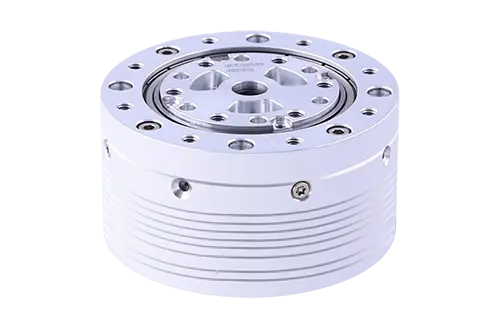 2026-04-17
Planetary Gear Robotic Joint: Precision, Efficiency, and Reliability in Modern Automation
-
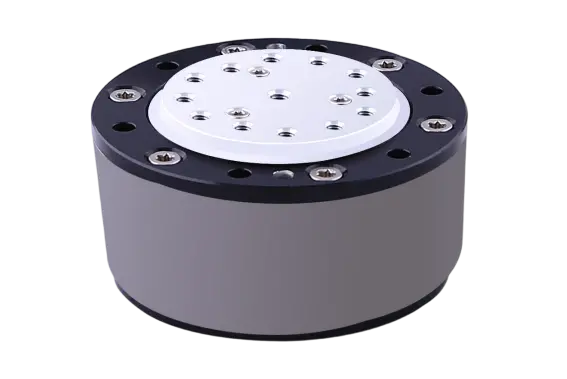 2026-09-29
Why Zero Backlash Matters in Collaborative Robots: A Technical Guide to Precision Joint Modules and Reducers
-
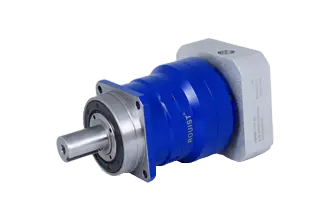 2026-09-29
How to Choose a Planetary Gearbox Wholesale Supplier for Robotics and Automation