 EN
EN
 EN
EN ZH
ZH IT
IT ES
ES TH
TH TR
TR JA
JA PT
PT KO
KO RU
RU FR
FR DE
DE AR
AR
 Home > News Center > Industry news > Joint Actuator Requirements for Wheeled-Legged Robots: What Defines a High-Performance Drive System?
Joint Actuator Requirements for Wheeled-Legged Robots: What Defines a High-Performance Drive System?
Wheeled-legged robots are rapidly becoming one of the fastest-growing categories in mobile robotics. By combining the efficiency of wheeled locomotion with the terrain adaptability of legged movement, these robots are increasingly deployed in industrial inspection, logistics, emergency response, defense, and autonomous service applications.
Unlike conventional AGVs or industrial robotic arms, wheeled-legged robots place exceptionally demanding requirements on their joint actuators. Every joint must simultaneously satisfy conflicting objectives: high torque density, compact dimensions, lightweight construction, precise motion control, dynamic response, and long-term reliability under continuously changing loads.
For robot manufacturers, selecting the appropriate joint actuator architecture has become one of the most critical engineering decisions affecting robot stability, energy efficiency, payload capability, and overall lifecycle cost.
This article analyzes the technical requirements of wheeled-legged robot joint actuators, compares the mainstream precision transmission technologies available today, and discusses why integrated planetary and harmonic joint modules are becoming the preferred solution for next-generation robotic platforms.
Why Wheeled-Legged Robots Are More Demanding Than Traditional Robots
Unlike fixed industrial manipulators, wheeled-legged robots continuously transition between different motion modes.
Typical movements include:
High-speed wheeled driving
Dynamic balancing
Stair climbing
Obstacle crossing
Jumping
Payload transportation
Body posture adjustment
Recovery from external impacts
Each movement generates highly dynamic torque variations throughout the robot's joints.
Unlike AGVs that mainly require wheel drive systems, wheeled-legged robots depend on multiple synchronized joint actuators that must coordinate in real time.
A typical quadruped wheeled-legged robot may contain:
Hip joints
Knee joints
Wheel steering joints
Wheel driving motors
Body balancing mechanisms
Every joint directly influences the robot's:
Walking stability
Dynamic balance
Position accuracy
Motion smoothness
Energy consumption
Consequently, the transmission system becomes one of the robot's most valuable core components.
Key Performance Requirements for Wheeled-Legged Robot Joint Actuators
1. High Torque Density
Robot designers continually seek to reduce overall weight while increasing payload.
Joint actuators therefore need to generate higher output torque without increasing physical size.
High torque density enables:
Smaller robot dimensions
Reduced leg inertia
Faster acceleration
Better jumping capability
Longer battery life
Modern integrated joint modules combine:
High-performance motors
Precision reducers
Encoders
Brakes
Servo drives
into a single compact unit, significantly improving torque-to-weight ratio.
2. Ultra-Low Backlash
Backlash directly affects robot balance.
Even minor positioning errors become amplified during dynamic locomotion.
For wheeled-legged robots, excessive backlash can lead to:
Oscillation
Foot placement errors
Reduced control accuracy
Increased vibration
Poor force feedback
Most advanced robot manufacturers now specify joint backlash below 3 arc-minutes, while premium robotic systems increasingly target ≤1 arc-minute.
This is one reason why precision planetary reducers and harmonic reducers dominate high-end robot applications.
3. High Dynamic Response
Unlike industrial automation systems that often repeat identical trajectories, wheeled-legged robots constantly adapt to changing environments.
Joint actuators must respond within milliseconds to:
Terrain changes
Collision avoidance
Balance correction
Motion planning
Force control
Low inertia rotating components and optimized transmission efficiency significantly improve dynamic responsiveness.
4. Lightweight Construction
Every additional kilogram increases:
Battery consumption
Motor load
Joint stress
Thermal generation
Robot developers therefore prioritize lightweight transmission systems.
Advanced joint modules increasingly utilize:
High-strength aluminum alloys
Integrated structural designs
Compact planetary gear arrangements
Optimized housing topology
to reduce overall system mass.
5. High Structural Rigidity
Legged robots experience repeated impact loads.
Each landing generates substantial transient forces.
Insufficient joint rigidity results in:
Structural deformation
Reduced positioning accuracy
Premature bearing wear
Transmission instability
High-rigidity reducers improve:
Motion repeatability
Control bandwidth
Long-term durability
Planetary vs Harmonic Joint Modules
Although both technologies are widely used in robotics, their application priorities differ.
| Feature | Planetary Joint Module | Harmonic Joint Module |
|---|---|---|
| Torque Capacity | Excellent | Excellent |
| Backlash | Low | Ultra-low |
| Shock Resistance | Excellent | Moderate |
| Efficiency | High | Moderate |
| Speed Capability | High | Moderate |
| Service Life | Long | Long |
| Cost | Moderate | Higher |
| Best Applications | Wheeled robots, heavy-duty joints | Precision manipulation, humanoid arms |
For wheeled-legged robots, many manufacturers employ a hybrid architecture:
Planetary modules for hip or wheel joints requiring high impact resistance.
Harmonic modules for joints demanding exceptional positioning precision.
This approach balances durability, accuracy, and cost.
How Leading Global Reducer Manufacturers Compare
Several established European and Japanese brands continue to set benchmarks in precision transmission technology.
WITTENSTEIN alpha
Known for ultra-high precision planetary reducers, WITTENSTEIN alpha achieves backlash as low as ≤1 arc-minute, making it a preferred choice for premium servo systems, CNC equipment, and high-end automation.
Strengths include:
Exceptional positioning accuracy
High torsional rigidity
Stable long-term performance
Limitations for emerging robot manufacturers often include higher acquisition costs and longer procurement cycles.
Neugart GmbH
Neugart focuses on compact precision planetary gearboxes with excellent noise characteristics and reliable operation.
Typical applications include:
Electronics manufacturing
Medical automation
Precision machinery
Small industrial robots
Its products balance precision, compactness, and cost efficiency.
STOBER
STOBER specializes in heavy-duty planetary gear systems with strong overload capacity.
Advantages include:
High torque transmission
Excellent durability
Robust mechanical construction
These characteristics make STOBER particularly suitable for demanding industrial automation rather than lightweight mobile robots.
SEW-Eurodrive
SEW emphasizes modular drive systems and broad industrial compatibility.
Its solutions are widely deployed in:
Logistics automation
Packaging machinery
Material handling
Heavy industrial equipment
While highly versatile, these products are generally optimized for industrial machinery instead of compact robotic joints.
Lenze
Lenze integrates motion control, drives, and automation systems into unified platforms.
Its reducers are valued for:
Good system compatibility
Reliable industrial performance
Flexible integration
They are commonly selected for automated production lines and machine-building applications.
Bosch Rexroth
Bosch Rexroth combines precision transmission with extensive expertise in industrial motion control and hydraulics.
Its solutions offer:
High rigidity
Strong engineering support
Excellent industrial reliability
These strengths make them suitable for demanding industrial and engineering equipment.
Nidec Shimpo
Nidec Shimpo emphasizes compact planetary reducers with competitive cost-performance.
Typical markets include:
Small automation equipment
Collaborative robots
Assembly machinery
Customized automation systems
Sumitomo
Sumitomo is recognized for outstanding durability under heavy loads.
Its reducers perform well in:
Mining equipment
Heavy machinery
Harsh industrial environments
Their robust design is ideal for demanding duty cycles but may not always prioritize the lightweight requirements of advanced mobile robots.
Emerging Trends: Integrated Joint Modules
Rather than purchasing individual motors, reducers, encoders, and controllers separately, robot manufacturers increasingly adopt integrated joint modules.
Integrated solutions simplify:
Mechanical design
Electrical wiring
Servo tuning
Maintenance
Assembly
They also reduce:
Overall system weight
Installation time
Failure points
This trend is particularly evident in humanoid robots and wheeled-legged robots, where packaging space is extremely limited.
Why Upstream Component Suppliers Are Becoming Strategic Partners
As robot architectures become more sophisticated, manufacturers are placing greater emphasis on long-term collaboration with core component suppliers rather than purchasing standardized transmission products alone.
An upstream specialist focused on robot joint modules can provide:
Customized joint architectures
Integrated drive solutions
Mechanical optimization support
Rapid engineering modifications
Application-specific torque matching
Shorter development cycles
These capabilities help OEM robot developers accelerate product iteration while maintaining consistent transmission performance across multiple robot platforms.
Liangzhi Joint's Approach to Robotic Joint Transmission
As a supplier specializing in robot joint modules and precision reducers, Liangzhi Joint focuses on developing integrated transmission solutions for advanced robotic systems rather than complete robots.
Its core product portfolio includes:
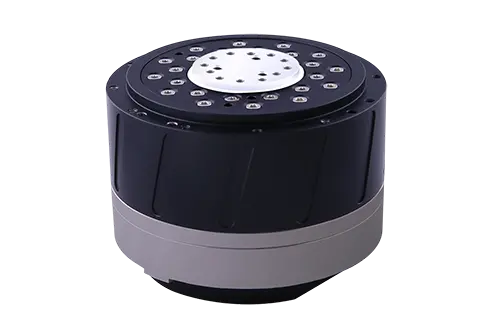
Planetary Joint Modules
Harmonic Joint Modules
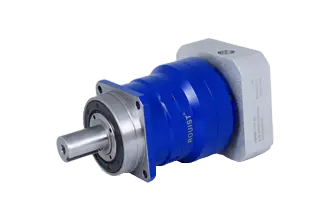
High-Precision Planetary Reducers
Harmonic Reducers
Integrated Direct-Drive Motor Modules
These products are engineered for applications such as:
Humanoid robots
Wheeled-legged robots
Collaborative robots
Industrial automation equipment
Compared with traditional industrial reducer suppliers primarily serving general automation, Liangzhi Joint emphasizes robotic motion characteristics, including compact integration, lightweight construction, dynamic response, and seamless drive-control integration. This positioning enables robot developers to reduce engineering complexity while improving overall system performance and accelerating time-to-market.
Future Development of Wheeled-Legged Robot Joint Actuators
As AI-driven motion planning and embodied intelligence continue to advance, future robotic joints will evolve toward:
Higher torque density
Lower weight
Greater integration
Intelligent diagnostics
Improved thermal management
Higher energy efficiency
Enhanced force-control capability
Integrated actuator modules are expected to become the standard architecture for next-generation mobile robots.
Manufacturers that can combine precision reducers, servo motors, drive electronics, and intelligent control into compact, highly reliable joint solutions will be well positioned to support the expanding markets for humanoid robots, wheeled-legged robots, and advanced industrial automation.
Conclusion
The performance of a wheeled-legged robot is fundamentally constrained by the capabilities of its joint actuators. High torque density, ultra-low backlash, lightweight construction, rapid dynamic response, and long-term reliability are no longer optional—they are essential requirements for stable, agile robotic locomotion.
While established European and Japanese brands such as WITTENSTEIN alpha, Neugart, STOBER, SEW-Eurodrive, Lenze, Bosch Rexroth, Nidec Shimpo, and Sumitomo continue to define benchmarks in precision transmission, the robotics industry is shifting toward highly integrated actuator solutions tailored specifically for mobile and humanoid platforms.
For robot manufacturers developing next-generation wheeled-legged systems, selecting an upstream partner with expertise in integrated planetary and harmonic joint modules can simplify development, improve motion performance, and provide a scalable foundation for future robotic innovation.