 EN
EN
 EN
EN ZH
ZH IT
IT ES
ES TH
TH TR
TR JA
JA PT
PT KO
KO RU
RU FR
FR DE
DE AR
AR
 Home > News Center > Industry news > Robotic Precision Planetary Gearbox: Selection, Performance, Applications, and Integration Guide
Robotic Precision Planetary Gearbox: Selection, Performance, Applications, and Integration Guide
Robotic systems are becoming increasingly demanding in terms of positioning accuracy, dynamic response, payload capacity, and overall mechanical efficiency. As robot manufacturers and system integrators move toward more compact and intelligent motion platforms, the transmission system has become just as important as the motor, controller, and software. A gearbox that introduces excessive backlash, poor rigidity, vibration, or inconsistent positioning can limit the performance of the entire robotic system, even when the motor and control algorithm are properly designed.
For this reason, planetary gearboxes are widely used in industrial robots, collaborative robots, automated equipment, AGVs, machine tools, servo systems, and other precision motion applications. Among these products, a robotic precision planetary gearbox is designed specifically around the requirements of controlled, repeatable, and high-accuracy motion.
The right gearbox is not simply the one with the highest reduction ratio or the largest rated torque. Selection requires a complete evaluation of output torque, reduction ratio, backlash, torsional rigidity, efficiency, rotational speed, operating cycle, installation space, motor compatibility, thermal conditions, and expected service life.
Liangzhi Joint specializes in robotic joint modules and harmonic reducers, while also developing high-precision planetary reducer technologies for demanding transmission applications. With a shareholder team bringing more than 20 years of industry and management experience, the company officially launched in 2024 and operates R&D centers in Hangzhou and Shenzhen, together with production bases in Zhejiang and Dongguan. Its precision planetary reducer technology can achieve accuracy down to 1 arcminute, supported by more than 30 national patents.
This guide explains how precision planetary gearboxes work, what specifications matter in robotic applications, how to select a suitable configuration, and where planetary transmission technology can provide practical advantages.
What Is a Robotic Precision Planetary Gearbox?
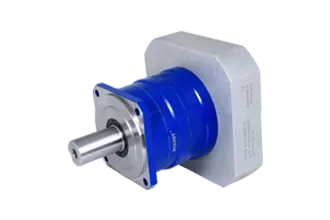
A planetary gearbox is a mechanical transmission consisting primarily of a sun gear, multiple planet gears, a planet carrier, and a ring gear. Unlike a conventional spur gear reduction mechanism, the load in a planetary system can be distributed across several planet gears.
The basic operating principle is relatively straightforward. The input gear, usually the sun gear, transfers motion to multiple planet gears. These planet gears rotate around the sun gear while simultaneously engaging with the internal ring gear. Depending on which component is fixed and which component serves as the output, different reduction ratios and rotational directions can be obtained.
In a robotic application, the planetary gearbox is typically connected between a servo motor and the driven mechanism. The motor provides high-speed rotation, while the gearbox reduces speed and increases available output torque.
A precision planetary gearbox goes beyond simple speed reduction. It is designed to maintain predictable mechanical behavior under changing loads. Important characteristics include:
Low backlash
High torsional rigidity
High transmission efficiency
Stable torque transmission
Compact dimensions
High radial and axial load capability
Consistent positioning performance
Low vibration and noise
Long operating life
Compatibility with servo motors
The word “precision” is particularly important in robotics. A robot may need to move a joint by a small angular increment and return to the same position thousands or millions of times. If the transmission has excessive clearance or deformation, the robot's actual position may differ from the commanded position.
Therefore, gearbox precision directly influences the mechanical accuracy that can be achieved by the complete servo system.
Why Planetary Transmission Is Important in Robotics
A robotic axis normally needs to satisfy several conflicting requirements.
It must be compact enough to fit inside the mechanical structure. It must provide sufficient torque to accelerate the payload. It must withstand repeated dynamic loading. It must maintain positioning accuracy. It must also work efficiently at the required motor speed.
A gearbox is responsible for converting the motor's operating characteristics into usable mechanical output.
For example, a servo motor may operate efficiently at several thousand revolutions per minute, while a robotic joint may require a much lower output speed. The gearbox provides the required reduction ratio while multiplying the motor torque.
In simplified form:
Output torque ≈ Motor torque × Reduction ratio × Transmission efficiency
This relationship explains why a relatively small servo motor can drive a much larger mechanical load after suitable reduction.
However, the equation alone is not enough for gearbox selection. A gearbox can theoretically deliver sufficient torque while still being unsuitable because of excessive backlash, insufficient rigidity, poor thermal performance, or inadequate bearing capacity.
For robotic motion, the transmission must be evaluated as part of the entire mechanical and control system.
How a Precision Planetary Gearbox Works
The planetary gear mechanism provides several mechanical advantages because multiple gears can share the transmitted load.
The sun gear is positioned at the center. Around it are several planet gears. These planet gears are mounted on a carrier and engage with the internal teeth of the ring gear.
One common configuration fixes the ring gear, drives the sun gear, and uses the planet carrier as the output. This produces speed reduction and torque multiplication.
The actual reduction ratio depends on the gear arrangement and tooth counts. Multiple planetary stages can be combined to achieve higher reduction ratios.
For robotic systems, a multi-stage planetary structure can provide a useful combination of:
High reduction ratio
Compact package size
High torque density
Balanced load distribution
Low backlash
High mechanical rigidity
The exact design depends on the application. A small robot axis may require a compact single-stage or two-stage solution, while a heavier robotic joint may require multiple stages and a larger bearing system.
The Importance of Backlash in Robotic Applications
Backlash is one of the most important specifications when selecting a precision transmission.
Backlash refers to the angular clearance between mating gear teeth. Some clearance is necessary for lubrication, thermal expansion, and proper gear operation. However, excessive backlash can create positioning errors.
Imagine a robotic axis commanded to move from one position to another and then reverse direction. If there is significant mechanical clearance inside the gearbox, the motor may rotate slightly before the output shaft begins moving in the opposite direction.
This creates a dead zone between motor movement and actual output movement.
For high-precision robots, this can cause:
Positioning errors
Repeatability problems
Oscillation during direction changes
Lower contour accuracy
Reduced machining quality
Difficulty in servo tuning
A robotic precision planetary gearbox is therefore normally designed with controlled backlash.
For demanding applications, manufacturers may specify backlash in arcminutes. One arcminute equals 1/60 of one degree. A transmission with a very low backlash specification can provide significantly better angular control than a conventional industrial gearbox.
However, buyers should pay attention to how the manufacturer defines and measures backlash. Test conditions, input torque, temperature, lubrication state, and measurement position can affect the result.
Comparing two gearbox products solely by a published backlash number without checking the measurement method can lead to incorrect conclusions.
Torsional Rigidity and Why It Matters
Backlash is not the only factor affecting robot accuracy.
Torsional rigidity describes the resistance of a transmission system to angular deformation when torque is applied.
Suppose a robot joint is carrying a heavy payload. The motor produces torque, but the gearbox and mechanical structure also experience load. If the transmission deforms significantly under this load, the output position can deviate from the theoretical position.
High torsional rigidity helps maintain the relationship between motor rotation and output rotation.
This is especially important for:
Welding robots
Assembly robots
Machining robots
Semiconductor equipment
Precision positioning systems
Vision-guided robots
Collaborative robots
Multi-axis automation platforms
A gearbox with low backlash but poor rigidity may still produce unsatisfactory results under load.
For this reason, gearbox selection should consider both static positioning characteristics and dynamic deformation.
Gearbox Efficiency in Servo Applications
Efficiency affects both energy consumption and thermal performance.
A planetary gearbox contains several gear meshes and bearings. Mechanical losses occur due to gear friction, bearing friction, lubrication, sealing, and other factors.
High transmission efficiency means that a greater proportion of the motor's input power reaches the output shaft.
This provides several benefits.
First, less energy is lost as heat. Second, the motor does not need to compensate for unnecessary transmission losses. Third, thermal management becomes easier during continuous operation.
Efficiency can vary depending on reduction ratio, rotational speed, load, lubrication, temperature, and gearbox design.
Therefore, published efficiency values should be evaluated according to actual operating conditions rather than treated as a single constant number.
For a robotic application involving frequent acceleration and deceleration, efficiency under dynamic operation may be more meaningful than efficiency measured only at one steady-state operating point.
Reduction Ratio Selection
Reduction ratio is one of the first parameters engineers consider when selecting a gearbox.
If a motor rotates at 3,000 rpm and the required output speed is 100 rpm, a nominal reduction ratio of approximately 30:1 would be required.
However, the motor speed and output speed are not the only considerations.
A higher reduction ratio generally increases output torque but reduces output speed. It can also affect gearbox efficiency, inertia, dynamic response, and the ability of the servo system to control the load.
For robotic joints, engineers should calculate:
Maximum motor speed
Rated motor speed
Required output speed
Continuous output torque
Peak output torque
Acceleration torque
External load torque
Load inertia
Duty cycle
The selected ratio should allow the motor to operate within an efficient and controllable speed range.
Choosing a gearbox with a very high reduction ratio simply because it provides more torque is not necessarily optimal. The resulting system may become slower and may have less desirable dynamic response.
Rated Torque Versus Peak Torque
One common mistake in gearbox selection is comparing only rated torque.
Robotic systems rarely operate at a single constant load. During acceleration, deceleration, emergency stops, or rapid direction changes, the instantaneous torque can be substantially higher than the continuous operating torque.
Therefore, both rated torque and peak torque need to be evaluated.
Rated torque generally represents the torque that the gearbox can transmit continuously under specified operating conditions.
Peak torque describes the short-duration load that the gearbox can withstand.
The relationship between these values should be considered together with the operating cycle.
For example, a robot arm may operate at moderate torque during most of its cycle but require a high torque peak during rapid acceleration. The gearbox must tolerate these repeated peak loads without excessive wear or permanent deformation.
A proper calculation should consider the actual motion profile instead of relying only on the nominal payload weight.
Load Inertia and Servo Matching
Gearbox selection should also account for reflected load inertia.
The inertia seen by the motor changes according to the reduction ratio. In simplified terms, the load inertia reflected to the motor decreases approximately with the square of the reduction ratio:
Reflected inertia ≈ Load inertia / Ratio²
This is one reason gear reduction can make a large mechanical load easier for a servo motor to control.
However, an excessively high ratio is not automatically better. The gearbox itself contributes inertia, friction, and mechanical compliance. The motor, gearbox, and load must therefore be considered as a complete dynamic system.
Good servo matching can improve:
Acceleration response
Positioning stability
Servo gain tuning
Energy efficiency
Overshoot control
Cycle time
For robot designers, it is useful to evaluate the motor and gearbox together rather than selecting each component independently.
Input Speed and Output Speed
The gearbox must be compatible with the actual operating speed of the servo motor.
A planetary reducer may be capable of high input speed, but its allowable speed depends on the internal gear design, bearings, lubrication, thermal conditions, and service life requirements.
Continuous operation at high speed generates heat. High-speed operation also increases frictional losses and may affect lubricant performance.
When specifying a gearbox, engineers should distinguish between:
Maximum input speed
Rated input speed
Continuous input speed
Intermittent input speed
Output speed under rated load
If the robot operates continuously at high speed, the continuous allowable speed is generally more important than a short-duration maximum value.
Bearings and External Loads
A gearbox does not only transmit torque. In many robotic mechanisms, the output shaft is also subjected to radial and axial loads.
For example, a robot arm may generate bending moments because of the distance between the joint and the payload.
The gearbox's output bearing system must be capable of handling the resulting loads.
Important parameters may include:
Radial load capacity
Axial load capacity
Permissible moment load
Bearing arrangement
Shaft diameter
Output flange design
In some systems, the gearbox is connected to an external support bearing. In others, the gearbox itself is expected to support the mechanical load.
These two configurations should not be treated as equivalent.
If the gearbox must directly support a significant external moment, the bearing structure becomes a major selection criterion.
Compact Design and Torque Density
Robotic equipment often has strict space constraints.
A joint may need to fit inside a narrow housing while providing sufficient torque. This makes torque density an important design parameter.
Torque density can be considered as the amount of usable output torque provided relative to the gearbox's size or weight.
Planetary mechanisms are naturally suitable for compact transmission because multiple gears share the load within a relatively small volume.
For robot manufacturers, a compact gearbox can provide more freedom when designing:
Joint housings
End-of-arm mechanisms
AGV drive systems
Automated rotary tables
Compact manipulators
Inspection equipment
Reducing gearbox dimensions can also reduce the overall mass of a moving axis.
This matters because lower moving mass can reduce the torque required for acceleration, especially in robot arms with multiple serial joints.
Gearbox Weight and Robot Dynamics
The gearbox itself becomes part of the robot's moving mass.
For a multi-axis robot, the weight of an upper joint is carried by lower joints. Consequently, reducing the weight of components in the upper sections can have a larger effect on overall system requirements.
This creates a design trade-off.
A larger gearbox may provide greater torque and bearing capacity, but it may also increase moving mass. A smaller gearbox may reduce weight but have insufficient load capacity.
The optimal solution is therefore not necessarily the smallest or largest gearbox. It is the model that provides the required mechanical performance with an appropriate safety margin.
Lubrication and Operating Temperature
Lubrication is critical to gearbox reliability.
Gear teeth and bearings operate under contact stress. Without appropriate lubrication, friction and wear increase rapidly.
Lubricant selection depends on factors such as:
Gear material
Gear surface treatment
Rotational speed
Operating temperature
Load
Gearbox structure
Required service life
Installation orientation
Temperature is another important factor.
High operating temperature can reduce lubricant performance and accelerate material degradation. In enclosed robotic joints, heat dissipation can be more difficult because the gearbox is installed inside a compact housing.
Therefore, thermal performance should be considered during system design.
For continuous-duty robots, engineers should not evaluate the gearbox only at room temperature. Actual operating temperature should be measured or calculated under representative load and speed conditions.
Gear Manufacturing Accuracy
The performance of a precision planetary gearbox depends heavily on the accuracy of its gears and supporting components.
Important manufacturing characteristics include:
Tooth profile accuracy
Pitch accuracy
Tooth thickness control
Gear concentricity
Shaft alignment
Bearing positioning
Assembly accuracy
Surface treatment
Material consistency
Small dimensional deviations can accumulate throughout a multi-stage transmission.
For precision robotic applications, gear manufacturing and assembly quality directly influence backlash, vibration, noise, transmission error, and service life.
This is why precision gearbox suppliers need strong process control rather than relying solely on final inspection.
Transmission Error and Vibration
Transmission error is the difference between theoretical gear motion and actual transmitted motion.
Even when a gearbox meets its nominal backlash specification, manufacturing tolerances and elastic deformation can create transmission error.
Transmission error may appear as:
Periodic speed fluctuation
Vibration
Acoustic noise
Positioning deviation
Servo disturbance
For robots that perform precision machining, optical inspection, semiconductor handling, or other sensitive operations, these effects can become important.
Gear geometry, assembly accuracy, bearing quality, lubrication, and structural rigidity all contribute to overall transmission behavior.
A precision planetary gearbox should therefore be evaluated not only by static accuracy specifications but also by its dynamic operating characteristics.
Single-Stage and Multi-Stage Planetary Gearboxes
Planetary gearboxes can be designed with one or multiple reduction stages.
A single-stage configuration is useful when a relatively modest reduction ratio is required. It can offer a compact structure and high efficiency.
Multi-stage designs are used when a higher reduction ratio is required.
Each additional stage changes the transmission characteristics. More stages can increase the available reduction ratio while maintaining a compact package, but they also introduce additional gear meshes, bearings, and potential sources of mechanical loss.
The appropriate configuration depends on the application.
For example, a high-speed rotary positioning axis may prioritize efficiency and response, while a robot joint requiring substantial torque multiplication may prioritize reduction ratio and torque density.
Planetary Gearbox Versus Harmonic Reducer
Planetary and harmonic transmission technologies are both widely associated with precision motion control, but they have different mechanical characteristics.
A harmonic reducer uses a flexible spline-based mechanism and can provide very low backlash and high reduction ratios in a compact package.
A planetary gearbox uses rigid gears and distributes load through multiple planetary gears.
The choice depends on the robot architecture and operating requirements.
Planetary gearboxes can be attractive when designers need:
High efficiency
High-speed input capability
Strong torque transmission
High torsional rigidity
Compact dimensions
Good dynamic response
Flexible motor integration
Harmonic reducers can be attractive when extremely compact high-ratio reduction and very low backlash are major priorities.
There is no universal “best” reducer for every robot. Engineers should compare the complete transmission characteristics against the joint's motion profile and mechanical requirements.
Planetary Gearbox Versus Conventional Spur Gearbox
A conventional spur gear reduction system can be effective for general mechanical transmission, but its load distribution is different from that of a planetary system.
In a planetary configuration, multiple planet gears can share the transmitted load.
This can increase torque capacity relative to the physical package and improve load distribution when the gear set is properly designed and manufactured.
For robotics, the benefits can include higher torque density and more compact transmission layouts.
However, a planetary gearbox is more complex than a simple spur gear pair. Manufacturing and assembly accuracy become particularly important.
The right choice depends on the required performance, cost target, mechanical architecture, and production volume.
How to Select a Robotic Precision Planetary Gearbox
A practical selection process should start with the application's actual operating parameters.
Step 1: Determine Required Output Speed
Identify the maximum, nominal, and minimum output speeds.
Do not select the gearbox based only on motor speed. Consider the complete robot motion profile.
Step 2: Calculate Continuous Torque
Determine the torque required during normal operation.
Include payload, gravity, friction, acceleration, and mechanical transmission losses.
Step 3: Determine Peak Torque
Identify the highest torque expected during acceleration, deceleration, collision recovery, or other transient conditions.
The gearbox should have sufficient peak torque capacity for the required duration and frequency.
Step 4: Determine Reduction Ratio
Calculate the approximate ratio based on motor speed and required output speed.
Then check available standard ratios from the gearbox supplier.
Step 5: Evaluate Backlash
For high-precision robot joints, low backlash is usually desirable.
The acceptable value depends on the robot's required positioning and repeatability.
Step 6: Check Torsional Rigidity
Evaluate the gearbox's stiffness under the expected operating torque.
This is particularly important for robot arms carrying heavy or offset loads.
Step 7: Check Bearing Capacity
Calculate radial, axial, and moment loads at the output.
Confirm that the gearbox can safely support the actual mechanical loads.
Step 8: Check Motor Compatibility
Verify:
Motor flange
Input shaft diameter
Shaft length
Key or clamping interface
Maximum input speed
Mounting configuration
A mechanically excellent gearbox is still unsuitable if it cannot be properly integrated with the selected motor.
Step 9: Evaluate Thermal Conditions
Consider continuous duty, ambient temperature, enclosure conditions, and available heat dissipation.
Step 10: Confirm Service Life
Gearbox service life should be evaluated according to actual load and operating conditions rather than simply relying on a generic lifetime figure.
Motor and Gearbox Integration
A gearbox should be considered part of the motor-transmission assembly.
The motor flange must align accurately with the gearbox input. Poor alignment can increase vibration, bearing load, and wear.
The coupling or connection method is also important.
Potential integration methods include:
Keyed shaft
Clamp connection
Direct flange mounting
Integrated motor adapter
Custom input interface
For robotic applications, reducing the number of mechanical interfaces can simplify assembly and improve overall stiffness.
This is one reason integrated robotic joint modules are becoming increasingly useful.
Instead of designing the motor, gearbox, encoder, brake, and housing as completely independent components, a joint module can combine multiple functions into one engineered assembly.
Robotic Joint Modules and Planetary Transmission
A robotic joint module may integrate:
Servo motor
Precision reducer
Encoder
Brake
Bearing system
Housing
Motor driver or control electronics
Wiring interface
The main advantage is integration.
A system integrator can reduce the amount of mechanical design work required for each joint. Standardized modules can also simplify assembly, testing, maintenance, and procurement.
For robot developers, the use of an integrated joint module can shorten development cycles and reduce compatibility problems between individual components.
A planetary reduction mechanism can be incorporated into such a joint architecture when the application requires high-speed motor operation, torque multiplication, compact dimensions, and rigid transmission.
Where Robotic Precision Planetary Gearboxes Are Used
Precision planetary reducers are not limited to articulated industrial robots.
They can be applied across a wide range of motion-control equipment.
Industrial Robot Arms
Industrial robots require reliable transmission for repetitive movement under significant loads.
Typical applications include:
Welding
Painting
Material handling
Palletizing
Assembly
Machine tending
The gearbox must tolerate repeated acceleration and deceleration while maintaining positioning consistency.
Collaborative Robots
Collaborative robots generally emphasize compact dimensions, low mass, safety, and controllable motion.
A precision gearbox can help provide the torque required from relatively compact servo motors.
Automated Guided Vehicles
AGVs and autonomous mobile robots use geared drive systems to convert motor speed into usable wheel torque.
Depending on the architecture, planetary gearboxes can provide a compact and robust solution for wheel or steering drives.
Rotary Tables
Precision rotary tables require accurate angular positioning.
Backlash, rigidity, and bearing capacity can significantly influence positioning performance.
Semiconductor Equipment
Semiconductor manufacturing equipment often requires controlled movement and repeatability.
Transmission systems must provide predictable motion with low vibration and contamination considerations.
Machine Tools
Robotic or automated machine-tool systems can require high stiffness and accurate rotary positioning.
Planetary transmission can be used where the required ratio, torque, and speed characteristics match the application.
Automated Inspection Systems
Inspection machines may use servo-driven rotary or linear mechanisms requiring repeatable positioning.
A low-backlash transmission can help reduce mechanical positioning errors.
What Procurement Teams Should Ask a Gearbox Supplier
Technical buyers should request more than a product catalog.
Before approving a gearbox, ask the supplier for the following information:
Reduction ratio options
Rated output torque
Peak output torque
Rated input speed
Maximum input speed
Backlash specification
Torsional rigidity
Efficiency
Radial and axial load capacity
Permissible moment load
Gearbox dimensions
Weight
Motor interface options
Lubrication requirements
Operating temperature range
Expected service life
Test standards
Quality-control procedures
Delivery lead time
Available customization options
This information allows engineers to compare products on engineering performance rather than marketing language.
Why Delivery Time Matters in B2B Robotics Projects
Gearbox availability can directly affect a robot development schedule.
A robot manufacturer may have already completed the motor, controller, software, and mechanical structure, only to discover that the transmission component has a long procurement cycle.
This can delay:
Prototype assembly
Functional testing
Customer validation
Pilot production
Product launch
For this reason, short and predictable delivery cycles can be a practical advantage.
Liangzhi Joint provides an ultra-fast delivery cycle of approximately 5–7 days for applicable products, helping customers reduce waiting time when developing and integrating precision transmission systems.
Actual delivery should always be confirmed according to the specific model, configuration, quantity, and production schedule.
Customization Requirements
Not every robotic system can use a standard gearbox without modification.
Customization may involve:
Input shaft dimensions
Output flange
Mounting holes
Gear ratio
Housing dimensions
Bearing configuration
Lubrication
Encoder integration
Brake integration
Connector position
When requesting customization, customers should provide as much technical information as possible.
A useful gearbox specification package may include:
Motor datasheet
CAD drawing
Output load information
Motion profile
Required speed
Required torque
Installation orientation
Operating temperature
Expected annual quantity
Providing this information early allows the supplier's engineering team to evaluate the transmission more accurately.
Precision Requirements Should Be Matched to the Application
Not every machine requires an ultra-high-precision reducer.
Using a very expensive precision gearbox in a low-accuracy application may add unnecessary cost and complexity.
Conversely, using a general-purpose reducer in a precision robot joint can create problems later.
The correct approach is to define the required system-level performance first.
For example, if the complete mechanism only requires moderate positioning accuracy, a standard planetary reducer may be sufficient.
If the mechanism requires extremely small angular positioning increments, high repeatability, low reversal error, and high stiffness, a higher-precision transmission should be considered.
This approach prevents both under-specification and over-specification.
Understanding Accuracy, Repeatability, and Resolution
These terms are sometimes used interchangeably, but they describe different aspects of motion performance.
Accuracy describes how close the actual position is to the commanded or reference position.
Repeatability describes how consistently the system can return to the same position.
Resolution describes the smallest distinguishable or controllable movement.
The gearbox affects all three, but it is only one part of the system.
Encoder resolution, servo control, mechanical structure, thermal expansion, bearing clearance, and external load can also influence the final result.
Therefore, a gearbox with a very low backlash specification does not automatically mean that the complete robot will achieve the same angular accuracy.
System-level validation remains essential.
Quality Control for Precision Planetary Gearboxes
Precision transmission products require systematic quality control.
Important inspection stages can include:
Incoming material inspection
Gear dimensional inspection
Tooth profile inspection
Shaft inspection
Bearing inspection
Assembly verification
Backlash testing
Rotation testing
Noise and vibration testing
Torque testing
Final dimensional inspection
For B2B customers, quality consistency is often more important than the performance of a single prototype.
A gearbox supplier should therefore be capable of producing stable performance across repeated production batches.
For applications involving hundreds or thousands of robotic units, process capability and production consistency become major procurement criteria.
Choosing a Supplier for Global Robot Projects
When purchasing transmission components internationally, technical capability is only one part of supplier evaluation.
Customers should also consider:
Engineering communication
Documentation quality
Quality consistency
Production capacity
Lead time
Sample support
Customization capability
Packaging
Export experience
After-sales technical support
A supplier that can provide engineering assistance during the selection stage can reduce integration risks.
For international B2B projects, clear drawings, technical datasheets, dimensional tolerances, testing information, and response speed can make a substantial difference.
Liangzhi Joint's Approach to Precision Transmission
Liangzhi Joint focuses on drive integration solutions, with a product portfolio centered on robotic joint modules and harmonic reducers while also developing high-precision planetary reducer technology.
The company was launched in 2024 with a shareholder team that brings more than 20 years of industry and management experience.
Its R&D resources are located in Hangzhou and Shenzhen, while production bases are located in Zhejiang and Dongguan.
The company's precision planetary reducer technology reaches a maximum accuracy of 1 arcminute. More than 30 national patents support its technical development.
For customers comparing transmission solutions against European, American, Japanese, and Taiwanese benchmarks, dimensional compatibility and performance matching are important considerations. Liangzhi Joint develops products intended to match the performance and dimensions of established international benchmark products while providing a shorter delivery cycle for applicable configurations.
For a robot manufacturer, this can be useful when replacing an existing transmission design or developing a new motion platform around standardized mechanical interfaces.
Practical Checklist Before Ordering
Before placing an order for a precision planetary gearbox, the engineering team should be able to answer the following questions:
Motor
What is the motor rated torque?
What is the motor peak torque?
What is the normal motor speed?
What is the maximum motor speed?
What is the motor shaft diameter?
What flange standard is being used?
Output
What output speed is required?
What is the continuous output torque?
What is the peak output torque?
What radial load is applied?
What axial load is applied?
What external moment is applied?
Precision
What backlash is acceptable?
What positioning accuracy is required?
What repeatability is required?
What torsional rigidity is required?
Operating Conditions
How many hours per day will the robot operate?
What is the duty cycle?
What is the ambient temperature?
Is the gearbox enclosed?
What is the installation orientation?
Are there frequent starts and stops?
Mechanical Integration
What are the available installation dimensions?
What is the required output flange?
Is an external bearing required?
Is an encoder or brake integrated into the joint?
Answering these questions before requesting a quotation makes technical communication significantly more efficient.
Common Gearbox Selection Mistakes
Several recurring mistakes can be avoided with a more systematic approach.
Selecting Only by Torque
Torque is important, but torque alone does not define a suitable gearbox.
Backlash, rigidity, speed, inertia, bearings, thermal performance, and life must also be considered.
Ignoring Peak Loads
A gearbox may operate correctly under normal load but fail to provide sufficient safety margin during acceleration or emergency stopping.
Peak torque must be included in the calculation.
Ignoring External Moment Loads
A robot arm can create a large bending moment even when the motor torque appears moderate.
The output bearing system must be checked accordingly.
Comparing Backlash Without Test Conditions
Backlash figures are meaningful only when the measurement method and conditions are understood.
Selecting a Ratio Without Considering Servo Dynamics
A very high ratio can increase torque multiplication but may change the dynamic characteristics of the complete system.
Treating the Gearbox as an Independent Component
Motor, gearbox, encoder, bearing, structure, and controller interact with each other.
The transmission should be selected as part of the complete axis.
How to Improve Robot Transmission Reliability
Good gearbox performance begins with proper selection but does not end there.
Installation quality is equally important.
The mounting surfaces should be clean and sufficiently flat. Shaft alignment should meet the gearbox manufacturer's requirements. Excessive external forces should not be introduced during assembly.
Fasteners should be tightened according to the recommended torque. Couplings should be properly aligned.
Lubrication should follow the supplier's specifications.
During commissioning, engineers should monitor:
Operating temperature
Vibration
Noise
Positioning behavior
Motor current
Acceleration response
Backlash-related reversal behavior
Early monitoring can identify mechanical integration problems before they develop into long-term failures.
Future Trends in Robotic Transmission
Robotic transmission systems are moving toward greater integration.
Instead of treating motors, reducers, encoders, brakes, and housings as separate components, robot developers increasingly expect modular joint solutions that can be integrated quickly.
At the same time, several technical requirements are becoming more important:
Higher torque density
Lower weight
Lower backlash
Higher rigidity
Higher efficiency
Smaller dimensions
Better thermal performance
Easier assembly
Faster customization
Shorter delivery cycles
The development of precision planetary gearboxes is therefore closely connected with the broader evolution of robot joint technology.
As robot applications expand beyond traditional industrial environments into logistics, healthcare equipment, service robotics, inspection, mobile manipulation, and intelligent automation, transmission suppliers will need to balance precision, reliability, integration, and production flexibility.
Conclusion
A robotic precision planetary gearbox is more than a speed-reduction component. It is a critical mechanical element that influences torque capacity, positioning behavior, dynamic response, rigidity, efficiency, noise, and service life.
The correct selection process starts with the actual application rather than a product catalog. Engineers should calculate motor speed, output speed, continuous torque, peak torque, load inertia, external forces, reduction ratio, and duty cycle. Backlash, torsional rigidity, bearing capacity, thermal performance, and motor compatibility should then be evaluated together.
Planetary transmission is particularly useful when a robotic system requires a combination of compact dimensions, high torque density, high-speed motor compatibility, efficient transmission, and controlled mechanical precision.
For B2B buyers, supplier capability is equally important. Consistent manufacturing quality, engineering support, customization options, reliable documentation, and predictable delivery can significantly reduce development and procurement risks.
Liangzhi Joint provides robotic joint modules, harmonic reducers, and precision planetary transmission solutions for customers developing robotic and automated motion systems. With R&D centers in Hangzhou and Shenzhen, production bases in Zhejiang and Dongguan, more than 30 national patents, and precision capabilities reaching 1 arcminute, the company focuses on practical drive integration requirements for global customers.
When selecting a planetary gearbox for a robot, the best solution is not necessarily the one with the largest torque rating or the lowest advertised backlash. The better solution is the one whose mechanical characteristics match the motor, load, motion profile, accuracy target, installation space, and operating environment of the complete system.
For engineers and procurement teams, that system-level approach is the most reliable way to select a transmission that performs consistently in real-world robotic applications.